Artificial Intelligence

AI, machine learning, and intelligent systems

Artificial Intelligence

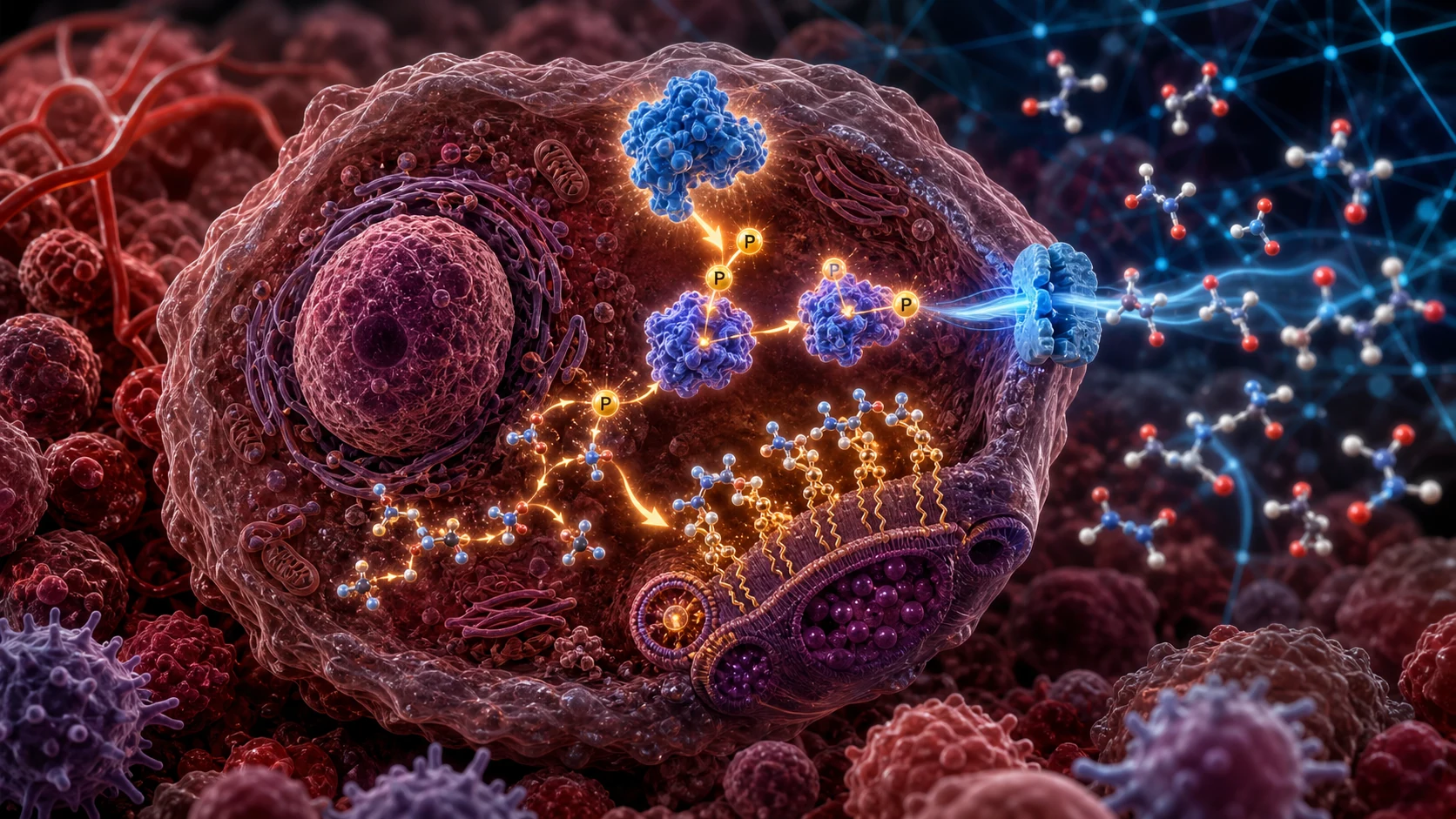
PLK1-mediated phosphorylation of PHGDH reprograms serine metabolism in advanced prostate cancer.

Metabolic reprogramming is a hallmark of cancer, enabling tumor cells to meet their increased biosynthetic and energetic demands. Although cells possess the capacity for de novo serine biosynthesis, most transformed cancer cells preferentially rely on exogenous serine uptake to sustain their growth, yet the regulatory mechanisms driving this metabolic dependency remain poorly understood. Here, we uncover a mechanism by which Polo-like kinase 1 (PLK1), frequently overexpressed in prostate cancer,

Continue reading

Artificial Intelligence

When coordination is avoidable: A monotonicity analysis of organizational tasks.

Organizations devote substantial resources to coordination, yet which tasks actually require it for correctness remains unclear. The problem is acute in multiagent AI systems, where coordination cost is directly measurable and can exceed the cost of the work itself. Distributed systems theory provides a precise criterion: Coordination is required when a task specification is nonmonotonic, meaning that as histories grow, new information can invalidate prior conclusions. Here we show that Thompson

Continue reading
Artificial Intelligence

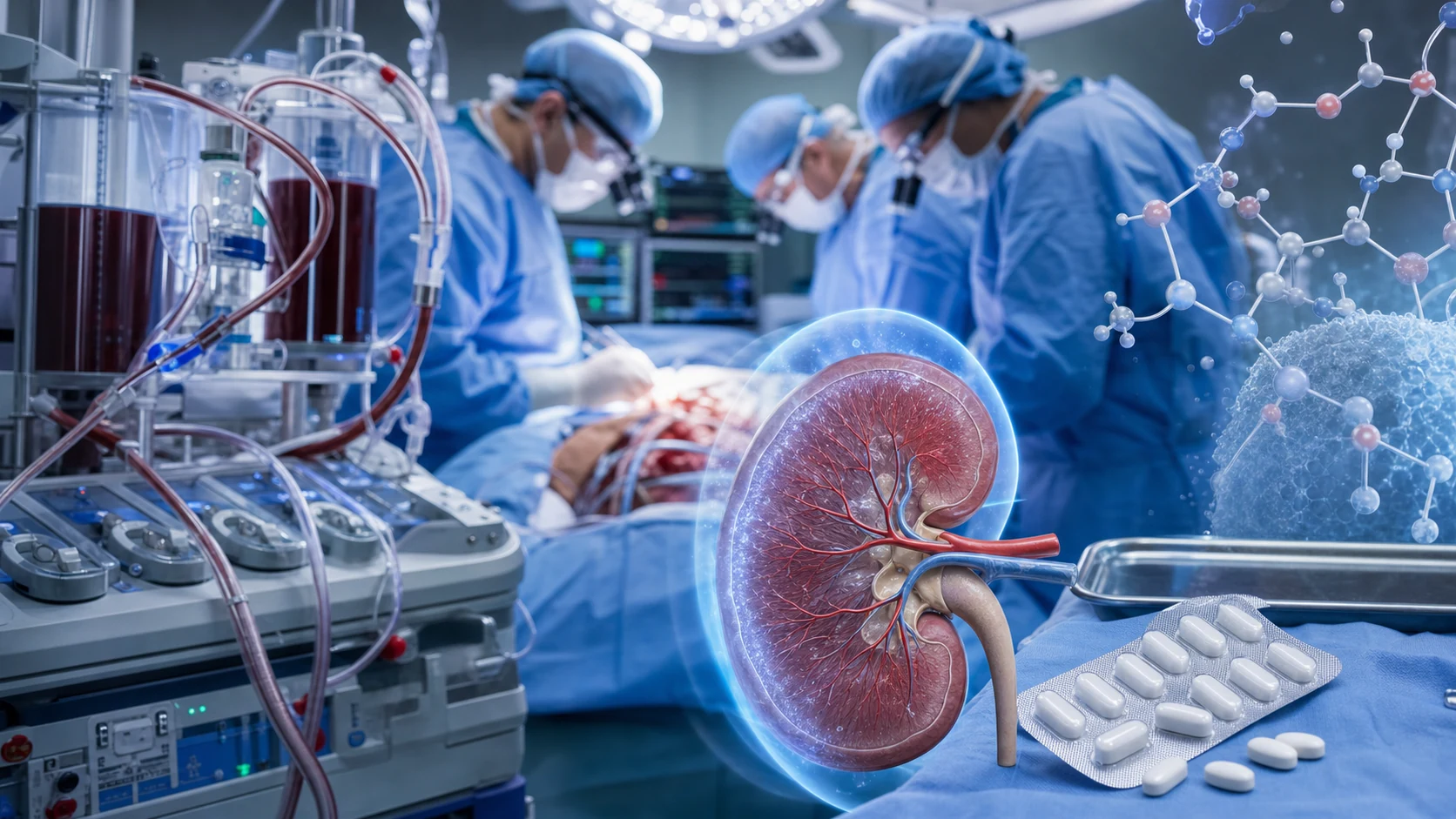
Dapagliflozin and Acute Kidney Injury Following Cardiac Surgery: A Randomized Clinical Trial.

Two percent to 50% of patients undergoing elective cardiac surgery experience acute kidney injury (AKI) postoperatively. Medications to prevent AKI after elective cardiac surgery have not been identified. In patients undergoing elective cardiac surgery, to evaluate whether initiating dapagliflozin 1 day prior to surgery reduces the incidence of AKI at 7 days after cardiac surgery, compared with placebo. Multicenter, double-blind, placebo-controlled randomized clinical trial conducted at 2 academ

Continue reading
Artificial Intelligence

Context-aware multimodal AI navigates hidden pathways in five centuries of art evolution.

The rise of multimodal generative AI transforms the intersection of technology and art, offering richer insights into large-scale artworks. While significant research has focused on their creative potential, their ability to represent artworks in latent spaces remains underexamined. We use generative AI, specifically Stable Diffusion, to analyze 500 y of Western paintings by extracting two types of latent information with the model: formal aspects (e.g., colors) and contextual aspects (e.g., sub

Continue reading
Artificial Intelligence

Advancing cancer detection and treatment using longitudinal routine clinical data.

Cancer management remains fragmented across its continuum, from late-stage diagnosis and salvage therapies to non-personalized surveillance. Here, we present Oncoformer, a unified multimodal transformer model trained on the China Oncology Multimodal Prediction and Surveillance Study (COMPASS) cohort (3.67 million individuals, 17.7 million clinical visits) and validated on independent external cohorts, including the UK Biobank. Oncoformer integrates longitudinal electronic health records with che

Continue reading
Artificial Intelligence

AI-based clinician decision support system for diagnosis of inherited retinal diseases: a multicenter, randomized trial.

The accurate and timely diagnosis of inherited retinal diseases (IRDs) represents an unmet clinical need in ophthalmology, as the current pathways rely on resource-intensive phenotyping, multidisciplinary expertise and genetic testing. Here we developed Retina4IRD, an artificial intelligence (AI)-based clinician decision support system (CDSS) that predicts 17 genotype categories from retina images. Retina4IRD uses a Vision Transformer model pretrained with RETFound. We then trained and validated

Continue reading
Artificial Intelligence

UniPert-G2CP bridges genetic and chemical screens from molecular representation to phenotype modeling.

Systematically simulating and predicting phenotypic effects of diverse interventions across heterogeneous cellular environments is central to the vision of artificial intelligence virtual cell (AIVC). However, disparities in perturbagen modalities, assay formats, and data production efficiency hinder unified modeling and analysis of genetic and chemical screens. This study presents UniPert-G2CP, a two-stage deep learning framework that bridges genetic and chemical screens by unifying multimodal

Continue reading
Artificial Intelligence

Predicting Enantioselectivity of Ruthenium-Catalyzed Ketone Hydrogenation with 3D Structure-Based Deep Learning.

We report machine-learning (ML) models that predict with high accuracy the enantioselectivity of ketone hydrogenation with Noyori-type diphosphine-diamine catalysts. To mitigate bias in published data, we combined a data set curated from the literature with >1,000 examples from our own high-throughput experimentation. We demonstrate that 3D graph neural networks, trained on 3D representations derived from the enantiodetermining transition state, outperform models based on 2D graphs, molecular

Continue reading
Artificial Intelligence

Mechanical Thrombectomy in Ischemic Stroke With a Medium or Distal Arterial Occlusion: The DISCOUNT Randomized Clinical Trial.

Evidence regarding efficacy and safety of thrombectomy in acute ischemic stroke (AIS) due to medium or distal vessel occlusions (MDVOs) is lacking. To evaluate the benefit of thrombectomy, in addition to medical treatment over medical treatment alone, in patients with an AIS related to a primary and isolated MDVO. Randomized clinical trial conducted at 22 stroke centers in France from November 2021 to April 2025, with planned enrollment of 488 patients. The trial has been stopped after the plann

Continue reading
Artificial Intelligence

Many AI analysts, one dataset: Navigating the agentic data science multiverse.

Empirical conclusions depend not only on data but also on analytic decisions. Many-analyst studies have quantified this dependence: independent teams testing the same hypothesis on the same dataset regularly reach conflicting conclusions. But such studies require costly human coordination. We show that fully autonomous AI analysts built on large language models (LLMs) can, cheaply and at scale, produce the analytic dispersion observed in human many-analyst studies. In our framework, each AI anal

Continue reading
Artificial Intelligence

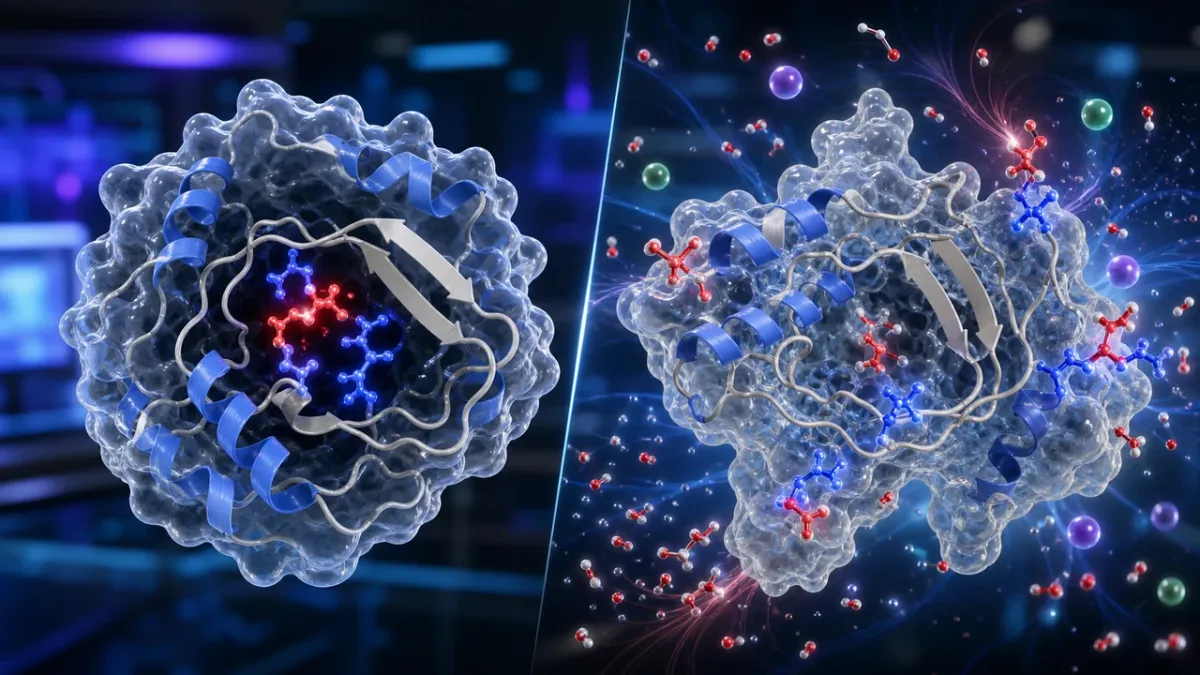
The accuracy of electrostatic interactions captured by AI protein structure prediction models.

A variant of the U1A protein containing four substitutions to ionizable residues was generated serendipitously due to a miscommunication. Biophysical measurements reveal this variant has twice the helical structure of wild-type U1A and is trimeric, unlike the monomeric wild type. In sharp contrast, structures predicted by deep-learning (AlphaFold2, RoseTTAFold2) and transformer-based tools (OmegaFold, ESMFold) are nearly identical to the wild-type (backbone RMSD < 1 Å). Surprisingly, the

Continue reading
Artificial Intelligence

Viral protease-initiated lytic cell death as a universal antiviral mRNA therapy.

While gasdermin (GSDM)-mediated pyroptosis is a potent immune effector, its antiviral potential remains largely untapped. Here, we introduce viral protease-initiated lytic cell death (VID), a universal mRNA therapeutic platform inspired by the modular architecture of GSDM and the clinical success of mRNA vaccines. By engineering gasdermin-D (GSDMD) to harbor viral protease-specific cleavage motifs, we generated VID activators (VIDAs) that selectively trigger lytic cell death in virus-infected ce

Continue reading
Artificial Intelligence

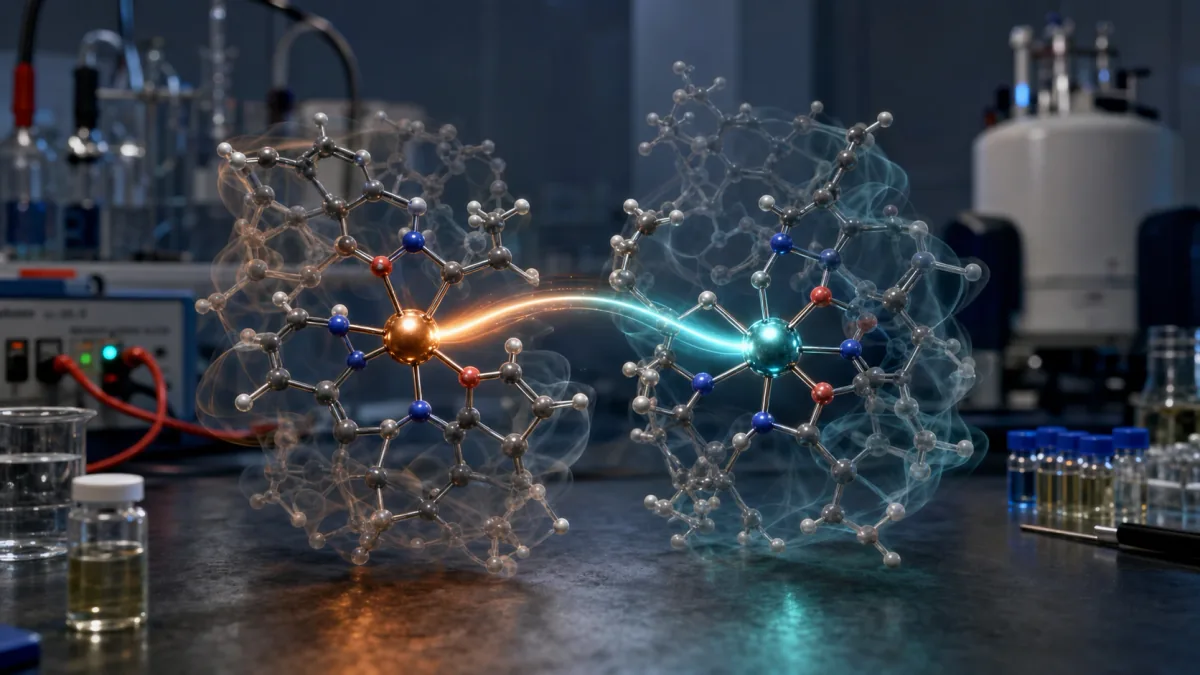
Assessing the Impacts of Conformational Fluxionality on Copper(II/I) Electron Transfer Self-Exchange.

Typical Cu(II/I) complexes exhibit hallmark structural changes during their electron transfer (ET) reactions that result from the (pseudo) Jahn-Teller distortions and changes in polarizability inherent to their d 9 / d 10 configurations. Given that such structural changes incur large reorganization energy penalties, the slow rates of ET characteristic of these compounds are unsuprising. However, we recently reported a set of Cu(II/I) complexes that undergo significant and well-defined structural

Continue reading
Artificial Intelligence

Do AI Agents Know When a Task Is Simple? Toward Complexity-Aware Reasoning and Execution

Preprint — not peer-reviewed. Large language model (LLM) agents increasingly automate multi-step engineering and informatics workflows, yet they rarely ask how much effort a task actually requires. They often follow a maximum-context-first strategy--re-reading files and dependencies they have already seen--turning a one-line edit into a small code-base audit. We argue the missing capability is task-aware execution-scope estimation: judging a task's difficulty, the information it truly needs, and the shortest reliable path be

Continue reading
Artificial Intelligence

TerraZero: Procedural Driving Simulation for Zero-Demonstration Self-Play at Scale

Preprint — not peer-reviewed. Training robust autonomous driving agents requires a simulator that is fast enough for reinforcement learning at scale, realistic enough to ground behavior in real-world map structure, and diverse enough to cover the safety-critical long tail that logged data rarely contains. We present TerraZero, a procedural driving simulator and self-play training stack. A configurable C engine runs simulation on the CPU and policy inference on the GPU over a zero-copy path, sustaining 1.3M agent-steps per se

Continue reading
Artificial Intelligence

PalmClaw: A Native On-Device Agent Framework for Mobile Phones

Preprint — not peer-reviewed. Large Language Model (LLM) agents have moved beyond generating responses to executing multi-step tasks by calling tools, observing the results, and iteratively deciding the next action. Most agent systems run on desktops or servers, which support tool use and task automation. Mobile devices are also important agent environments because they are widely accessible and contain users' data, sensors, and daily-use applications. Existing mobile agents mainly operate smartphones through graphical user

Continue reading
Artificial Intelligence

Audio-Native Speech Recognition with a Frozen Discrete-Diffusion Language Model

Preprint — not peer-reviewed. Automatic speech recognition is dominated by autoregressive decoders that emit one token at a time. We ask whether a discrete diffusion language model can transcribe speech instead, refining a whole transcript in parallel over a small number of denoising steps. We train an audio-native interface for DiffusionGemma, a 26B mixture-of-experts model that generates text by uniform, random-token discrete diffusion rather than the absorbing-mask scheme common to recent diffusion language models. A froz

Continue reading
Artificial Intelligence

Machine Learning-Assisted Development of High-Performance Ethanol Synthesis Catalysts via CO 2 Hydrogenation.

The discovery and development of high-performance catalysts, which is crucial across all catalysis areas, requires advanced technologies and innovative approaches. Recently, machine learning (ML) has shown promise in accelerating this process, but its capability and examples of discovery of truly novel catalysts have remained limited. In this study, we describe an ML approach that goes beyond the traditional element pool, incorporating elements that have not been previously studied, to develop h

Continue reading
Artificial Intelligence

Health system learning enables generalist neuroimaging models.

Frontier artificial intelligence (AI) models have advanced rapidly through training on internet-scale public data, yet such systems lack access to private clinical data. Neuroimaging is underrepresented in the public domain due to identifiable facial features within magnetic resonance imaging (MRI) and computed tomography (CT) scans, restricting model performance in clinical medicine. Here we show that frontier models underperform on neuroimaging tasks and that learning directly from uncurated d

Continue reading