Artificial Intelligence

Programmable design of functional proteins from natural language.
| Source: Nature

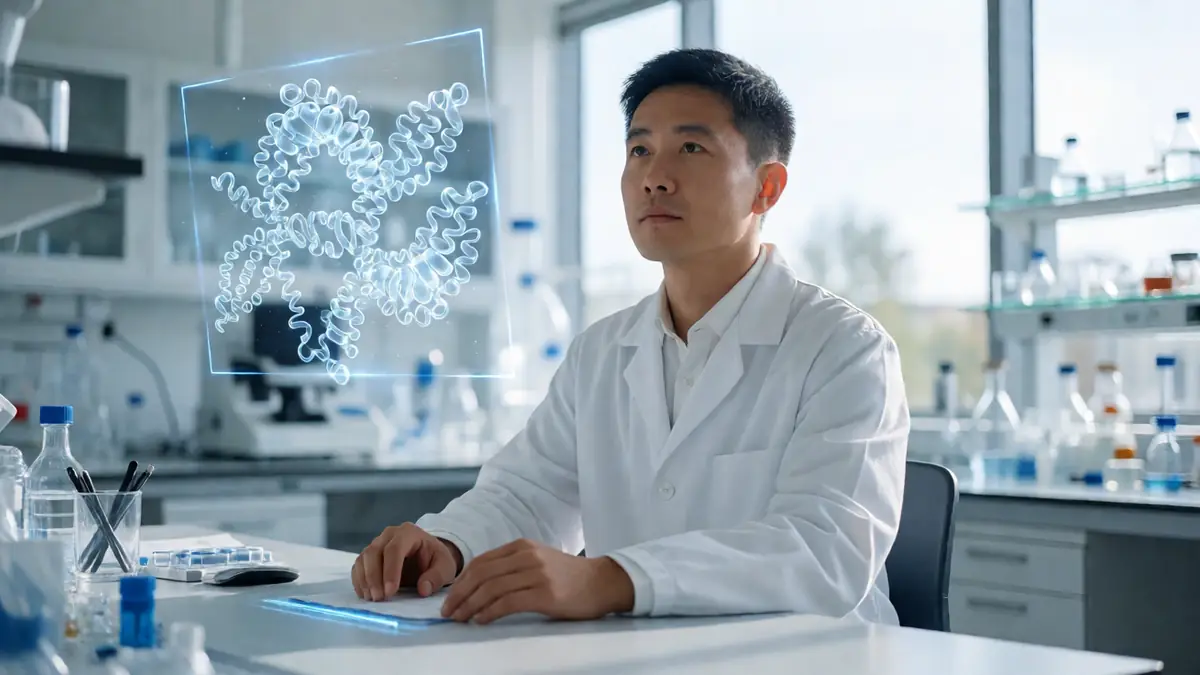
Programming biological function-designing bespoke proteins to perform specified molecular tasks-is a foundational goal of molecular engineering. However, current design models remain fundamentally limited 1-3 : they typically require either natural proteins as starting points for optimization or manual reformulation of functional goals as geometric and sequence-level constraints to guide candidate generation. Here we introduce Pinal, a 16-billion-parameter foundation model that designs candidate

Programming biological function-designing bespoke proteins to perform specified molecular tasks-is a foundational goal of molecular engineering. However, current design models remain fundamentally limited 1-3 : they typically require either natural proteins as starting points for optimization or manual reformulation of functional goals as geometric and sequence-level constraints to guide candidate generation. Here we introduce Pinal, a 16-billion-parameter foundation model that designs candidate proteins from natural-language descriptions of desired function. Trained on 1.7 billion synthetically annotated protein-text pairs, Pinal links functional intent to protein sequence and structure. In computational evaluations, generated candidates combined high predicted foldability with functional-description alignment and sequence diversity, providing a basis for prioritizing experimentally testable designs. We applied Pinal to four distinct design tasks-a fluorescent protein, a polyethylene terephthalate hydrolase, an alcohol dehydrogenase and a metabolic H-protein-and experimentally observed the intended function in each case, including catalytic activity for both designed enzymes. Without iterative experimental optimization, a Pinal-designed H-protein increased product titre by 1.7-fold relative to the corresponding native Escherichia coli H-protein in a multi-enzyme CO 2 fixation pathway. These findings support natural language as a high-level interface for candidate generation in protein design, enabling programmable exploration with reduced reliance on manually specified structural or sequence constraints.
Read the original source →

Related Stories

Artificial Intelligence

CX3CL1 (fractalkine)-CX3CR1 interface drives CD8⁺ T cell-induced neurodegeneration in human brain organoids.

Immune-neuron interactions play a critical role in neuroinflammatory and neurodegenerative diseases, such as Alzheimer's disease (AD), but how CD8⁺ T cells contribute to brain pathology remains poorly understood. Amyloid-β (Aβ), a hallmark of AD, is known to trigger neuronal stress and inflammation. Here, we established a human cortical organoid (hCO) model to investigate CD8⁺ T cell responses to Aβ-induced neurodegenerative stress. Aβ exposure increased neu

Continue reading
Artificial Intelligence

Causality in liquid water as a hallmark of emergent glassy dynamics.

In molecular liquids such as water, time-delayed influences between microscopic or mesoscopic variables are typically probed using time-correlation functions, which are symmetric under detailed balance and therefore blind to dynamical asymmetries. Here, we characterize water's dynamics using a causal inference metric that captures asymmetric couplings between collective variables. Analyzing equilibrium molecular dynamics simulations at ambient conditions and in the high-density liquid (HDL) regi

Continue reading
Artificial Intelligence

A bioavailable GPX4 inhibitor for ferroptosis induction in vivo and tumor suppression.

Ferroptosis is implicated in multiple human diseases, but the lack of bioavailable inducers has limited its physiological study and therapeutic translation. Here, we report KY0418, a selective covalent inhibitor of glutathione peroxidase 4 (GPX4) featuring an isourea warhead, with high plasma stability and broad tissue distribution after oral dosing in mice. KY0418 specifically targets GPX4 SeCys46 to induce ferroptosis hallmarks in human and mouse cancer cell lines, with greater selectivity tha

Continue reading
Artificial Intelligence

Integrating cooperative breeding with reciprocity and culture extends Hamilton's rule to humans.

We study how kinship and reciprocity shape giving and child care support in societies with limited access to markets. Extending Hamilton's rule to incorporate reciprocity, we test it using behavioral data from dictator games and surveys in remote matrilocal and patrilocal villages of northeast India (N = 406 parents of young children). We replicate with data from urban Manila neighborhoods (N = 301) and the Solomon Islands (N = 624). Consistent with predictions, transfers to recipients increase

Continue reading
Artificial Intelligence

Multi-omics atlas of chronic exercise.

Exercise reduces all-cause mortality, yet its molecular effects across organs, sexes, and circadian phases remain incompletely understood. We subjected mice to 8 weeks of voluntary wheel running and collected 22 tissues and plasma during active and inactive phases for bulk RNA sequencing, metabolomics, proteomics, and single-nucleus RNA and methylation sequencing. Exercise induced canonical fiber-type switching and widespread, tissue-specific remodeling, with the largest transcriptomic changes i

Continue reading