Plant fiber exploitation contributed to the emergence of ground-edged cutting tools in North China.
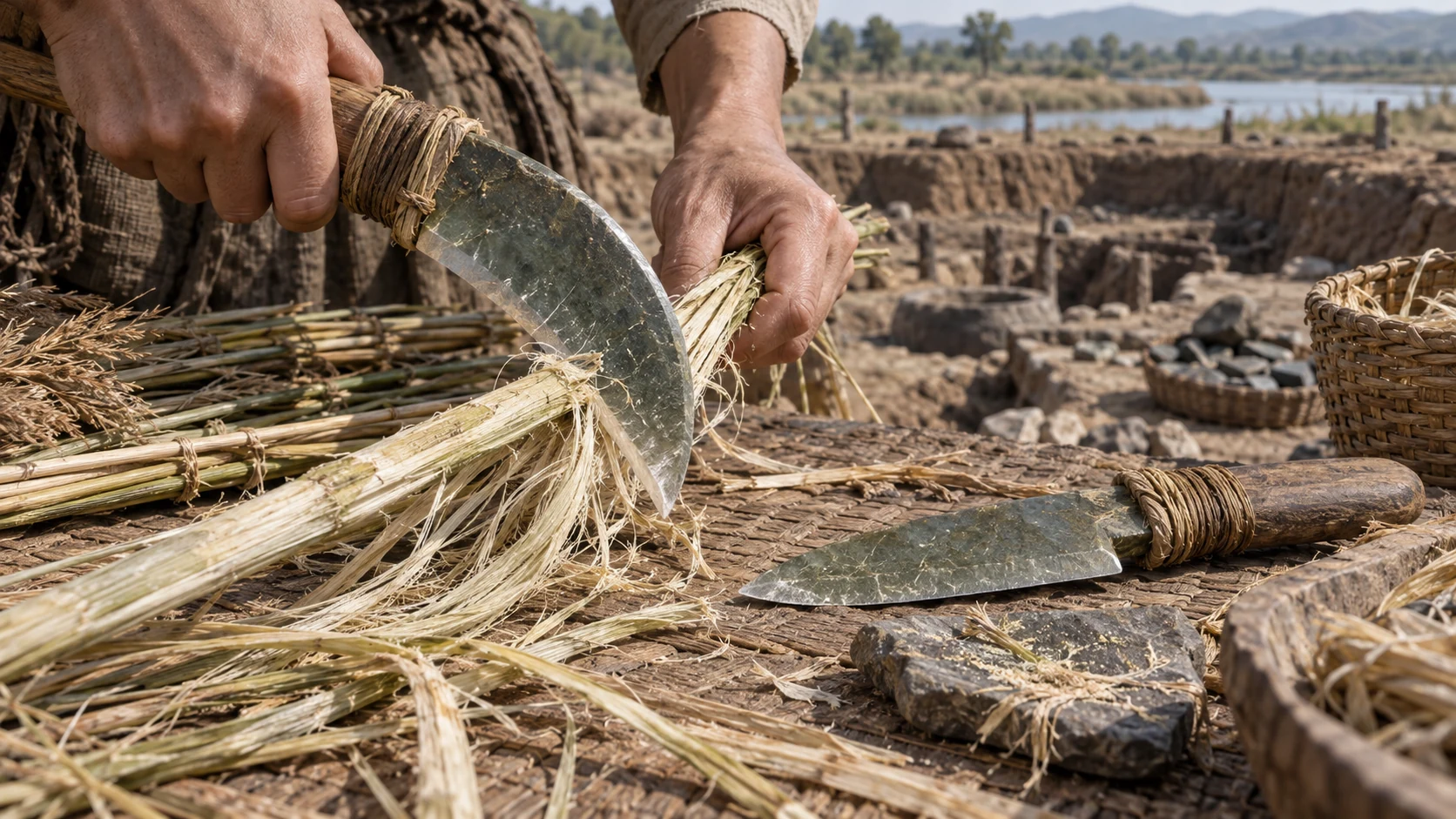
Ground-edged cutting tools are widely regarded as technological hallmarks of early agriculture in North China, commonly hypothesized to have been developed primarily for cereal harvesting. Yet the functional foundations of this innovation remain insufficiently tested. This study integrates use-wear and microfossil analyses of 140 stone tools from the Peiligang site, with experimental data, to reassess their roles within long-term trajectories of technological change from the Late Paleolithic to
Ground-edged cutting tools are widely regarded as technological hallmarks of early agriculture in North China, commonly hypothesized to have been developed primarily for cereal harvesting. Yet the functional foundations of this innovation remain insufficiently tested. This study integrates use-wear and microfossil analyses of 140 stone tools from the Peiligang site, with experimental data, to reassess their roles within long-term trajectories of technological change from the Late Paleolithic to the Early Neolithic. Upper Paleolithic flaked tools were multifunctional implements used for processing diverse plant and animal materials, and Early Neolithic flakes continued to serve similarly flexible roles. In contrast, Early Neolithic ground-edged tools show marked specialization in plant-related tasks. Microfiber and starch residues, combined with use-wear evidence, indicate that ground-edged sickles and knives were used not only for plant foods but also for harvesting and processing fibrous plants. Experiments show that ground-edged tools were only slightly more efficient than flakes for cutting narrow-stemmed grasses but substantially more effective for fiber-yielding plants with tougher stems and thick-stemmed weeds. These findings indicate that ground-edged cutting tools emerged through broader functional demands, including fiber production, and potentially vegetation clearance, rather than cereal harvesting alone. By identifying nonfood plant labor as an important driver of technological specialization, this study reframes the emergence of ground-edged tools as part of a broader technological and economic reorganization in early Holocene East Asia.