Artificial Intelligence

Transient chaos in the self-organization of dissipative optical solitons.
| Source: Proceedings of the National Academy of Sciences of the United States of America

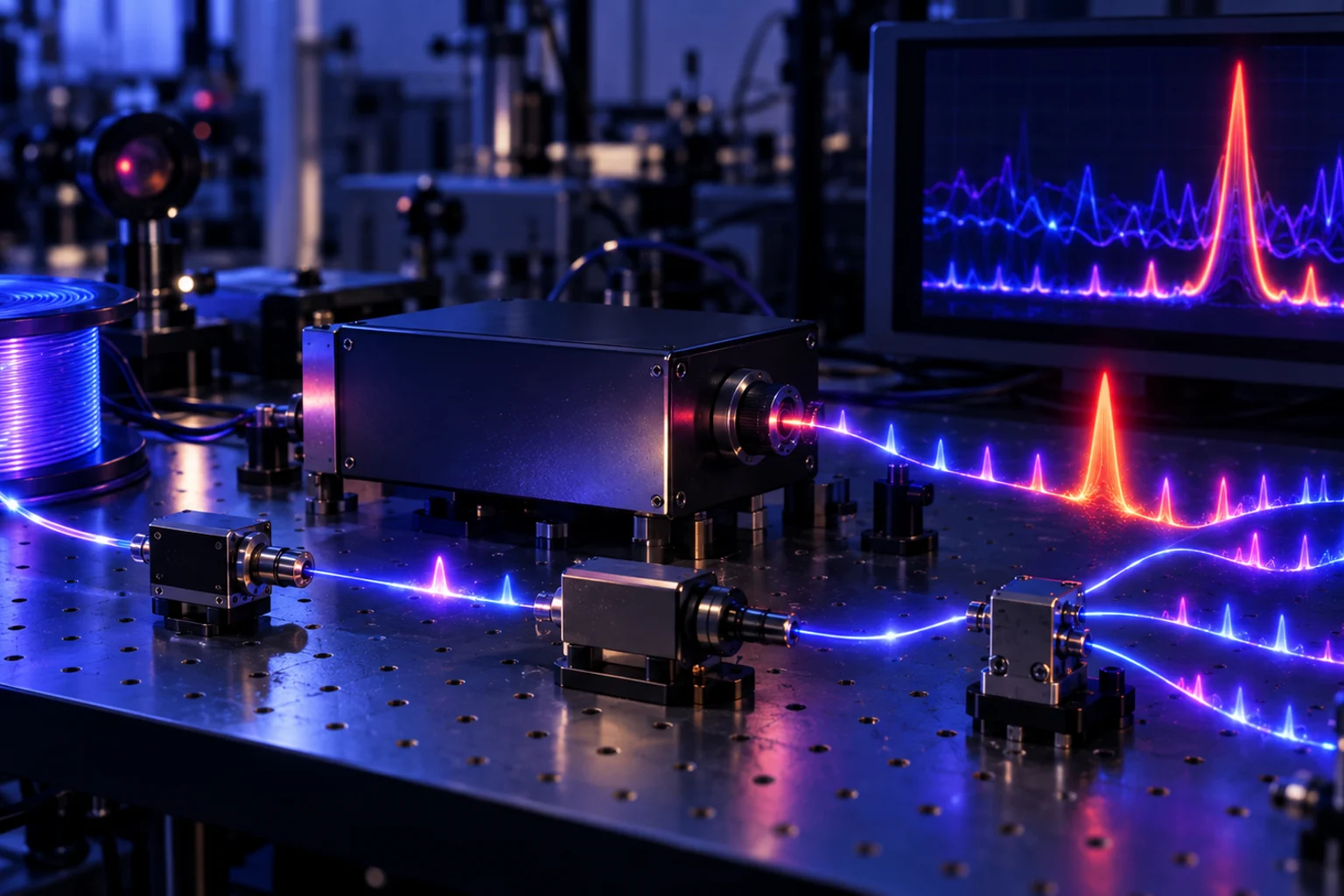
Transient chaos is a hallmark of complex dynamics in nonlinear systems. Governed by chaotic saddles, it manifests as short-lived yet rich chaotic behavior preceding an abrupt transition to a stable attractor. However, real-time capture and quantitative characterization of such inherently unpredictable and nonrepetitive dynamics remain challenging, obscuring their physical origins. Here, we experimentally demonstrate transient chaos during the self-organization of dissipative optical solitons in

Transient chaos is a hallmark of complex dynamics in nonlinear systems. Governed by chaotic saddles, it manifests as short-lived yet rich chaotic behavior preceding an abrupt transition to a stable attractor. However, real-time capture and quantitative characterization of such inherently unpredictable and nonrepetitive dynamics remain challenging, obscuring their physical origins. Here, we experimentally demonstrate transient chaos during the self-organization of dissipative optical solitons in a mode-locked fiber laser. By reconstructing phase-space trajectories from single-shot measurements, we quantify key dynamical invariants that confirm the deterministic nature of the underlying nonattracting chaotic set. Experimental and numerical results reveal that this complexity arises from coupled nonlinear interactions within unstable multipulse complexes. Furthermore, we identify the emergence of optical rogue waves with extreme amplitudes during the chaotic transient regime. Our results bridge the conceptual gap between optical chaos and mode-locking coherence, providing both an analytical framework and a versatile experimental platform for probing and manipulating transient chaotic dynamics in high-dimensional dissipative systems.


Read the original source →

Related Stories

Artificial Intelligence

Plant fiber exploitation contributed to the emergence of ground-edged cutting tools in North China.

Ground-edged cutting tools are widely regarded as technological hallmarks of early agriculture in North China, commonly hypothesized to have been developed primarily for cereal harvesting. Yet the functional foundations of this innovation remain insufficiently tested. This study integrates use-wear and microfossil analyses of 140 stone tools from the Peiligang site, with experimental data, to reassess their roles within long-term trajectories of technological change from the Late Paleolithic to

Continue reading
Artificial Intelligence

Neural network-augmented Pfaffian wave-functions for scalable simulations of interacting fermions.

Developing accurate numerical methods for strongly interacting fermions is crucial for improving our understanding of various quantum many-body phenomena, especially unconventional superconductivity. Recently, neural quantum states have emerged as a promising approach for studying correlated fermions, highlighted by the hidden fermion and backflow methods, which use neural networks to model corrections to fermionic quasiparticle orbitals. In this work, we expand these ideas to the space of Pfaff

Continue reading
Artificial Intelligence

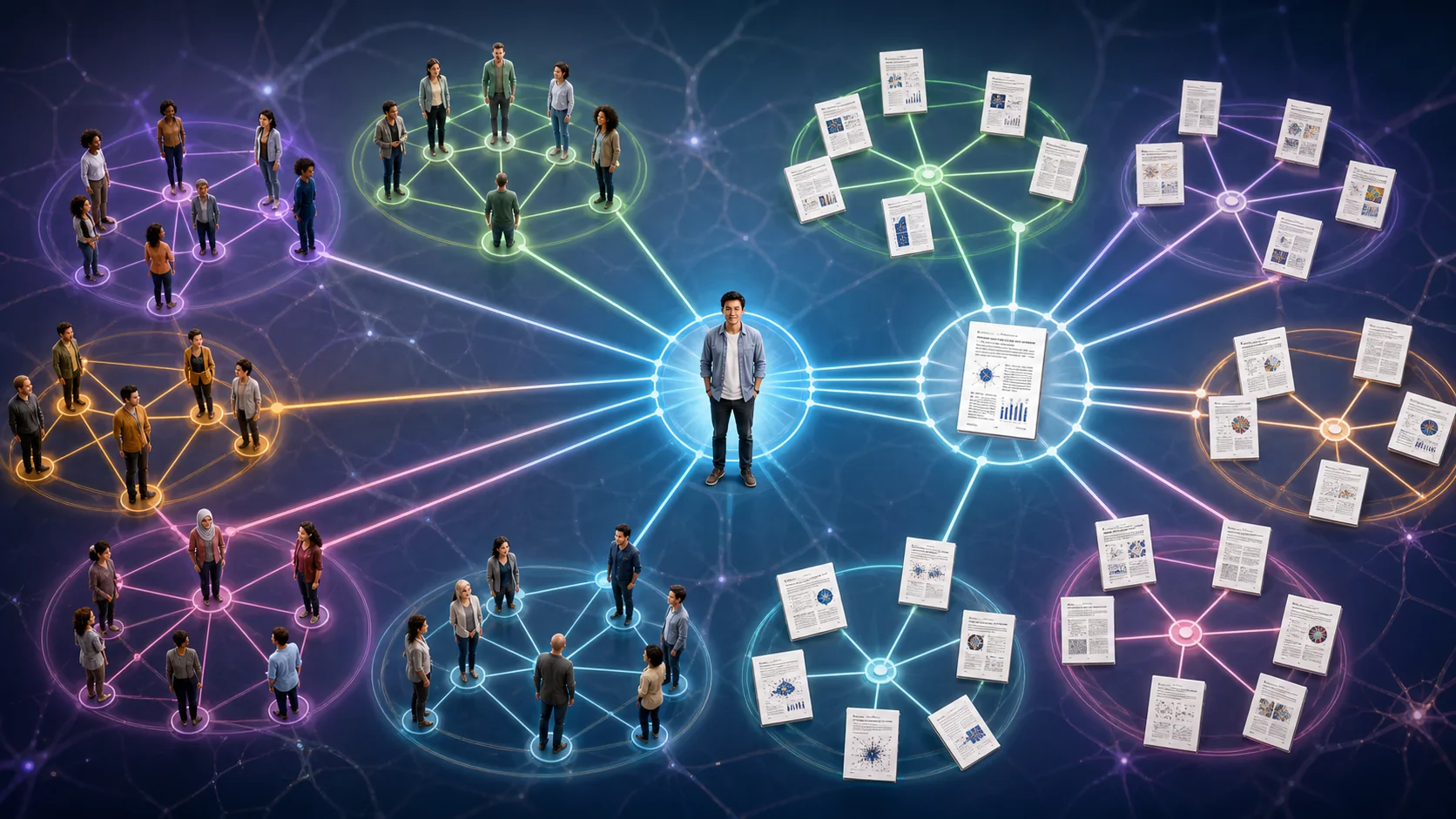
Why friends in common reveal network stars.

The Friendship Paradox states that, on average, your friends have more friends than you do. We extend this to common friends-those who appear in multiple people's friend lists. We show that the more people who share a common friend, the more connected that person tends to be, and we derive an expression quantifying this progression. In a regional Facebook network, a common friend to three randomly sampled individuals has on average more friends than 99.9% of the network. In a citation network, a

Continue reading
Artificial Intelligence

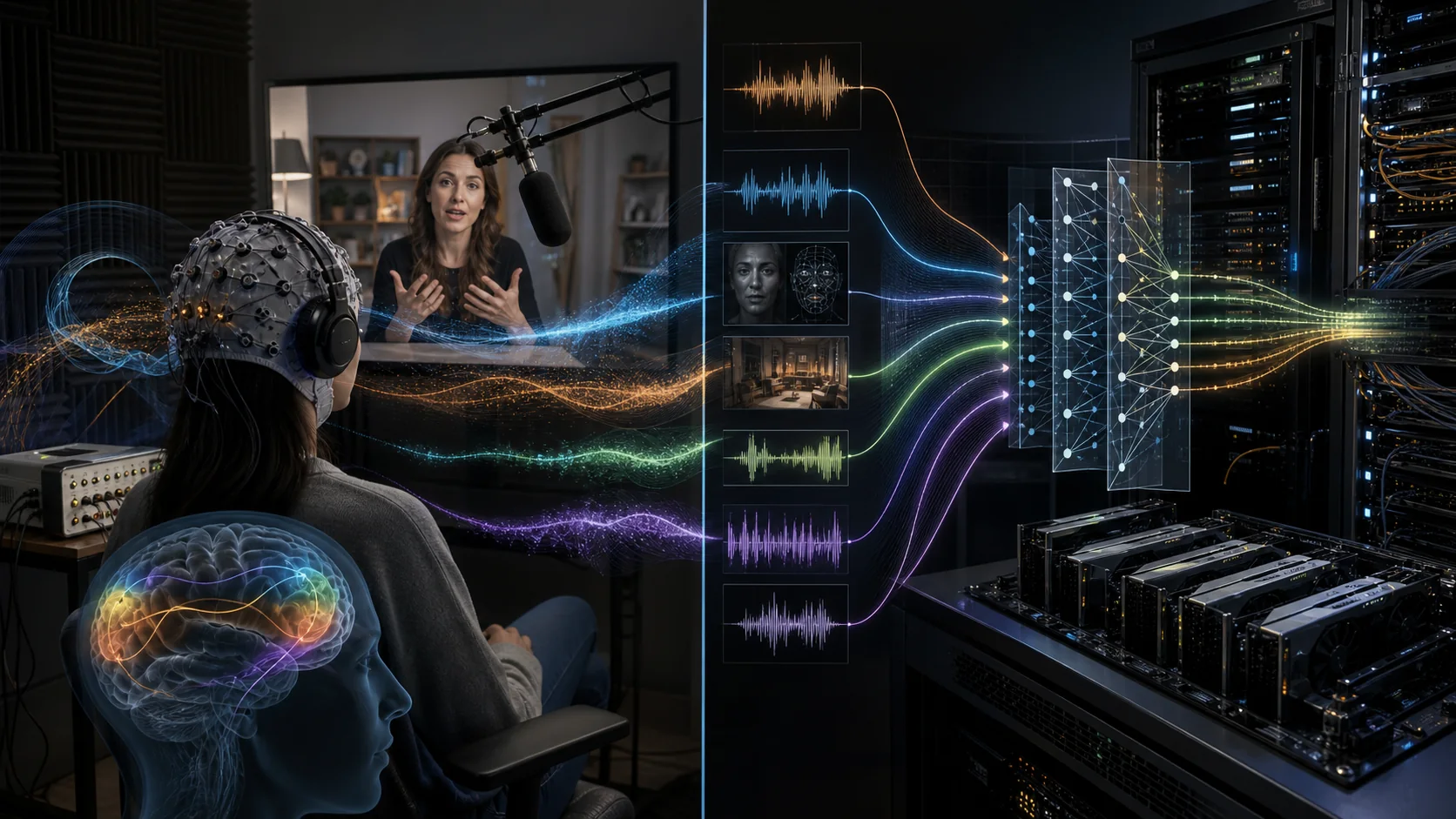
Sensory context improves language prediction in humans and LLMs.

Language is a fundamental human capacity. Large language models (LLMs) have presented the first viable model of language outside of humans, yet how these models learn and use language differs significantly from humans. Here, we compare LLMs and humans predicting language with varying levels of sensory information-from disembodied written text to audiovisual videos of speakers-to demonstrate that, in both humans and LLMs, sensory context is critical for optimal performance. We asked human partici

Continue reading
Artificial Intelligence

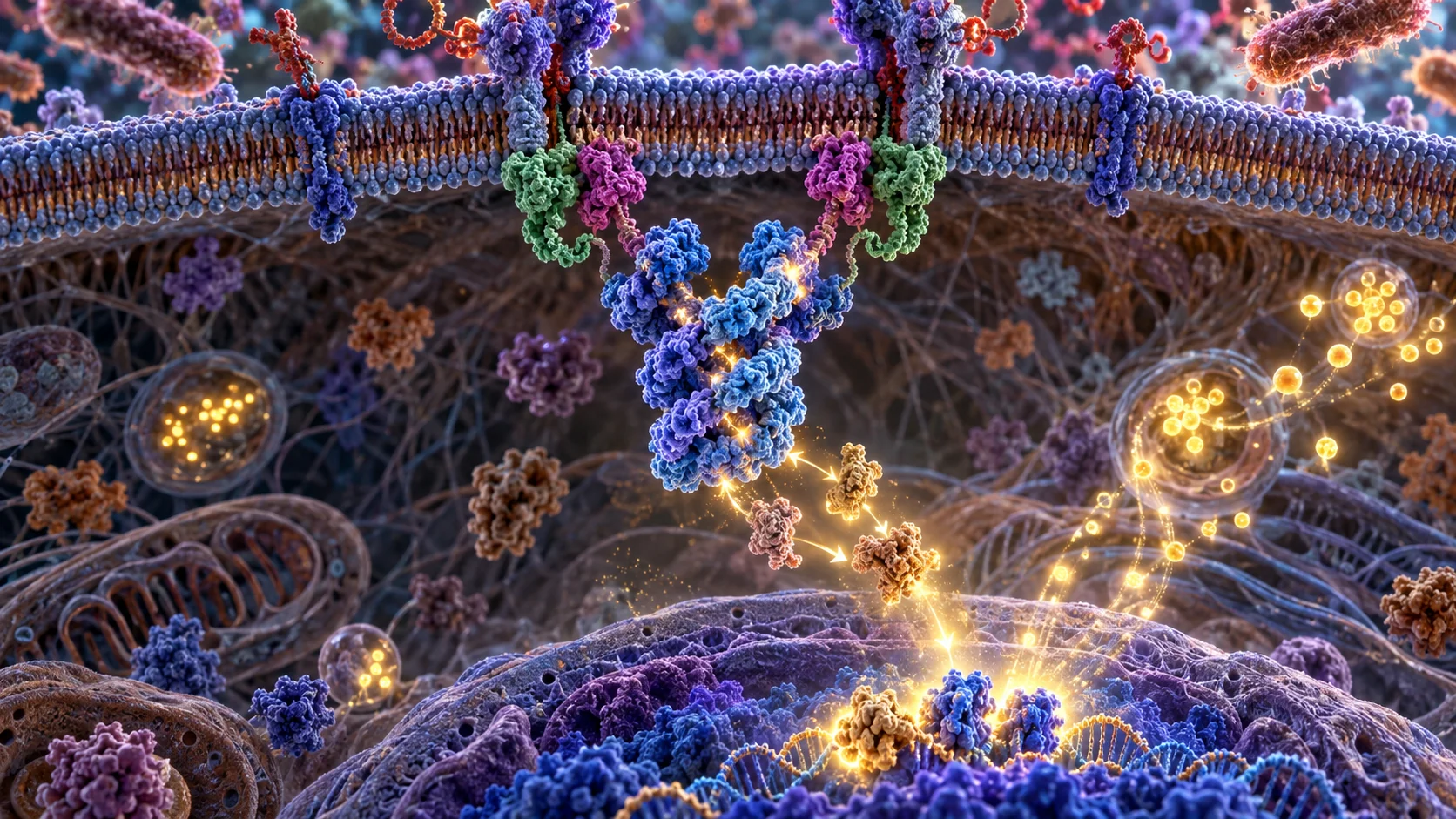
TRAM promotes Toll-like-receptor-free myddosome signal transduction.

In the Toll-like receptor (TLR) signal transduction pathways, activated receptors are present for mere minutes within the initial, membrane-proximal signalling complexes called proto-myddosomes 1 . Proto-myddosomes are rapidly released from TLRs to self-assemble (that is, mature) into enzyme-rich, cytosolic supramolecular organizing centres called myddosomes 2-4 . Myddosomes induce hours-long inflammatory gene expression 5-10 . The mechanism controlling proto-myddosome release and its effect on

Continue reading