Artificial Intelligence

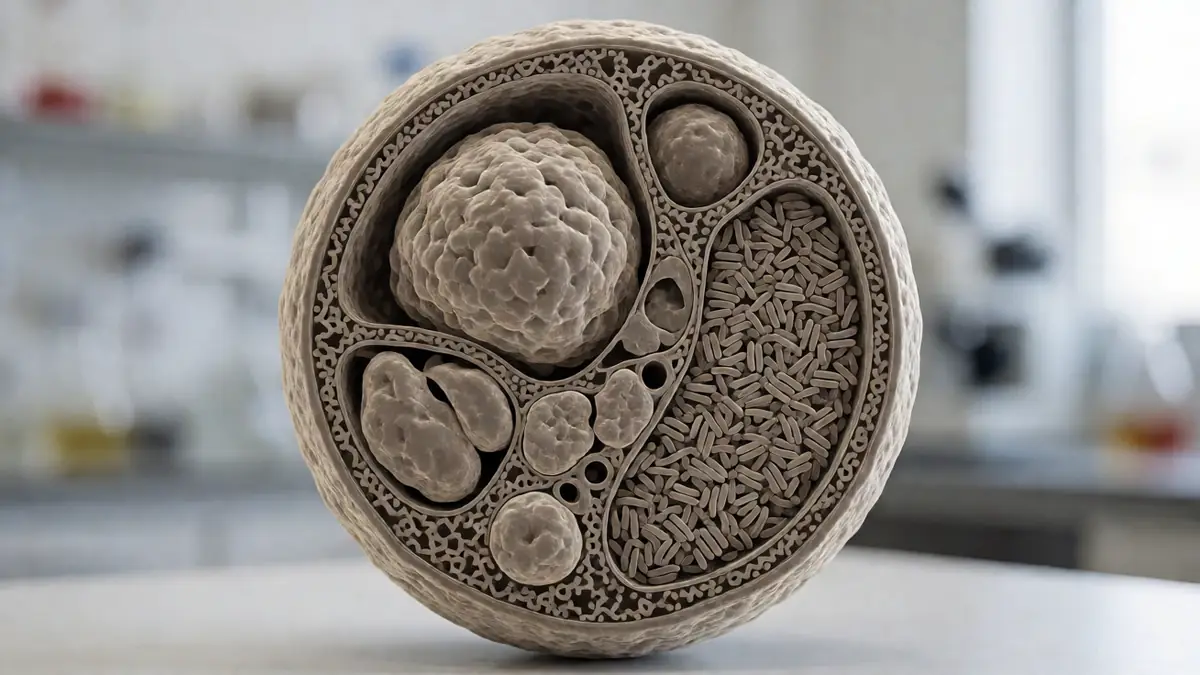
Protein resource allocation across subcellular compartments revealed by large-scale absolute quantitative proteomics in yeast.
| Source: Proceedings of the National Academy of Sciences of the United States of America

Subcellular compartmentalization within complex membrane-bound organelles is a hallmark of eukaryal life, enabling metabolic specialization through spatial segregation. Here, we compiled a dataset encompassing 300 absolute quantitative proteomes, the largest to date, across two yeast species under diverse experimental conditions. Leveraging big data analysis, formula fitting, and machine learning, quantitative correlations among protein abundance, resource allocation, and cellular phenotypes wer

Subcellular compartmentalization within complex membrane-bound organelles is a hallmark of eukaryal life, enabling metabolic specialization through spatial segregation. Here, we compiled a dataset encompassing 300 absolute quantitative proteomes, the largest to date, across two yeast species under diverse experimental conditions. Leveraging big data analysis, formula fitting, and machine learning, quantitative correlations among protein abundance, resource allocation, and cellular phenotypes were elucidated at a system level. We found that subcellular resource distribution is highly uneven and covaries with specific growth rate. Specifically, at high specific growth rates, the protein mass fraction (PMF) from certain compartments, (e.g., nucleus) is consistently reduced, coinciding with the increasing protein resource demand from ribosomes. Meanwhile, nutrient limitation may induce resource recycling by upregulating protein resources within specific compartments (e.g., vacuole) to sustain stress adaptation. Importantly, our integrative analysis indicates that PMF from a few subcellular compartments (e.g., nucleus and ribosomes) can accurately predict yeast physiological parameters (e.g., specific growth rate, oxygen uptake rate), and a limited protein set (≥ 23) could be used to capture the variation in resource allocation across seven major subcellular compartments. Furthermore, our comparative analysis between Crabtree-positive and Crabtree-negative species across conditions illustrates that subcellular resource allocation could be shaped by multiple factors and the two species differ markedly in their robustness to environmental perturbations. In summary, the high-quality quantitative proteomic dataset for yeast species offers an unprecedented opportunity for understanding the general principles underlying subcellular resource allocation, laying foundations for precision engineering of cell factories in synthetic biology.

Read the original source →

Related Stories

Artificial Intelligence

CX3CL1 (fractalkine)-CX3CR1 interface drives CD8⁺ T cell-induced neurodegeneration in human brain organoids.

Immune-neuron interactions play a critical role in neuroinflammatory and neurodegenerative diseases, such as Alzheimer's disease (AD), but how CD8⁺ T cells contribute to brain pathology remains poorly understood. Amyloid-β (Aβ), a hallmark of AD, is known to trigger neuronal stress and inflammation. Here, we established a human cortical organoid (hCO) model to investigate CD8⁺ T cell responses to Aβ-induced neurodegenerative stress. Aβ exposure increased neu

Continue reading
Artificial Intelligence

Causality in liquid water as a hallmark of emergent glassy dynamics.

In molecular liquids such as water, time-delayed influences between microscopic or mesoscopic variables are typically probed using time-correlation functions, which are symmetric under detailed balance and therefore blind to dynamical asymmetries. Here, we characterize water's dynamics using a causal inference metric that captures asymmetric couplings between collective variables. Analyzing equilibrium molecular dynamics simulations at ambient conditions and in the high-density liquid (HDL) regi

Continue reading
Artificial Intelligence

Cell-state-specific metabolic networks govern ferroptosis versus apoptosis in small cell lung cancer.

Cellular heterogeneity and plasticity are hallmarks of cancer that contribute to tumor growth and therapy resistance. Here, we investigated metabolic heterogeneity in small cell lung cancer (SCLC), an aggressive cancer type with considerable plasticity between neuroendocrine (NE) and non-NE cellular states. Through integrated transcriptomic and metabolomic analyses, we identified a universal dependency on exogenous cysteine/cystine (Cys) across all NE/non-NE SCLC cell states. Notably, NE and non

Continue reading
Artificial Intelligence

Trastuzumab Rezetecan in ERBB2-Low Advanced Breast Cancer: The HORIZON-Breast06 Randomized Clinical Trial.

Trastuzumab rezetecan (SHR-A1811) has demonstrated encouraging antitumor activity in a global phase 1 trial involving heavily pretreated patients with erythroblastic oncogene B (ERBB2)-low metastatic breast cancer. To compare trastuzumab rezetecan vs physician's choice of chemotherapy in patients with ERBB2-low metastatic breast cancer. This open-label, randomized, multicenter phase 3 trial was conducted at 73 hospitals across China. Eligible patients were females aged 18 to 75 years with centra

Continue reading
Artificial Intelligence

Programmable design of functional proteins from natural language.

Programming biological function-designing bespoke proteins to perform specified molecular tasks-is a foundational goal of molecular engineering. However, current design models remain fundamentally limited 1-3 : they typically require either natural proteins as starting points for optimization or manual reformulation of functional goals as geometric and sequence-level constraints to guide candidate generation. Here we introduce Pinal, a 16-billion-parameter foundation model that designs candidate

Continue reading