Artificial Intelligence

Reimagining research papers as interactive and reliable AI agents.

| Source: Nature

Here we introduce Paper2Agent, an automated framework that converts research papers into artificial intelligence (AI) agents. Paper2Agent transforms research output from passive artefacts into active systems that accelerate use and discovery. Conventional research papers require readers to understand and adapt the paper's code, data and methods to their work, creating barriers to dissemination and reuse. Paper2Agent addresses this challenge by converting a paper into an AI agent that functions a

Here we introduce Paper2Agent, an automated framework that converts research papers into artificial intelligence (AI) agents. Paper2Agent transforms research output from passive artefacts into active systems that accelerate use and discovery. Conventional research papers require readers to understand and adapt the paper's code, data and methods to their work, creating barriers to dissemination and reuse. Paper2Agent addresses this challenge by converting a paper into an AI agent that functions as a virtual corresponding author, exposing its manuscript, supplementary materials, datasets, code and workflows as active, agent-native knowledge rather than static text. It analyses the paper and codebase using multiple agents to construct a model context protocol (MCP) server, then generates and runs tests to refine and increase robustness of the MCP. These paper MCPs can be connected to a chat agent (such as Claude Code) to carry out complex scientific queries through natural language while invoking tools and workflows from the paper. We demonstrate Paper2Agent's effectiveness through case studies. Paper2Agent created an agent that leveraged AlphaGenome 1 to interpret genomic variants and agents based on Scanpy 2 and TISSUE (transcript imputation with spatial single-cell uncertainty estimation) 3 to conduct single-cell and spatial transcriptomics analyses. We validate that these agents reproduce the results of the original papers and carry out novel user queries. Paper2Agent created multiple agents that collaborate to prioritize a causal gene for psoriasis. By turning static papers into interactive AI agents, Paper2Agent introduces a paradigm for knowledge dissemination and a collaborative ecosystem of AI co-scientists.


Read the original source →

Related Stories

Artificial Intelligence

Plant fiber exploitation contributed to the emergence of ground-edged cutting tools in North China.

Ground-edged cutting tools are widely regarded as technological hallmarks of early agriculture in North China, commonly hypothesized to have been developed primarily for cereal harvesting. Yet the functional foundations of this innovation remain insufficiently tested. This study integrates use-wear and microfossil analyses of 140 stone tools from the Peiligang site, with experimental data, to reassess their roles within long-term trajectories of technological change from the Late Paleolithic to

Continue reading
Artificial Intelligence

Neural network-augmented Pfaffian wave-functions for scalable simulations of interacting fermions.

Developing accurate numerical methods for strongly interacting fermions is crucial for improving our understanding of various quantum many-body phenomena, especially unconventional superconductivity. Recently, neural quantum states have emerged as a promising approach for studying correlated fermions, highlighted by the hidden fermion and backflow methods, which use neural networks to model corrections to fermionic quasiparticle orbitals. In this work, we expand these ideas to the space of Pfaff

Continue reading
Artificial Intelligence

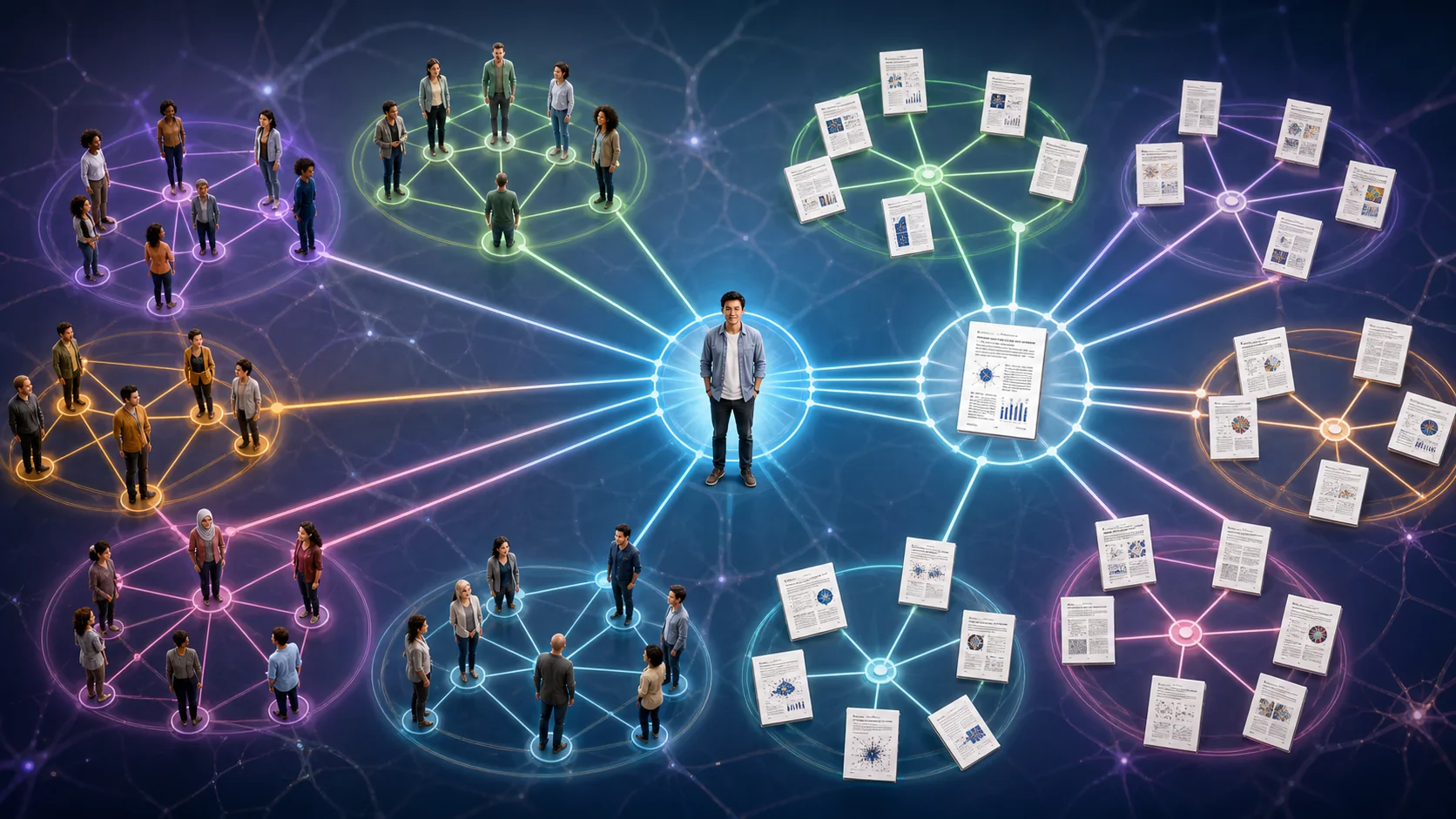
Why friends in common reveal network stars.

The Friendship Paradox states that, on average, your friends have more friends than you do. We extend this to common friends-those who appear in multiple people's friend lists. We show that the more people who share a common friend, the more connected that person tends to be, and we derive an expression quantifying this progression. In a regional Facebook network, a common friend to three randomly sampled individuals has on average more friends than 99.9% of the network. In a citation network, a

Continue reading
Artificial Intelligence

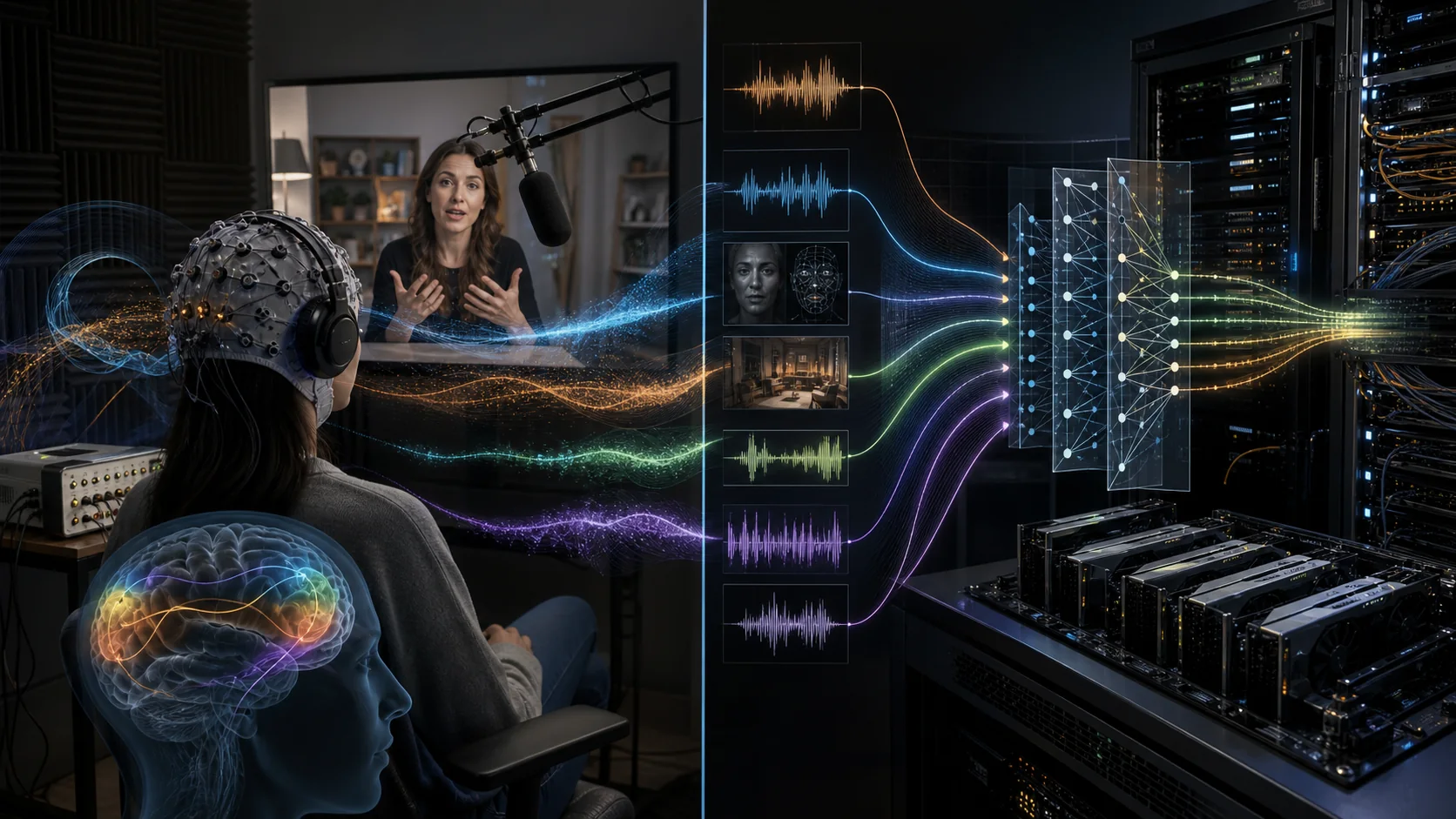
Sensory context improves language prediction in humans and LLMs.

Language is a fundamental human capacity. Large language models (LLMs) have presented the first viable model of language outside of humans, yet how these models learn and use language differs significantly from humans. Here, we compare LLMs and humans predicting language with varying levels of sensory information-from disembodied written text to audiovisual videos of speakers-to demonstrate that, in both humans and LLMs, sensory context is critical for optimal performance. We asked human partici

Continue reading
Artificial Intelligence

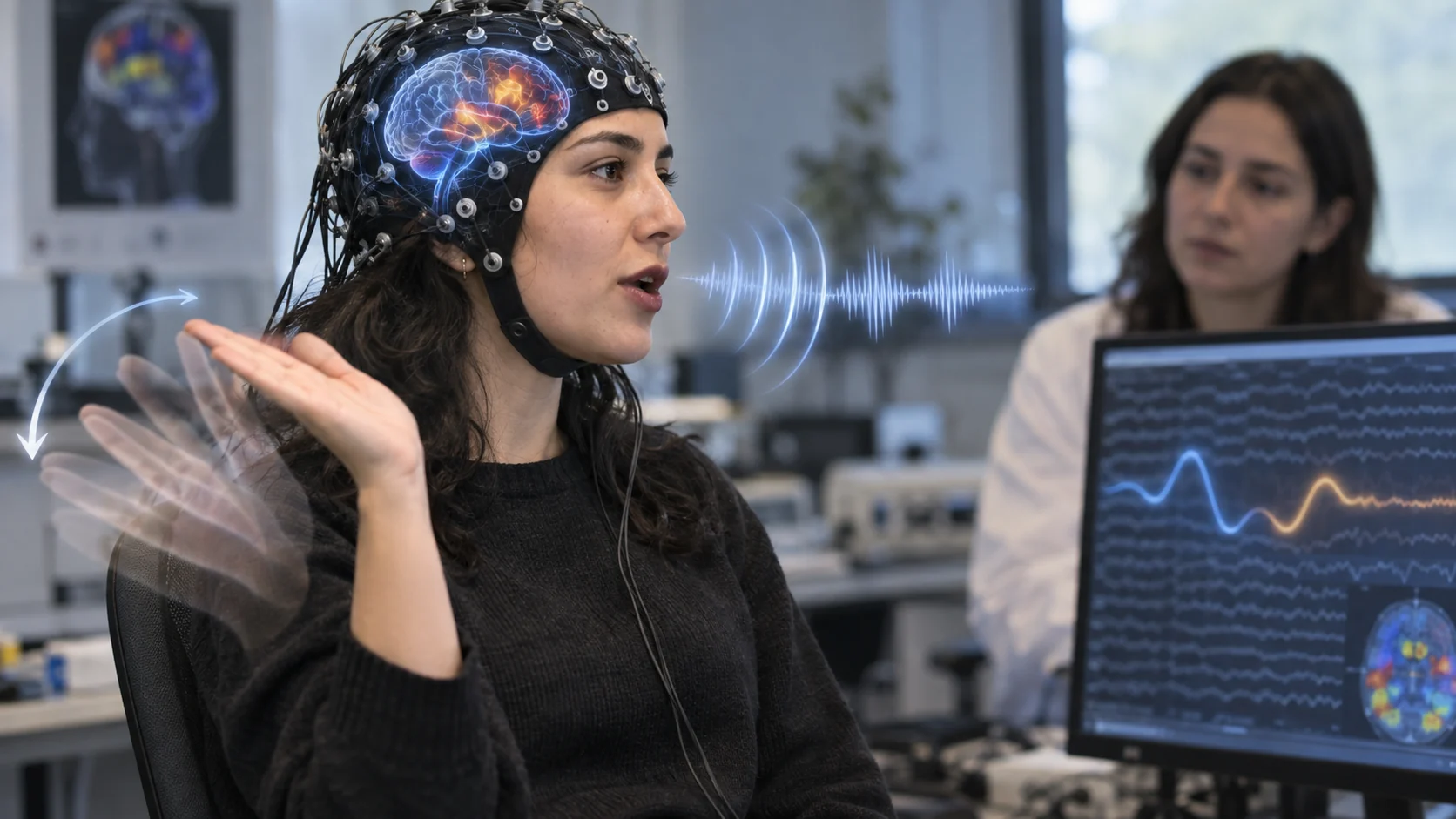
Multimodal integration supports neural processing of grammatical negation.

Negation is a fundamental aspect of human cognition and grammar, expressed across different modalities. Yet, little is known about multimodal processing of negation, especially grammatical negation (e.g., "I did not sleep"), and the contribution of gestures and prosodic markers to its neural processing remains unexplored. This study investigates the neurocognition of multimodal negation in Turkish, a verb-final language where standard verbal negation is expressed morphologically with a postverba

Continue reading