Health & Medicine

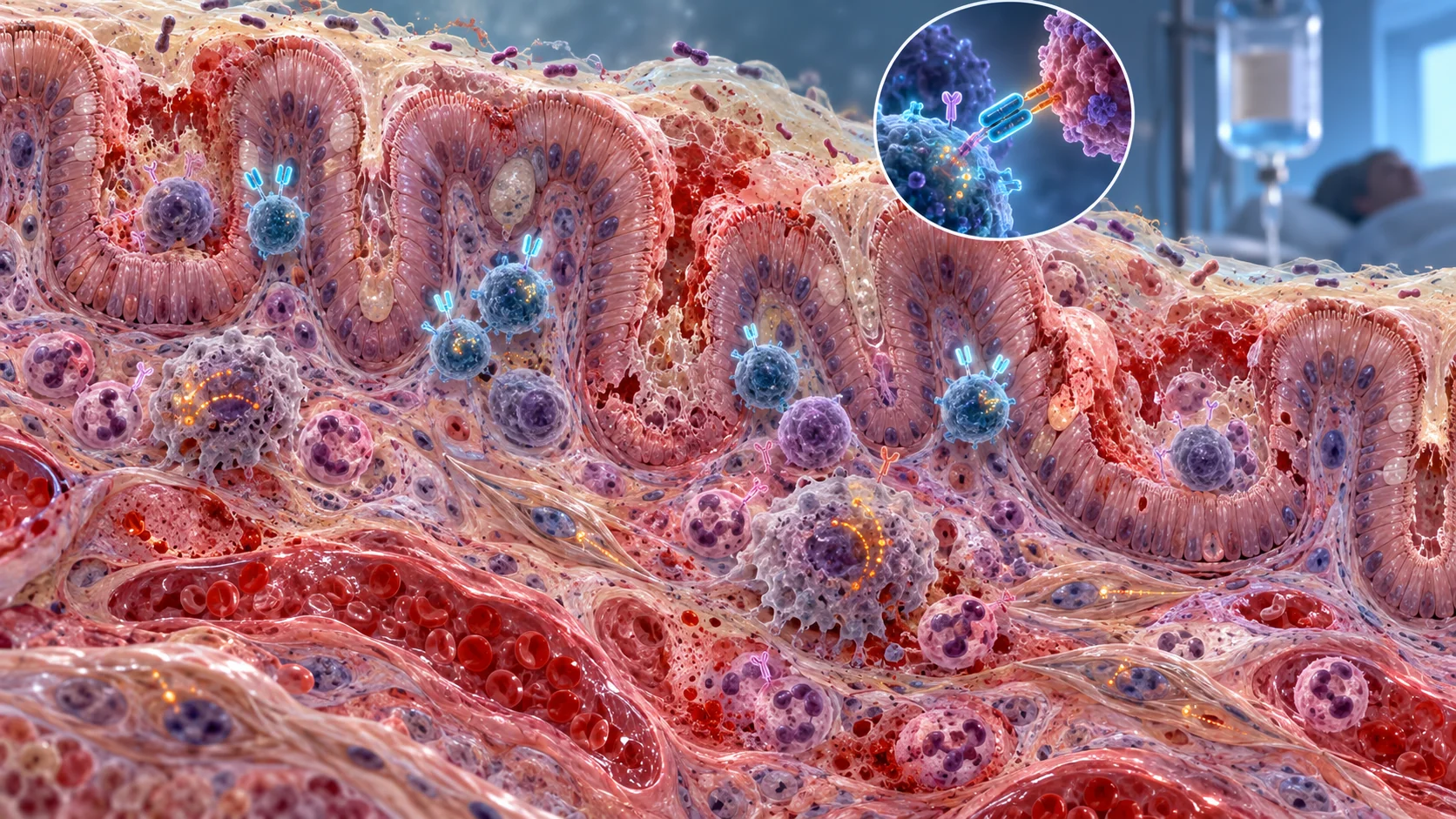
Persistence of mucosal CAR-T cells and inflammatory remodeling in enterocolitis associated with BCMA CAR-T cell therapy.
| Source: Nature medicine

B cell-targeted therapies are expanding across oncologic and autoimmune indications, yet their consequences for mucosal immunity remain incompletely examined. Here we define the pathophysiology of ciltacabtagene autoleucel chimeric antigen receptor (CAR)-T cell-induced enterocolitis (EC) (CAR-T EC )-a severe complication of B cell maturation antigen-targeted CAR-T cell therapy in multiple myeloma. Using single-cell transcriptomics, flow cytometry and tissue imaging of intestinal bi

B cell-targeted therapies are expanding across oncologic and autoimmune indications, yet their consequences for mucosal immunity remain incompletely examined. Here we define the pathophysiology of ciltacabtagene autoleucel chimeric antigen receptor (CAR)-T cell-induced enterocolitis (EC) (CAR-T EC )-a severe complication of B cell maturation antigen-targeted CAR-T cell therapy in multiple myeloma. Using single-cell transcriptomics, flow cytometry and tissue imaging of intestinal biopsies from patients with CAR-T EC (n = 10), CAR-T cell-treated controls without EC (n = 7) and healthy volunteers (n = 26), we identify profound depletion of mucosal B cells and plasma cells accompanied by expansion of highly cytotoxic CAR-T cells and inflammatory myeloid, stromal and glial cell remodeling to be associated with CAR-T EC . Cell-cell communication analyses suggest a compensated mucosal state in CAR-T cell-treated controls, telocyte-driven stromal niche dysfunction as noted in CAR-T EC . Interferon- and Janus kinase (JAK) and signal transducer and activator of transcription-associated reprogramming was noted across stromal, endothelial and epithelial compartments, supporting JAK inhibition as a rational, mechanism-based therapeutic strategy. Upadacitinib-an oral selective JAK 1 inhibitor-resulted in clinical, endoscopic and histologic improvement in two people with CAR-T EC . Our findings define CAR-T EC as a multicompartment syndrome of severe mucosal dysregulation with implications for the emerging field of B cell-targeted therapies.

Read the original source →

Related Stories

Health & Medicine

The honey bee stinger: An unusual pump with collapsible double pistons.

Most stinging animals deliver venom by contracting muscles around a venom reservoir, but honey bees employ a fundamentally different strategy. The stingers of worker bees have the unique ability to autotomize, separating from the body, to continue to sting independently. Despite more than a century of anatomical descriptions, the mechanics of venom pumping have remained unresolved due to the challenges of observing them in action. We recorded high-speed videos of active, autotomized stingers, co

Continue reading
Health & Medicine

Chronic cigarette smoke exposure induces distinct stem cell states driving genetic driver-specific non-small cell lung cancer subtypes.

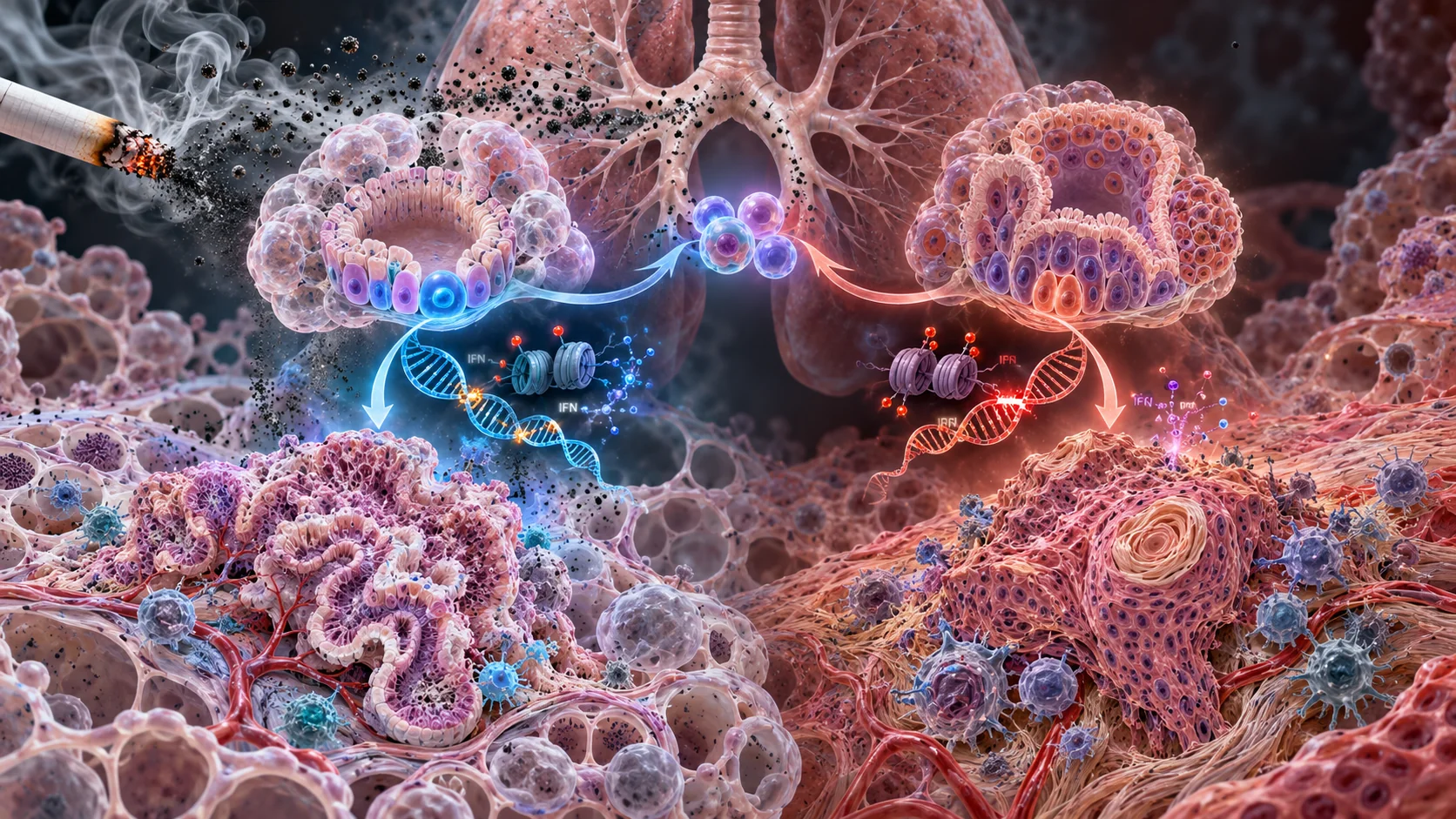
Cigarette smoke-induced chronic inflammation (CI) potentiates development of non-small cell lung cancer (NSCLC) by mediating genetic and epigenetic events. Using normal lung organoids (LOs), we define how chronic cigarette smoke condensate (CSC) exposure drives two separate stem cell populations to evolve premalignant states harboring progressive epigenetic and linked transcriptomic abnormalities in the absence of major driver mutations. These dynamics facilitate evolution of an immune evasive s

Continue reading
Health & Medicine

Cell identity competes with surface tension to determine stromal organization in tumor spheroids beyond the CAF shell paradigm.

Cancer-associated fibroblasts (CAFs) are often found forming a peripheral stromal barrier around tumors. Here, this paradigm is challenged using microfabricated 3D cancer-CAF spheroid models combined with quantitative magnetic force tensiometry. A surface tension atlas is established for eight cancer cell lines, three CAF populations, and heterotypic tumor-CAF assemblies, spanning nearly two orders of magnitude. Surface tension is first shown to govern spheroid morphology and modulate drug respo

Continue reading
Health & Medicine

Controlled functionalization of cellulose nanocrystals directs polymer-specific protein coronas and immune cell interactions.

Polymer coatings are widely used to suppress nonspecific protein adsorption and modulate nanoparticle-cell interactions. However, the biological outcomes of polymer-functionalized nanoparticles remain difficult to predict in complex biological environments because protein corona formation rapidly alters nanoparticle identity. This challenge is particularly pronounced when hydrophobic moieties are incorporated for imaging or therapeutic applications, as they can promote nonspecific interactions a

Continue reading
Health & Medicine

Dynamic partitioning shapes the in vivo organization of the Escherichia coli RNA degradosome.

The bacterial RNA degradosome is a central mediator of RNA turnover, yet how its components are organized and regulated in living cells remains unclear. Using live-cell single-molecule imaging, we quantified the spatial distribution and dynamics of the four major Escherichia coli degradosome components: RNase E, RhlB, PNPase, and enolase. These proteins occupied distinct membrane-associated and cytoplasmic pools whose relative abundance varied among proteins and changed with physiological state.

Continue reading