Health & Medicine

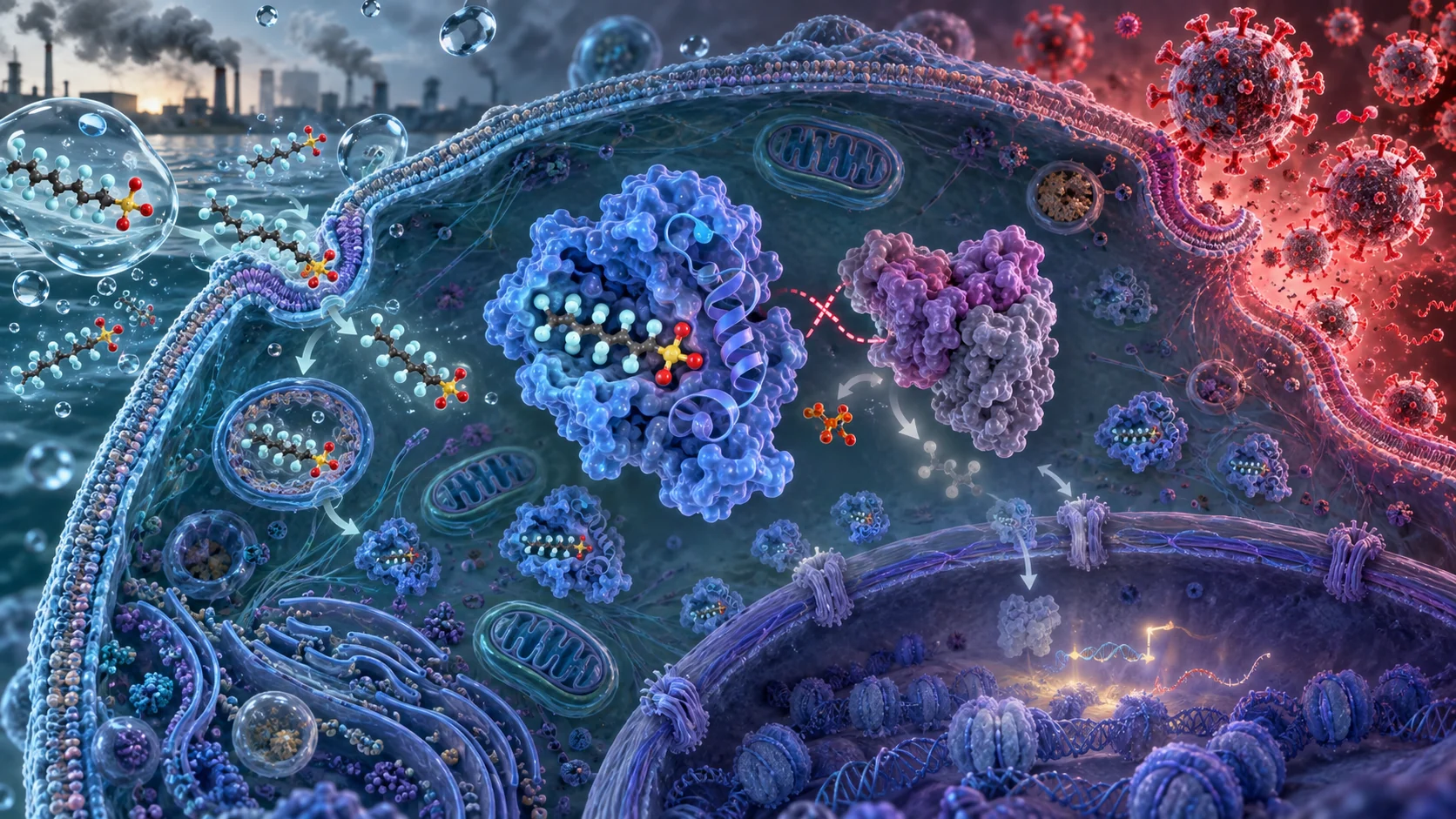
Perfluorooctane sulfonate directly interacts with IRF3 to attenuate antiviral innate immunity.
| Source: Proceedings of the National Academy of Sciences of the United States of America

Perfluorooctane sulfonate (PFOS), a prominent per- and polyfluoroalkyl substance (PFAS), has raised significant public health concerns due to its widespread use, environmental persistence, and bioaccumulation potential. Both epidemiological and experimental studies demonstrate that PFOS exposure causes immunotoxicity and disrupts both innate and adaptive immunity. However, the specific effects of PFOS on innate antiviral immunity remain poorly understood. Here, by integrating multi-omics analysi

Perfluorooctane sulfonate (PFOS), a prominent per- and polyfluoroalkyl substance (PFAS), has raised significant public health concerns due to its widespread use, environmental persistence, and bioaccumulation potential. Both epidemiological and experimental studies demonstrate that PFOS exposure causes immunotoxicity and disrupts both innate and adaptive immunity. However, the specific effects of PFOS on innate antiviral immunity remain poorly understood. Here, by integrating multi-omics analysis with in vitro and in vivo studies, we establish that PFOS exposure at subtoxic doses compromises antiviral defense by suppressing type I interferon production, thereby enhancing the replication of a broad range of viruses. Mechanistically, PFOS interacts with IRF3 at Val319, Asp328, and Arg341, inducing conformational changes that disrupt the TBK1-IRF3 interaction. This disruption inhibits subsequent IRF3 phosphorylation, dimerization, and nuclear translocation, which in turn suppresses type I interferon production and facilitates viral replication. Additionally, wild-type IRF3, but not a binding-deficient mutant, restores PFOS-mediated suppression of innate antiviral immunity in IRF3-deficient cells or knockout mice. Furthermore, association studies in patients with respiratory syncytial virus, influenza, or hepatitis B virus infection showed that elevated serum PFOS levels are correlated with increased viral loads, as indicated by lower Ct values or higher HBV DNA levels. Similarly, NHANES data link higher serum PFOS to lower vaccine antibody levels. Together, our results demonstrate that PFOS directly targets IRF3 to impair innate antiviral immunity, thereby enhancing host susceptibility to viral infection at environmental exposure levels.

Read the original source →

Related Stories

Health & Medicine

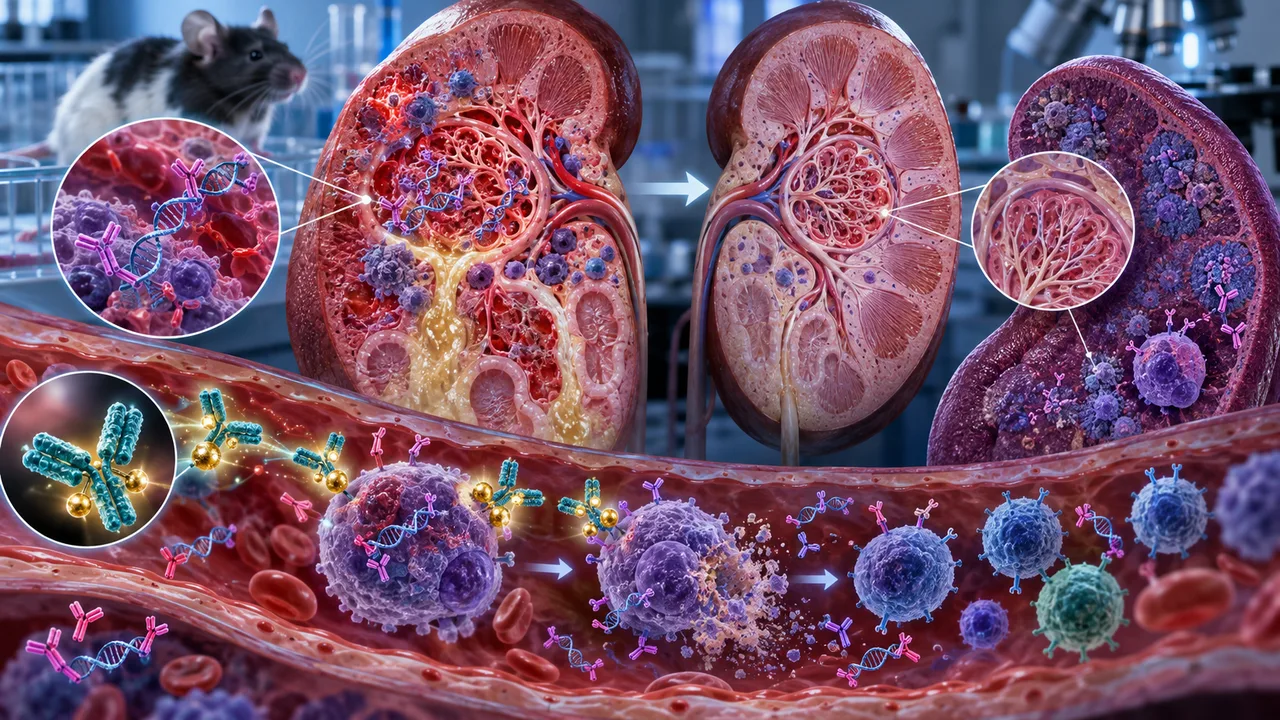
Selective ablation of dsDNA-specific plasma cells improves lupus nephritis in NZB/W mice.

Antibodies specific for double-stranded DNA (dsDNA) are thought to play a crucial role in the pathogenesis of lupus nephritis. Plasma cells have emerged as a promising therapeutic target in antibody-mediated diseases. Here, we show that dsDNA oligonucleotides longer than 80 bp and irrespective of their sequence, react with more than 80% of murine and human dsDNA antibodies. With a conjugate of a modified antibody to mouse CD138 and 100 bp dsDNA oligonucleotides, we demonstrate the selective depl

Continue reading
Health & Medicine

The genomic origins of cyanobacterial morphological diversity.

Cyanobacteria are the only prokaryotes to have evolved oxygenic photosynthesis, transforming the geochemistry and biology of the planet. They exhibit remarkable morphological diversity and represent one of the earliest known multicellular organisms, including filamentous growth and cellular differentiation. However, the genomic mechanisms underlying their repeated transitions between unicellularity and multicellularity remain unresolved. Here, we implement phylogenomic and Bayesian molecular clo

Continue reading
Health & Medicine

PLASTID ENVELOPE ION CHANNELS (PEC1/2) link Ca 2+ and jasmonic acid signaling in plant cells.

Plants constantly encounter adverse environmental interactions. One organelle is particularly specialized in stress signaling and phytohormone synthesis: the plastid. Calcium (Ca 2+ ), a key second messenger, is known to intersect with cellular phytohormone signaling networks. While cytosolic Ca 2+ dynamics have been studied extensively, the physiological relevance of stromal Ca 2+ transients and the identity of channels mediating rapid Ca 2+ flux into plastids remain largely unexplored. In this

Continue reading
Health & Medicine

Structural insights into fosfomycin efflux by a streptococcal ABC transporter.

Gram-positive bacteria encode a broad array of ABC transporters that mediate substrate translocation across the cell membrane, with some contributing to their survival under environmental stresses such as antimicrobial exposure. While several of these transporters have been shown to exhibit multidrug efflux activity, the functional roles of many others remain unknown. Here, using an efflux pump screen in the opportunistic human pathogen Streptococcus pneumoniae , we identified a previously uncha

Continue reading
Health & Medicine

Detection of "hidden" mitotic crossovers by long-read DNA sequencing.

Mitotic crossovers in diploid organisms are usually detected by looking for loss of heterozygosity (LOH) for a marker. Assuming the crossover occurs between two duplicated chromatids, a single reciprocal crossover will result in two recombinant chromatids and two nonrecombinant chromatids. LOH will only be observed when a recombinant chromatid cosegregates with a nonrecombinant chromatid. Cells containing both recombinant chromosomes will not result in LOH. Below, we use long-range DNA sequencin

Continue reading