Selective ablation of dsDNA-specific plasma cells improves lupus nephritis in NZB/W mice.
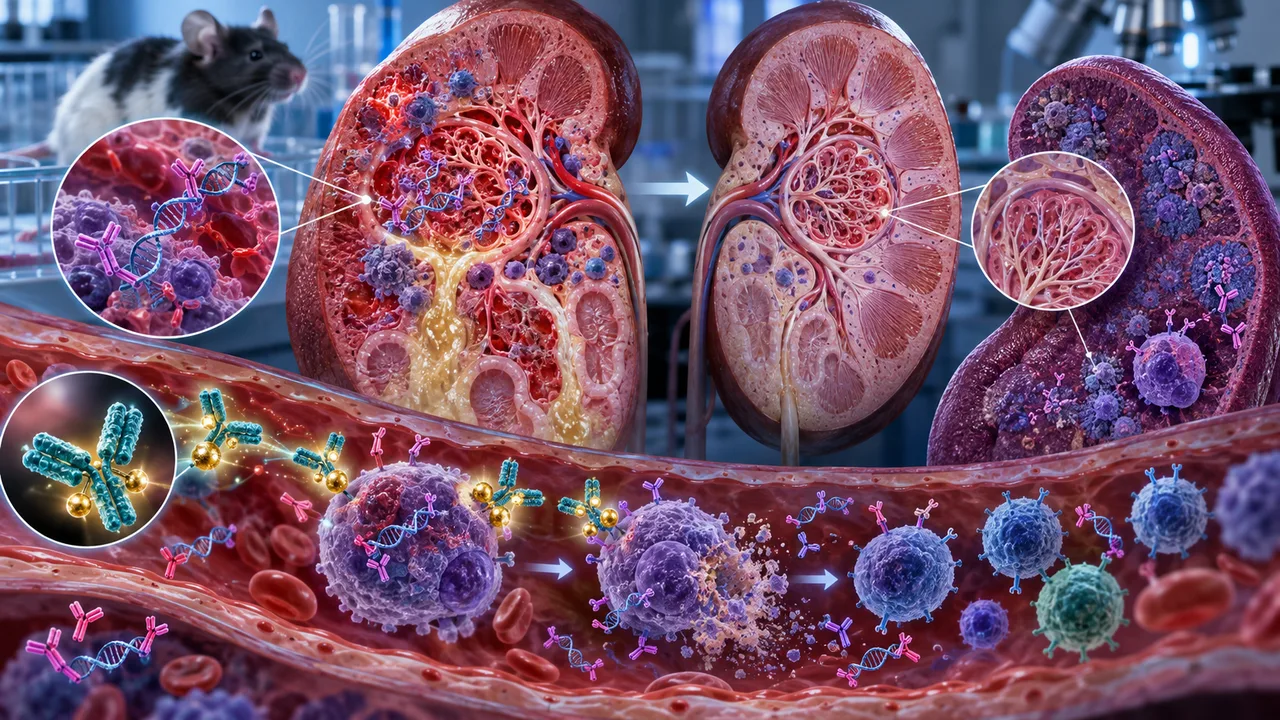
Antibodies specific for double-stranded DNA (dsDNA) are thought to play a crucial role in the pathogenesis of lupus nephritis. Plasma cells have emerged as a promising therapeutic target in antibody-mediated diseases. Here, we show that dsDNA oligonucleotides longer than 80 bp and irrespective of their sequence, react with more than 80% of murine and human dsDNA antibodies. With a conjugate of a modified antibody to mouse CD138 and 100 bp dsDNA oligonucleotides, we demonstrate the selective depl
Antibodies specific for double-stranded DNA (dsDNA) are thought to play a crucial role in the pathogenesis of lupus nephritis. Plasma cells have emerged as a promising therapeutic target in antibody-mediated diseases. Here, we show that dsDNA oligonucleotides longer than 80 bp and irrespective of their sequence, react with more than 80% of murine and human dsDNA antibodies. With a conjugate of a modified antibody to mouse CD138 and 100 bp dsDNA oligonucleotides, we demonstrate the selective depletion of dsDNA-specific antibody secreting plasma cells in NZB/W mice, a mouse model of lupus nephritis. Two days after injection of the conjugate, up to 80% of the dsDNA-specific plasma cells in spleen, bone marrow, and kidneys of the mice were ablated, presumably by complement or cellular cytotoxicity, targeted to them by their own secreted antibodies. Plasma cells secreting antibodies of different specificities were not affected. Treated mice showed a sustained reduction of dsDNA-specific antibodies in the serum and a significant improvement in proteinuria, i.e., kidney pathology. This demonstration of the therapeutic efficacy of antigen-specific ablation of pathogenic plasma cells offers a unique option for the precise treatment of antibody-mediated diseases.