Faecal microbiota transplantation in irritable bowel syndrome (REFIT2): a randomised, double-blind, placebo-controlled, phase 3 trial.
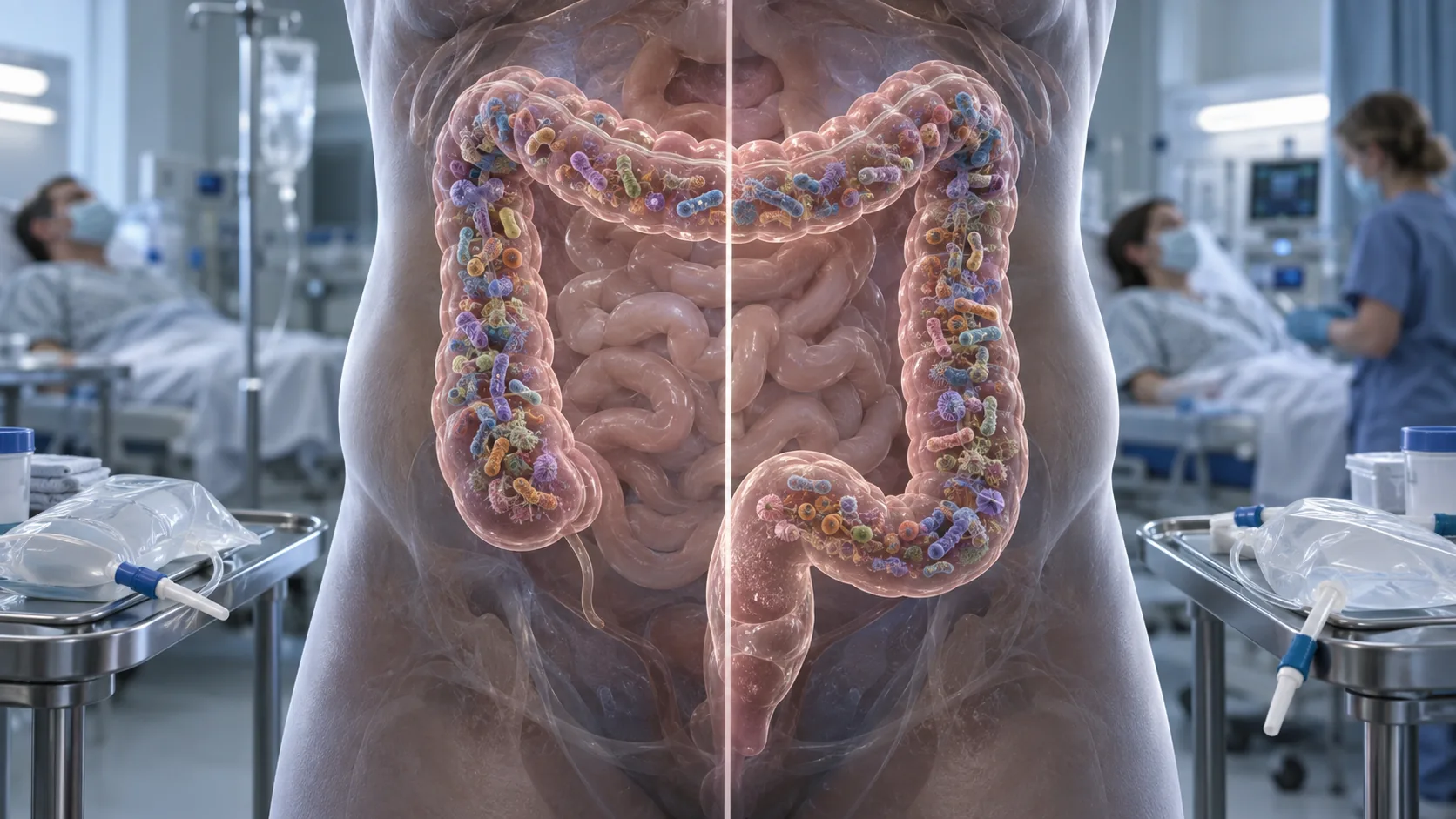
Gut microbiota composition might have a role in the pathogenesis of irritable bowel syndrome (IBS), and faecal microbiota transplantation has been proposed as a means of restoring healthy gut microbiota for individuals with this condition. We aimed to investigate the efficacy and safety of faecal microbiota transplantation in patients with IBS. In this parallel-group, randomised, double-blind, placebo-controlled, phase 3 trial, conducted at five hospitals in Norway, we enrolled men and women age
Gut microbiota composition might have a role in the pathogenesis of irritable bowel syndrome (IBS), and faecal microbiota transplantation has been proposed as a means of restoring healthy gut microbiota for individuals with this condition. We aimed to investigate the efficacy and safety of faecal microbiota transplantation in patients with IBS. In this parallel-group, randomised, double-blind, placebo-controlled, phase 3 trial, conducted at five hospitals in Norway, we enrolled men and women aged 18-65 years with moderate-to-severe IBS. IBS diagnosis was defined by the Rome IV criteria and an IBS-Severity Scoring System (IBS-SSS) score of 175 points or higher. A colonoscopy within 5 years before study enrolment was required for all participants aged 50 years or older to rule out colorectal cancer, and participants with IBS with predominantly diarrhoea required negative biopsies to exclude microscopic colitis. Participants were randomly assigned 2:1 to faecal microbiota transplantation with faeces samples from either healthy donors (intervention) or the participants themselves (placebo group). All investigators, participants, and study personnel involved in treatment administration, patient care, and outcome assessment were masked to treatment allocation throughout the study. Treatments were delivered as a once-only rectal enema. The primary endpoint was the proportion of participants with a reduction of 75 points or more in IBS-SSS score at 90 days after treatment compared with baseline, assessed in all patients who received their allocated treatment. All participants were advised to report any adverse event during follow-up to their study contact, preferably by telephone. A patient representative was involved in the planning of the trial. The trial was registered at ClinicalTrials.gov (NCT04691544). Between May 5, 2021, and July 14, 2022, we assessed 2304 individuals for eligibility, and 450 participants were enrolled and randomly assigned to the intervention group (299) or placebo group (151); two randomly assigned participants were excluded from analyses because their allocated treatments were switched. 293 (65%) of 448 participants were women, 155 (35%) were men, and the median age was 36 years (IQR 29-44). 119 (40%) participants in the donor faecal microbiota transplantation group and 57 (38%) in the placebo group showed an improvement of at least 75 points on the IBS-SSS at 90 days after treatment. The absolute difference was 1·9 percentage points (95% CI -8·1 to 12·0; p=0·76). The proportion of participants with adverse events was similar in the two study groups. The trial did not show a clinical benefit of faecal microbiota transplantation in patients with IBS. These findings suggest that microbiota modulation alone might be insufficient for symptom improvement in IBS. KLINBEFORSK.