Brain metabolic correlates of heroin addiction severity during abstinence and heroin versus social seeking: A PET study in rats.
Only a subset of heroin users develop addiction, characterized by binge-like heroin use and preference for heroin over other rewards, including social rewards. We recently established a rat model that captures these features. We trained rats to lever-press for social interaction and heroin (or saline, control) infusions and then tested heroin and social seeking and heroin-vs.-social choice. During 3 to 5 abstinence weeks, we used 2-deoxy-2-[ 18 F]fluoro-D-glucose (FDG) positron emission tomograp
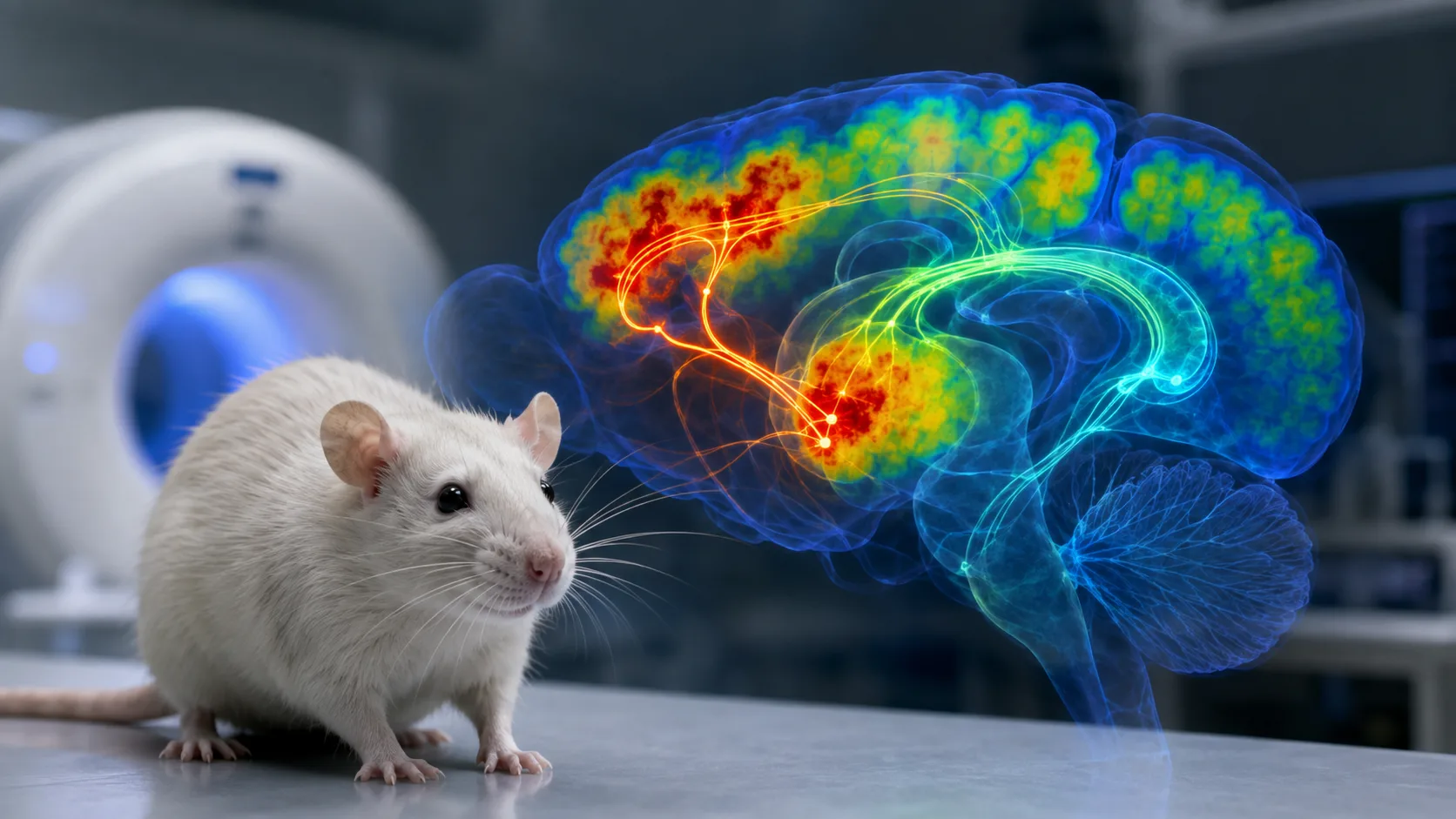
Only a subset of heroin users develop addiction, characterized by binge-like heroin use and preference for heroin over other rewards, including social rewards. We recently established a rat model that captures these features. We trained rats to lever-press for social interaction and heroin (or saline, control) infusions and then tested heroin and social seeking and heroin-vs.-social choice. During 3 to 5 abstinence weeks, we used 2-deoxy-2-[ 18 F]fluoro-D-glucose (FDG) positron emission tomography (PET) imaging to assess regional brain metabolic activity at rest (homecage) and during heroin and social seeking. We assessed regional differences in FDG uptake using unbiased voxel-wise analysis and statistical parametric mapping, and correlated FDG uptake with principle-component-analysis-derived addiction severity score incorporating heroin intake, binge-like episodes, and heroin preference. Compared with saline-trained rats, heroin-trained rats showed overall higher FDG uptake across multiple brain regions at rest and during both reward-seeking tests. Comparison of heroin-vs.-social-seeking in heroin-trained rats showed higher uptake in claustrum/striatum and auditory cortex during social seeking. Analysis of individual differences showed that addiction severity was primarily associated with metabolic alterations under resting conditions rather than during heroin or social seeking. At rest, higher addiction severity was associated with lower uptake in piriform cortex and higher uptake in ventral hippocampus, whereas during heroin seeking, addiction severity was associated with lower uptake in postsubiculum and cerebellum. Addiction severity was not associated with differences in social measures or FDG uptake during social-seeking. These findings identify brain metabolic features of heroin addiction vulnerability in a rat model that may serve as brain biomarkers of human opioid addiction.