Artificial Intelligence

Sub-second dopamine reinforcement shapes juvenile social play.
| Source: Cell

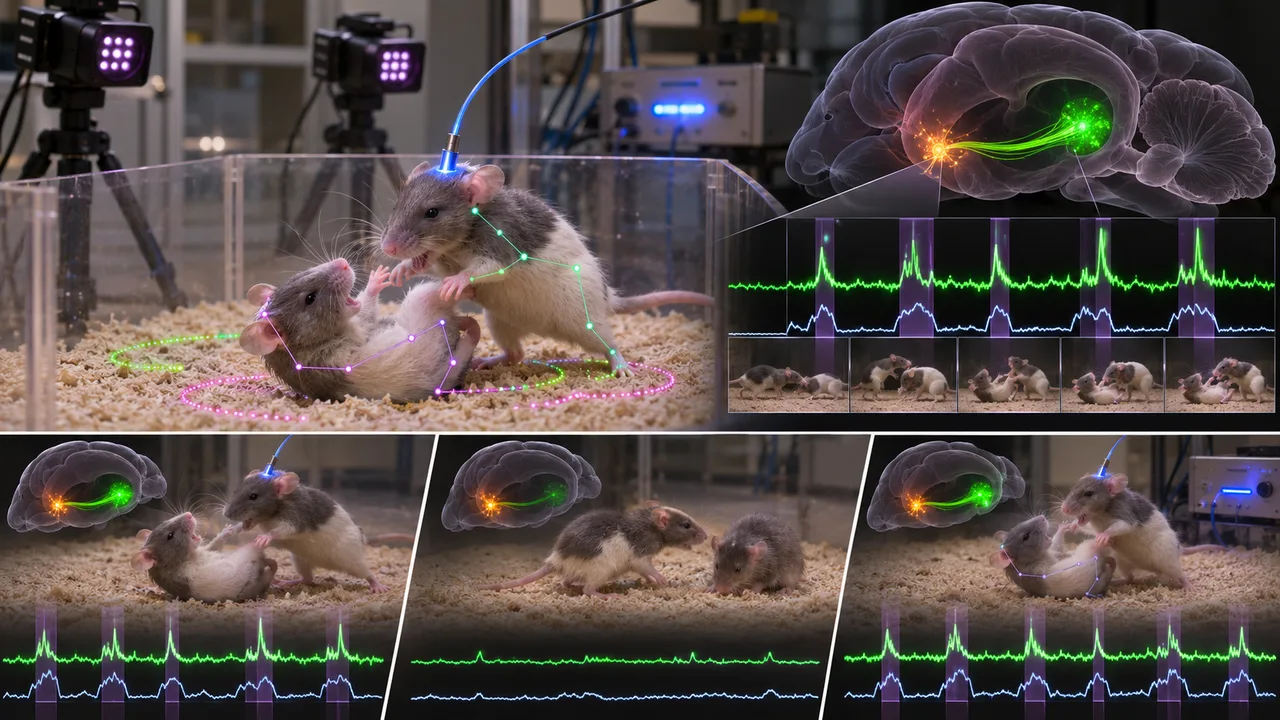
Juvenile social play is critical for neurodevelopment, yet the neural mechanisms organizing moment-to-moment interactions remain elusive. Using social behavior sequencing (Social-seq)-an occlusion-robust 3D pose estimation and unsupervised clustering pipeline-we found that nucleus accumbens (NAc) dopamine was tightly coupled to sub-second social syllables during naturalistic interactions. In wild-type juveniles, males exhibited a sharper dopaminergic contrast between proactive play and forced su

Juvenile social play is critical for neurodevelopment, yet the neural mechanisms organizing moment-to-moment interactions remain elusive. Using social behavior sequencing (Social-seq)-an occlusion-robust 3D pose estimation and unsupervised clustering pipeline-we found that nucleus accumbens (NAc) dopamine was tightly coupled to sub-second social syllables during naturalistic interactions. In wild-type juveniles, males exhibited a sharper dopaminergic contrast between proactive play and forced submission than females did, consistent with sex-divergent play strategies. In Shank3-deficient autism models, this process was fundamentally corrupted: proactive play-evoked dopamine responses were abolished in males and significantly sign-inverted in females, with male-specific enhancements during non-social behaviors, driving social play deficits. A multi-agent reinforcement learning model parameterized by disrupted, play-related dopaminergic reinforcement values recapitulated mutant phenotypes. Closed-loop optogenetic stimulation of ventral tegmental area (VTA)-NAc dopamine projections, time-locked to proactive play, restored reciprocal play in Shank3-deficient rats. Sub-second dopaminergic reinforcement thus orchestrates naturalistic social behavior, providing a behaviorally contingent interventional framework for neurodevelopmental disorders.
Read the original source →

Related Stories

Artificial Intelligence

Simply aging.

Biological aging is complex and resists any single mechanistic narrative. This article develops a conceptual framework for aging biology through a series of brief statements on central topics in the field, with the goal of discussing aging simply, directly and accessibly. The organizing principle is that aging is a default outcome of living: because biological processes are inherently imperfect, deleterious changes (the deleteriome) accumulate over time and progressively erode functional reserve

Continue reading
Artificial Intelligence

An integrative single-cell epigenomic atlas annotates the regulatory genome of the adult mouse brain.

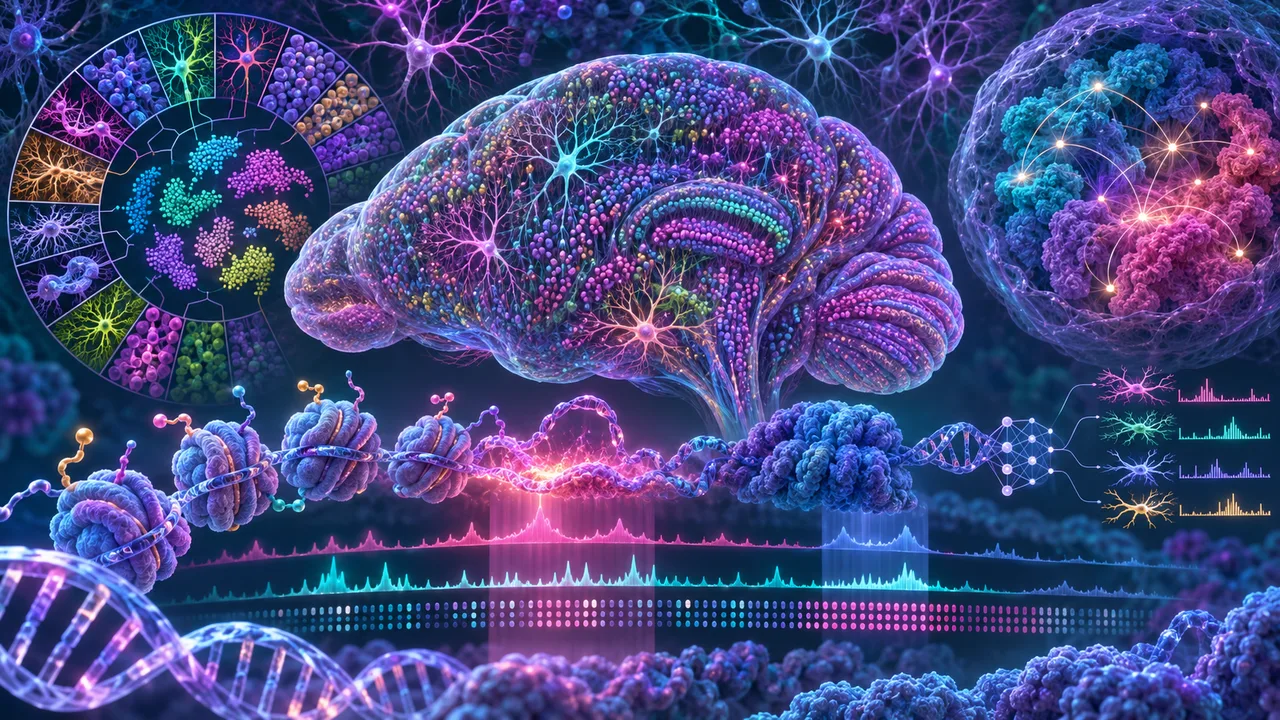
Histone modifications underpin the cell-type-specific gene regulatory programs that drive the remarkable cellular diversity of the mammalian brain. Here, we jointly profiled four histone modifications and the transcriptome in 2.5 million nuclei from the adult mouse brain. By integrating these data with chromatin accessibility, DNA methylation, and three-dimensional genome organization, we constructed a unified epigenomic atlas spanning over 100 brain cell subclasses and assigned active, primed,

Continue reading
Artificial Intelligence

Where intention goes, responsibility flows: Grounding AI accountability in the machine learning paradigm.

An opening salvo of lawsuits in US courts has begun holding AI companies accountable through independent doctrinal routes: Product liability and agency law cut as swords, while the shields of Section 230 immunity and First Amendment doctrine begin to crack. This Perspective points out that these converging paths share a unifying principle, built on the very engineering architecture of machine learning (ML) itself. Every ML system, across all variants, is constituted by a human-specified objectiv

Continue reading
Artificial Intelligence

Intermittent gas-liquid rearrangement controls the mixing of gases in porous media.

Gas mixing in porous media governs important environmental and industrial applications in which multiple gas components share the available pore space with liquid water, simultaneously undergoing gas mixing and gas-liquid redistribution. Currently, this process is represented by macroscopic models that ignore pore scale dynamics. We demonstrate that this is not generally valid, and can lead to large errors in the mixing rate. We use 4D X-ray imaging to investigate nitrogen injection into a porou

Continue reading
Artificial Intelligence

Normalized Raman imaging for studies of tissue physiology of the kidney.

Conventional histology relies on fixation, embedding, sectioning, and staining methods that distort cellular architecture, extract lipids, and introduce variability, limiting reproducibility. We present a pipeline for automated histopathology in the mouse kidney using normalized stimulated Raman imaging (NoRI) that enables quantitative, label-free protein and lipid measurements at high spatial resolution. NoRI computationally corrects protein, lipid, and water Raman signals, allowing quantitativ

Continue reading