Artificial Intelligence

Simply aging.

| Source: Proceedings of the National Academy of Sciences of the United States of America

Biological aging is complex and resists any single mechanistic narrative. This article develops a conceptual framework for aging biology through a series of brief statements on central topics in the field, with the goal of discussing aging simply, directly and accessibly. The organizing principle is that aging is a default outcome of living: because biological processes are inherently imperfect, deleterious changes (the deleteriome) accumulate over time and progressively erode functional reserve

Biological aging is complex and resists any single mechanistic narrative. This article develops a conceptual framework for aging biology through a series of brief statements on central topics in the field, with the goal of discussing aging simply, directly and accessibly. The organizing principle is that aging is a default outcome of living: because biological processes are inherently imperfect, deleterious changes (the deleteriome) accumulate over time and progressively erode functional reserve. The deleteriome provides a unifying framework for molecular damage, regulatory drift, maladaptive remodeling, and system-level failure, without reducing aging to individual genes, pathways, compartments, hallmarks, or pathologies. Evolution does not program aging; it shapes maintenance and renewal systems that oppose this trajectory with limited fidelity and unavoidable trade-offs. Aging begins during development, following an early embryonic phase of rejuvenation. Modern biomarkers make biological age imperfectly but increasingly measurable. Biological age is heterogeneous across cells, organs, and systems, modifiable by interventions and environment, and in some contexts partially reversible or resettable, although aging itself is irreversible. This model links first principles of aging to measurement, intervention, and longer-term strategies, with the goal of clarifying how substantial longevity gains might be achieved, both within and beyond existing species-level constraints.

Read the original source →

Related Stories

Artificial Intelligence

Where intention goes, responsibility flows: Grounding AI accountability in the machine learning paradigm.

An opening salvo of lawsuits in US courts has begun holding AI companies accountable through independent doctrinal routes: Product liability and agency law cut as swords, while the shields of Section 230 immunity and First Amendment doctrine begin to crack. This Perspective points out that these converging paths share a unifying principle, built on the very engineering architecture of machine learning (ML) itself. Every ML system, across all variants, is constituted by a human-specified objectiv

Continue reading
Artificial Intelligence

Intermittent gas-liquid rearrangement controls the mixing of gases in porous media.

Gas mixing in porous media governs important environmental and industrial applications in which multiple gas components share the available pore space with liquid water, simultaneously undergoing gas mixing and gas-liquid redistribution. Currently, this process is represented by macroscopic models that ignore pore scale dynamics. We demonstrate that this is not generally valid, and can lead to large errors in the mixing rate. We use 4D X-ray imaging to investigate nitrogen injection into a porou

Continue reading
Artificial Intelligence

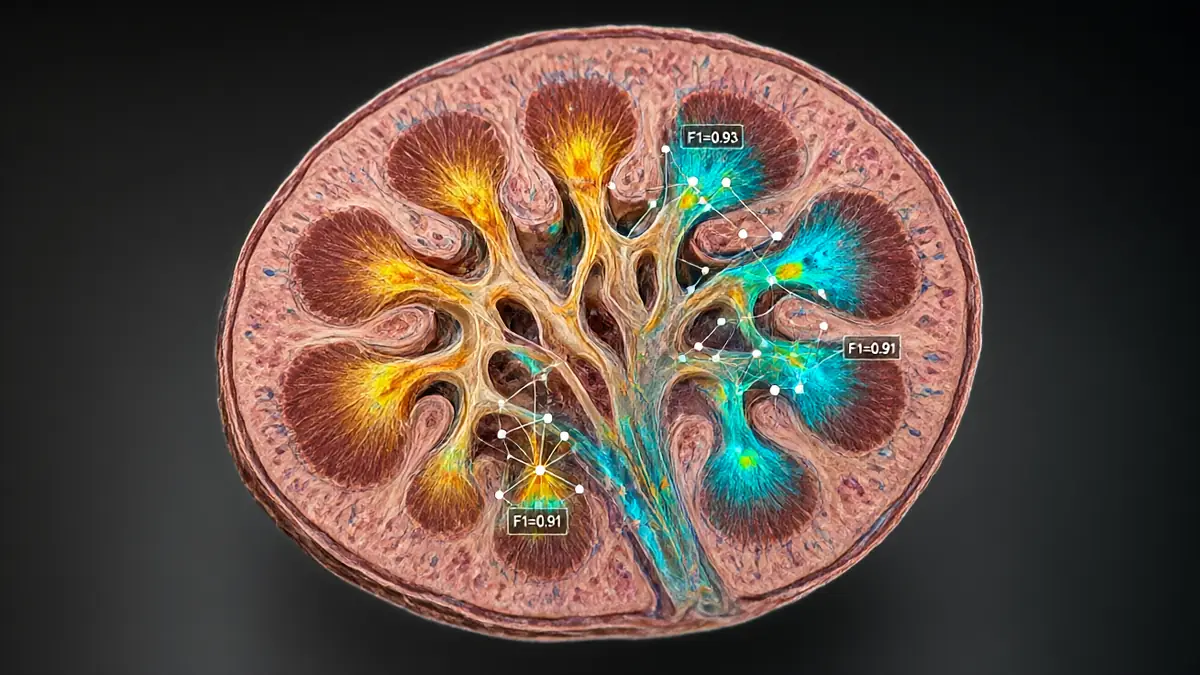
Normalized Raman imaging for studies of tissue physiology of the kidney.

Conventional histology relies on fixation, embedding, sectioning, and staining methods that distort cellular architecture, extract lipids, and introduce variability, limiting reproducibility. We present a pipeline for automated histopathology in the mouse kidney using normalized stimulated Raman imaging (NoRI) that enables quantitative, label-free protein and lipid measurements at high spatial resolution. NoRI computationally corrects protein, lipid, and water Raman signals, allowing quantitativ

Continue reading
Artificial Intelligence

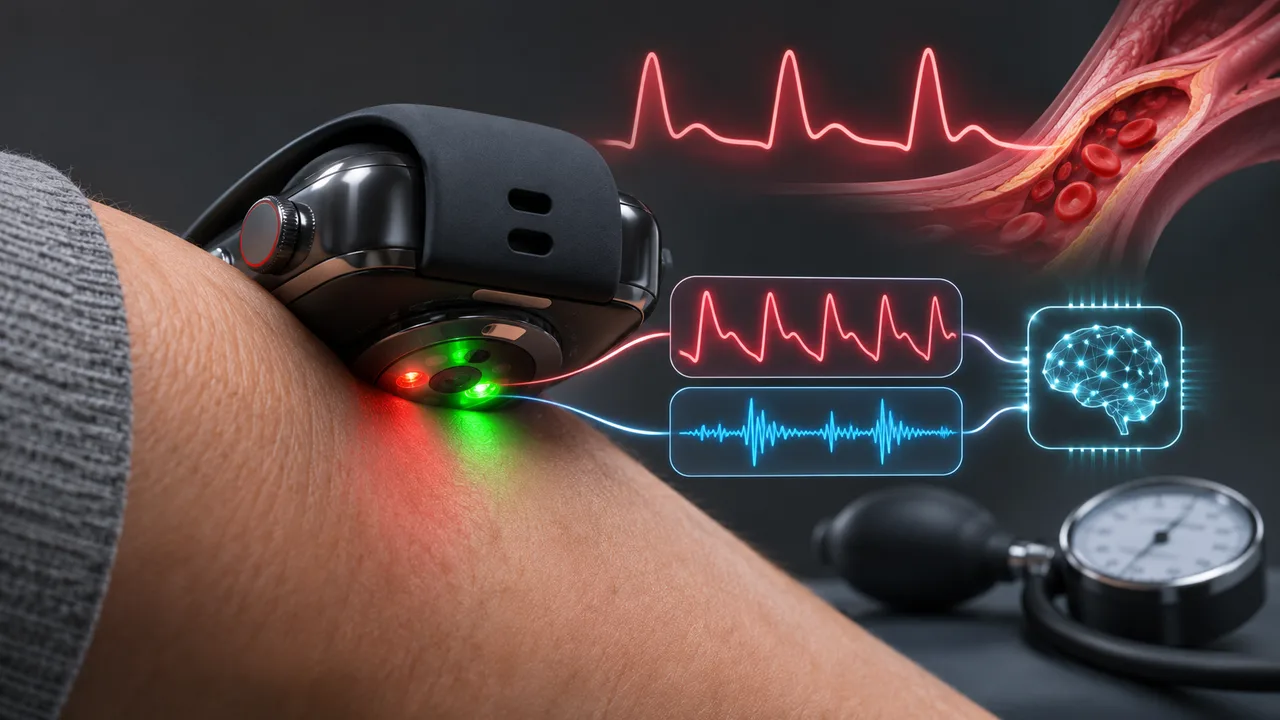
Opportunistically Detecting Signs of Hypertension on a Consumer Smartwatch.

Hypertension is a silent killer, with over half of affected adults unaware of their condition 1,2 . This lack of awareness is a major concern, as early intervention is critical for preventing major adverse cardiovascular events 3,4 . Here we show that applying artificial intelligence (AI) to multimodal waveforms (photoplethysmography and accelerometry) recorded using a widely available consumer smartwatch (AI-PPG-ACC-HTN), without any cuff calibration, can detect hypertension with accuracy level

Continue reading
Artificial Intelligence

Eating disorders.

The eating and feeding disorders are serious psychiatric disorders at the mind-body interface, often with an exceptionally high burden for affected individuals, their families and supporters, and wider society. In anorexia nervosa, high acute medical risk and patients' ambivalence about treatment can make a challenging combination that can impede engagement. First-line treatments for eating disorders are mainly psychological, with medications playing an adjunctive role. Novel biological and tech

Continue reading