An integrative single-cell epigenomic atlas annotates the regulatory genome of the adult mouse brain.
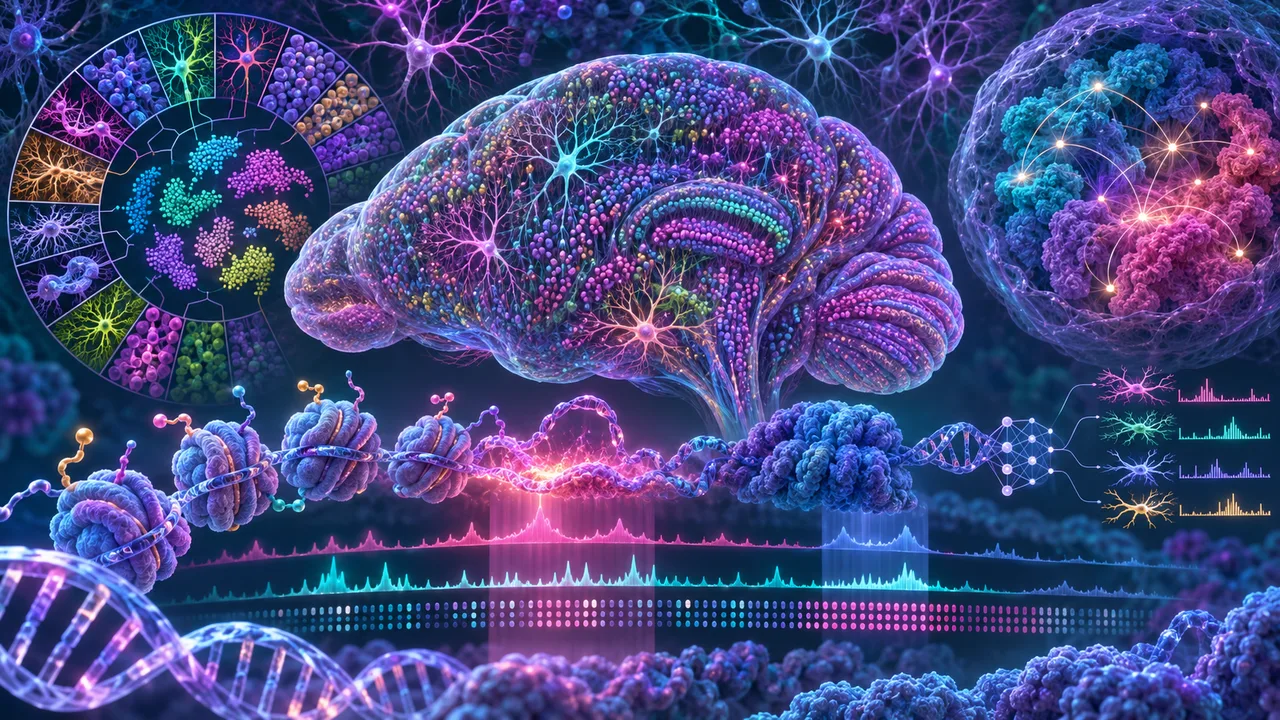
Histone modifications underpin the cell-type-specific gene regulatory programs that drive the remarkable cellular diversity of the mammalian brain. Here, we jointly profiled four histone modifications and the transcriptome in 2.5 million nuclei from the adult mouse brain. By integrating these data with chromatin accessibility, DNA methylation, and three-dimensional genome organization, we constructed a unified epigenomic atlas spanning over 100 brain cell subclasses and assigned active, primed,
Histone modifications underpin the cell-type-specific gene regulatory programs that drive the remarkable cellular diversity of the mammalian brain. Here, we jointly profiled four histone modifications and the transcriptome in 2.5 million nuclei from the adult mouse brain. By integrating these data with chromatin accessibility, DNA methylation, and three-dimensional genome organization, we constructed a unified epigenomic atlas spanning over 100 brain cell subclasses and assigned active, primed, and repressive chromatin states across 81% of the genome. Active chromatin states marked by combinatorial histone modifications better nominate candidate enhancers with functional support than chromatin accessibility alone, while H3K27me3- and H3K9me3-marked chromatin states delineate distinct modes of cell-type-specific gene repression. Finally, this multimodal resource enables the development of deep learning models that predict cell-type-specific epigenomic features and gene expression from DNA sequence, providing a comprehensive framework for annotating the brain regulatory genome and interpreting non-coding disease risk variants.