PLK1-mediated phosphorylation of PHGDH reprograms serine metabolism in advanced prostate cancer.
Metabolic reprogramming is a hallmark of cancer, enabling tumor cells to meet their increased biosynthetic and energetic demands. Although cells possess the capacity for de novo serine biosynthesis, most transformed cancer cells preferentially rely on exogenous serine uptake to sustain their growth, yet the regulatory mechanisms driving this metabolic dependency remain poorly understood. Here, we uncover a mechanism by which Polo-like kinase 1 (PLK1), frequently overexpressed in prostate cancer,
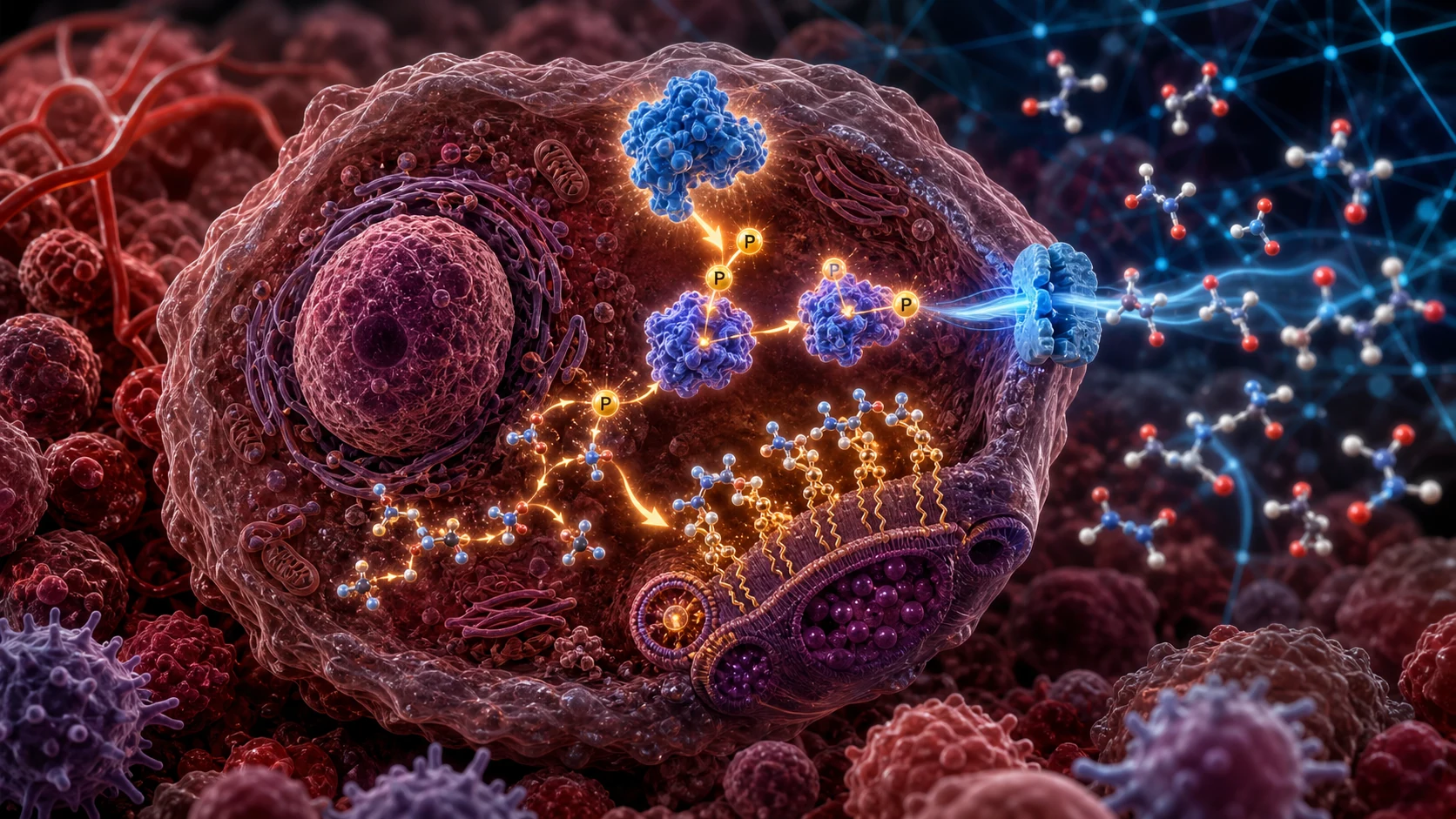
Metabolic reprogramming is a hallmark of cancer, enabling tumor cells to meet their increased biosynthetic and energetic demands. Although cells possess the capacity for de novo serine biosynthesis, most transformed cancer cells preferentially rely on exogenous serine uptake to sustain their growth, yet the regulatory mechanisms driving this metabolic dependency remain poorly understood. Here, we uncover a mechanism by which Polo-like kinase 1 (PLK1), frequently overexpressed in prostate cancer, orchestrates a metabolic shift in serine and sphingolipid metabolism through phosphorylation of phosphoglycerate dehydrogenase (PHGDH), the rate-limiting enzyme of the serine synthesis pathway (SSP). Specifically, PLK1 directly phosphorylates PHGDH at S512, S513, and S517, leading to a marked reduction in its protein level and enzymatic activity. This downregulation of de novo serine biosynthesis forces cancer cells to increase their reliance on exogenous serine uptake via the ASCT2 transporter, which in turn fuels the biosynthesis of lipids, including sphingolipids essential for tumor growth and survival. Our findings suggest that targeting the SSP, serine uptake, or downstream lipid biosynthesis pathways may represent promising therapeutic strategies in advanced cancers characterized by PLK1 dysregulation.