Phase 1 Study of Anito-cel, a d-Domain BCMA CAR T Cell for Refractory or Recurrent Myeloma.
Anitocabtagene autoleucel (anito-cel), a B-cell maturation antigen (BCMA)-directed autologous chimeric antigen receptor (CAR) T-cell therapy with a synthetic d-domain binder (ddBCMA), may have efficacy in patients with relapsed or refractory multiple myeloma. In a phase 1 study, we evaluated the safety and efficacy of anito-cel (dose level 1, 100×10 6 CAR+ T cells; dose level 2, 300×10 6 CAR+ T cells) in patients with relapsed or refractory multiple myeloma who had received three or mo
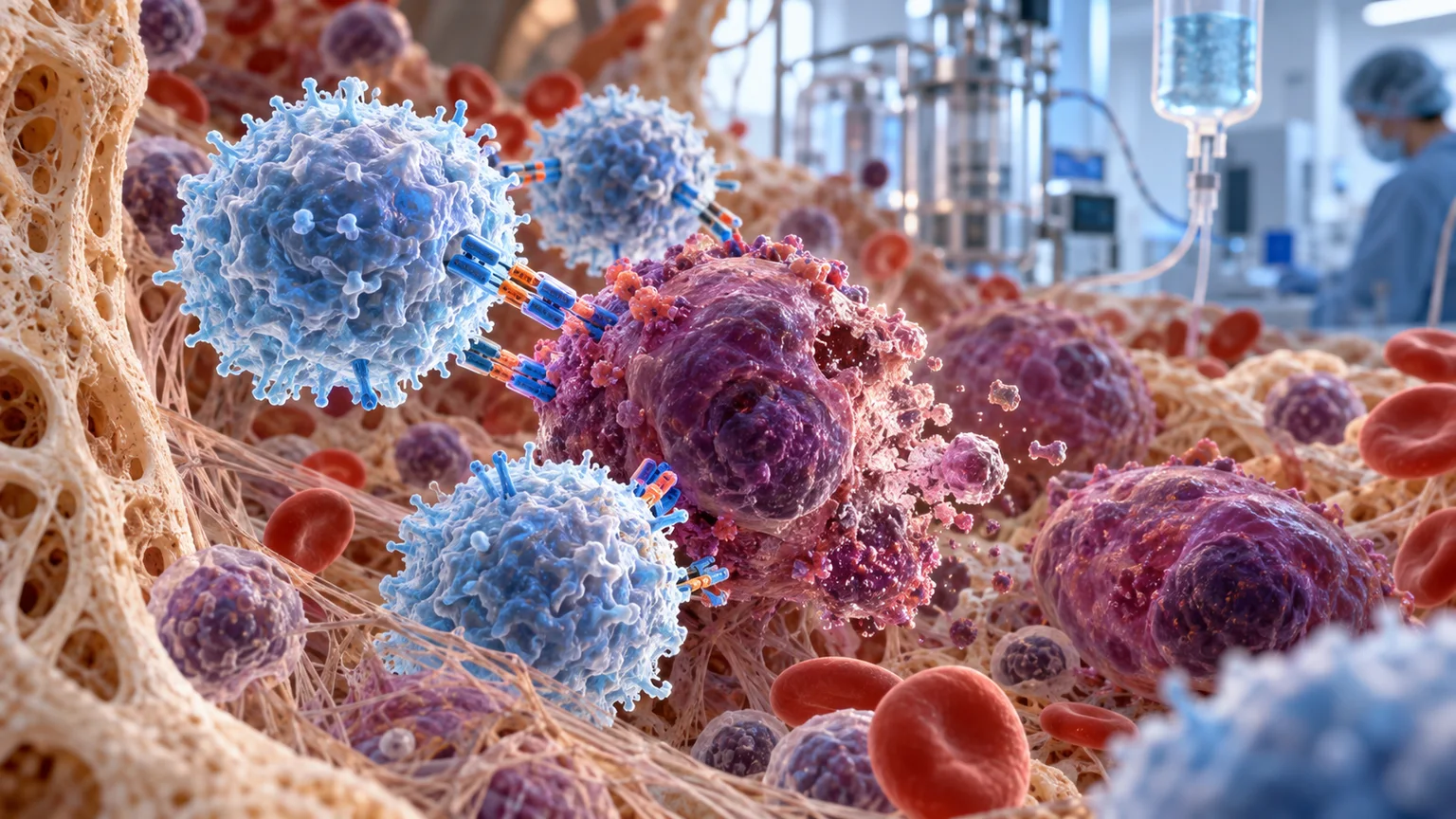
Anitocabtagene autoleucel (anito-cel), a B-cell maturation antigen (BCMA)-directed autologous chimeric antigen receptor (CAR) T-cell therapy with a synthetic d-domain binder (ddBCMA), may have efficacy in patients with relapsed or refractory multiple myeloma. In a phase 1 study, we evaluated the safety and efficacy of anito-cel (dose level 1, 100×10 6 CAR+ T cells; dose level 2, 300×10 6 CAR+ T cells) in patients with relapsed or refractory multiple myeloma who had received three or more lines of therapy previously or had triple-class refractory disease. Primary end points were adverse events during the treatment period and establishment of the recommended phase 2 dose. In complementary in vitro studies, we compared the anito-cel ddBCMA binder with a dual variable heavy-chain domain of a heavy chain-only antibody (dual-VHH) binder corresponding to the published sequence for ciltacabtagene autoleucel. Of 40 patients enrolled, 38 received anito-cel. All 38 patients had an adverse event during the treatment period, and 37 patients (97%) had an adverse event of grade 3 or higher. Among patients who received the recommended phase 2 dose (100×10 6 CAR+ T cells), 94% had cytokine release syndrome of grade 1 or 2, with no events of grade 3 or higher. A total of 16% of the patients had immune effector cell-associated neurotoxicity syndrome (ICANS) of grade 1 or 2, and 1 patient (3%) had a grade 3 event. No non-ICANS or delayed neurotoxic effects occurred. At a median follow-up of 38.1 months, all 38 patients (100%) had had a response, with 79% having a complete response. The 24-month progression-free survival was 57%; the median progression-free survival was 30.2 months. The 36-month overall survival was 65%. The ddBCMA binder had a faster off-rate than the dual-VHH binder; although cytotoxicity was similar with the two therapies, ddBCMA CAR T cells led to less cytokine release and did not result in activation without antigen or in off-target cytotoxic effects. Anito-cel therapy led to a high incidence of response among patients with heavily pretreated relapsed or refractory multiple myeloma. Cytokine release syndrome and ICANS of grade 3 or higher were rare. (Funded by Arcellx and Kite, a Gilead company; ClinicalTrials.gov number, NCT04155749.).