Health & Medicine

Permissive Blood Pressure Targets in Pediatric Critical Care: The PRESSURE Randomized Clinical Trial.

| Source: JAMA

Vasoactive drugs are often given to critically ill children to treat hypotension. However, optimal mean arterial pressure (MAP) targets are unknown. To evaluate whether adopting a permissive MAP target, and thereby potentially reducing exposure to vasoactive drugs, improves outcomes in hypotensive critically ill children. This multicenter, unblinded, pragmatic randomized clinical trial was conducted in 23 pediatric intensive care units (PICUs) in 3 countries. Critically ill children receiving in

Vasoactive drugs are often given to critically ill children to treat hypotension. However, optimal mean arterial pressure (MAP) targets are unknown. To evaluate whether adopting a permissive MAP target, and thereby potentially reducing exposure to vasoactive drugs, improves outcomes in hypotensive critically ill children. This multicenter, unblinded, pragmatic randomized clinical trial was conducted in 23 pediatric intensive care units (PICUs) in 3 countries. Critically ill children receiving invasive ventilation and vasoactive drugs for hypotension were enrolled between November 2021 and May 2026. Follow-up to the 30-day outcome was completed in June 2026. Patients randomized to the intervention (n = 957) were assigned a permissive MAP target greater than the fifth percentile for age. Patients in the control group (n = 943) received usual care with MAP target set by the attending physician. The primary outcome was a composite of mortality and duration of invasive ventilation at 30 days. Secondary outcomes included mortality at PICU discharge, time to cessation of invasive ventilation, receipt and duration of kidney replacement therapy in PICU at 30 days, and length of PICU and hospital stay. Of 1900 randomized patients, 910 in the permissive MAP target group and 904 in the usual care group were included for analysis of the primary outcome. Participants had a median (IQR) age of 4 (0-10) years and 44.8% were female; baseline characteristics were similar between the groups. Median (IQR) MAP while receiving vasoactive drugs was 58 (51-63) mm Hg in the permissive MAP target group and 61 (54-67) mm Hg in the usual care group. A permissive MAP target led to a 37.5% reduction in median norepinephrine-equivalent total dose compared with the usual care group. There was no significant difference between the groups in the primary outcome (probabilistic index, 0.52 [95% CI, 0.49-0.54]; P = .23). Six of the 7 secondary outcomes were similar between the groups, except median (IQR) PICU length of stay was significantly shorter in survivors in the permissive MAP target vs usual care group (159 [79-286] vs 166 [92-319] hours); probabilistic index, 0.53 [95% CI, 0.50-0.56]). Receipt of kidney replacement therapy and adverse events did not differ between the groups. Adopting a permissive MAP target resulted in no significant difference in mortality and duration of invasive ventilation at 30 days compared with usual care. isrctn.org Identifier: ISRCTN20609635; Swiss National Clinical Trial Portal: SNCTP000006590.


Read the original source →

Related Stories

Health & Medicine

Cellular remodeling during reversible life-stage transition in sessile ciliates: Genomic and transcriptomic insights.

Unraveling mechanisms driving dramatic life-stage transitions in response to environmental stress is central to understanding cellular adaptation. We studied a distinctive group of sessile ciliates that undergo profound morphological and organellar remodeling when transitioning from sessile trophonts to motile telotrochs. We generated chromosome-level genomes for two colonial species ( Campanella sinica , Epistylis hentscheli ) and one solitary species ( Vorticella campanula ), revealing genome

Continue reading
Health & Medicine

Zinc mediates the allosteric activation of Shiftless to suppress programmed -1 ribosomal frameshifting.

Many medically important viruses, including HIV-1 and severe acute respiratory syndrome coronavirus 2, utilize programmed -1 ribosomal frameshifting (-1 PRF) to synthesize certain proteins essential for the viral life cycle. Shiftless (SHFL) is an interferon-simulated, zinc finger-containing protein that restricts -1 PRF and viral infection. However, its regulatory spectrum and mechanism remain largely unclear. Here, we showed that SHFL orthologs potently suppress a wide variety of viral and cel

Continue reading
Health & Medicine

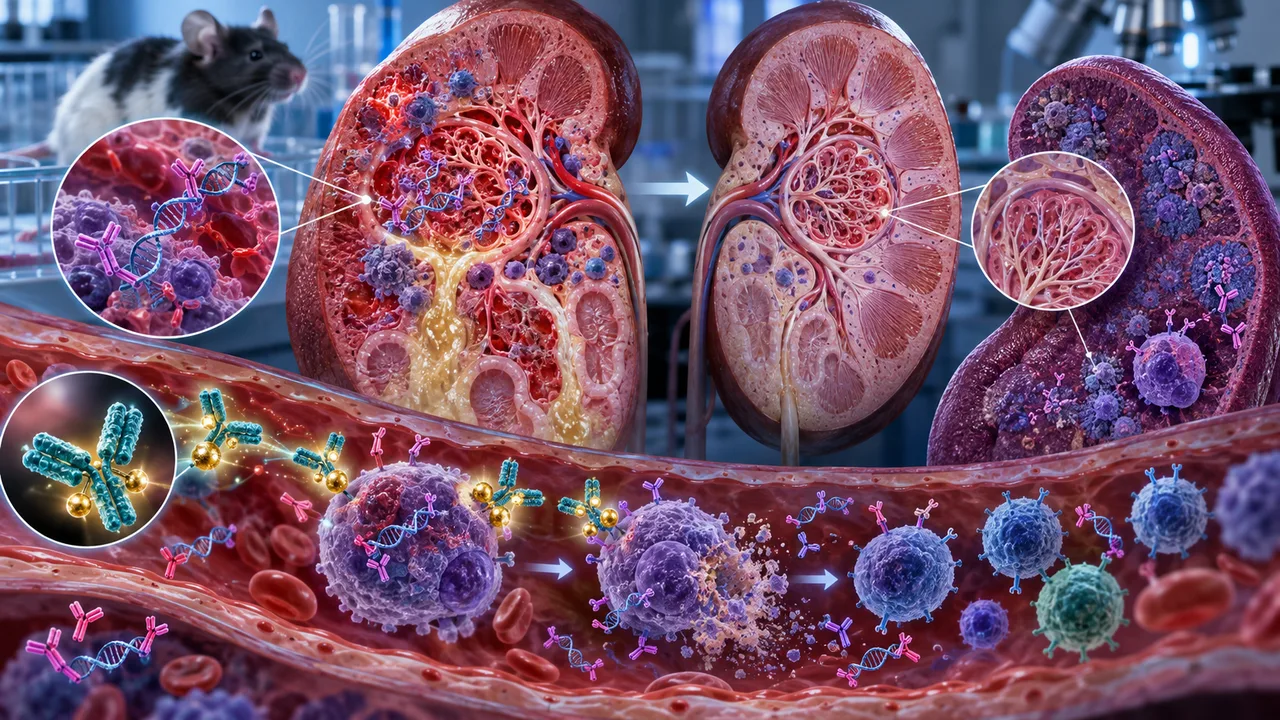
Selective ablation of dsDNA-specific plasma cells improves lupus nephritis in NZB/W mice.

Antibodies specific for double-stranded DNA (dsDNA) are thought to play a crucial role in the pathogenesis of lupus nephritis. Plasma cells have emerged as a promising therapeutic target in antibody-mediated diseases. Here, we show that dsDNA oligonucleotides longer than 80 bp and irrespective of their sequence, react with more than 80% of murine and human dsDNA antibodies. With a conjugate of a modified antibody to mouse CD138 and 100 bp dsDNA oligonucleotides, we demonstrate the selective depl

Continue reading
Health & Medicine

The genomic origins of cyanobacterial morphological diversity.

Cyanobacteria are the only prokaryotes to have evolved oxygenic photosynthesis, transforming the geochemistry and biology of the planet. They exhibit remarkable morphological diversity and represent one of the earliest known multicellular organisms, including filamentous growth and cellular differentiation. However, the genomic mechanisms underlying their repeated transitions between unicellularity and multicellularity remain unresolved. Here, we implement phylogenomic and Bayesian molecular clo

Continue reading
Health & Medicine

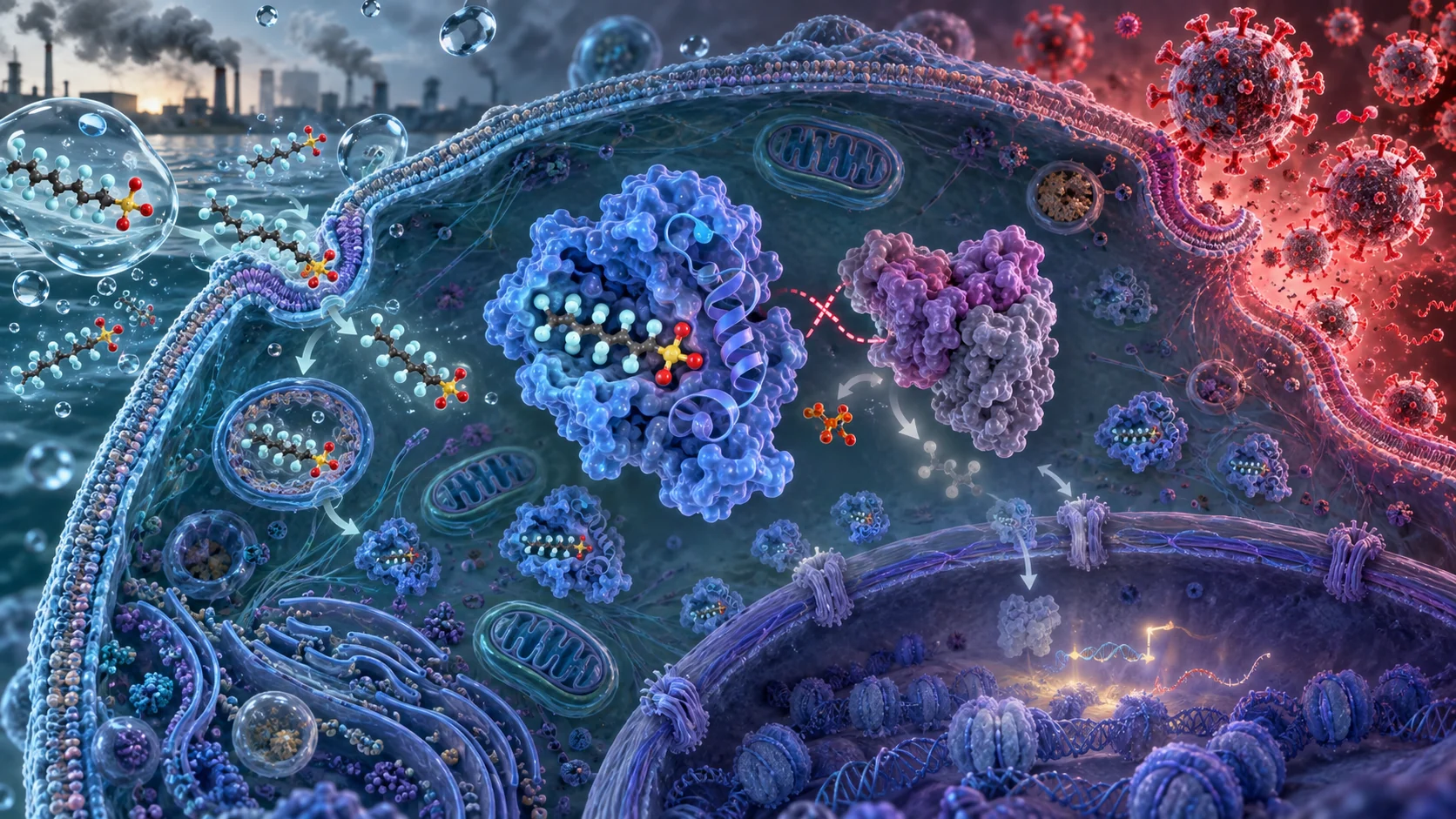
Perfluorooctane sulfonate directly interacts with IRF3 to attenuate antiviral innate immunity.

Perfluorooctane sulfonate (PFOS), a prominent per- and polyfluoroalkyl substance (PFAS), has raised significant public health concerns due to its widespread use, environmental persistence, and bioaccumulation potential. Both epidemiological and experimental studies demonstrate that PFOS exposure causes immunotoxicity and disrupts both innate and adaptive immunity. However, the specific effects of PFOS on innate antiviral immunity remain poorly understood. Here, by integrating multi-omics analysi

Continue reading