Health & Medicine

Neoadjuvant botensilimab with or without balstilimab in pMMR and dMMR colon cancer: the phase 2 UNICORN trial.
| Source: Nature medicine

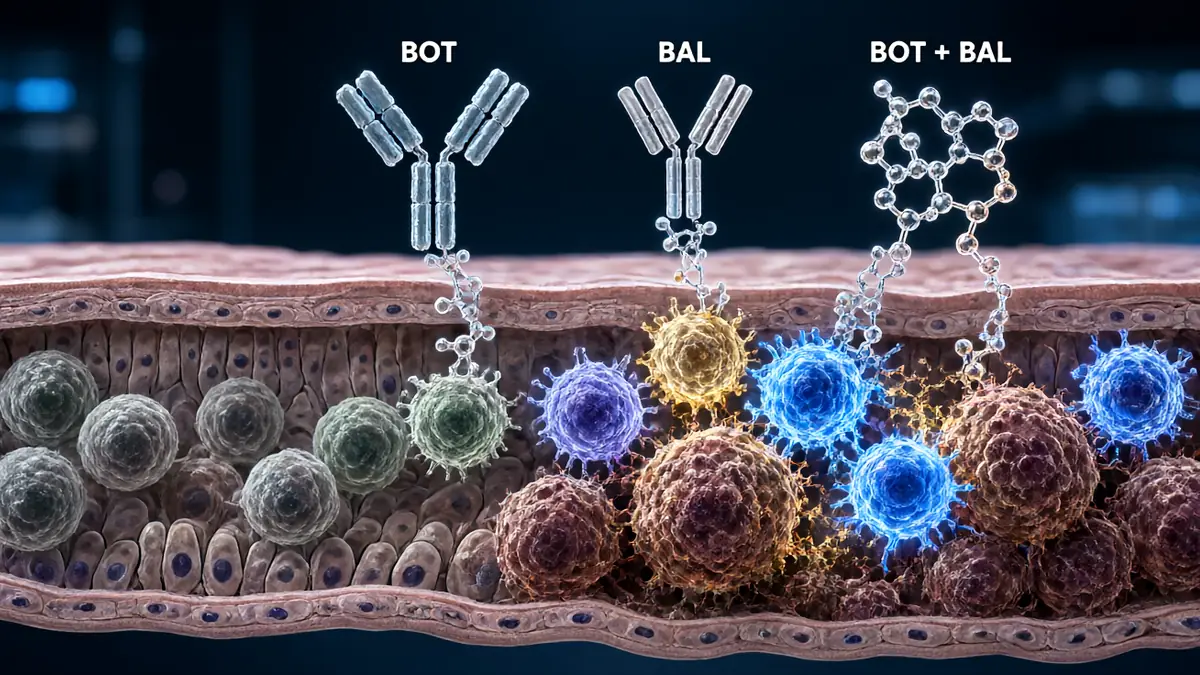
Preoperative immune checkpoint inhibitors (ICIs) are active in patients with deficient mismatch repair (dMMR) colon cancer (CC), whereas proficient mismatch repair (pMMR) CC has been consistently considered resistant to first-generation ICIs. In the phase 2 UNICORN trial, we evaluated short-course preoperative botensilimab (BOT; multifunctional Fc-enhanced anti-CTLA-4 monoclonal antibody) alone or in combination with the anti-PD-1 monoclonal antibody balstilimab (BOT + BAL) in 56 p

Preoperative immune checkpoint inhibitors (ICIs) are active in patients with deficient mismatch repair (dMMR) colon cancer (CC), whereas proficient mismatch repair (pMMR) CC has been consistently considered resistant to first-generation ICIs. In the phase 2 UNICORN trial, we evaluated short-course preoperative botensilimab (BOT; multifunctional Fc-enhanced anti-CTLA-4 monoclonal antibody) alone or in combination with the anti-PD-1 monoclonal antibody balstilimab (BOT + BAL) in 56 patients with resectable, locally advanced CC. Twenty-eight patients with pMMR CC were sequentially enrolled in BOT (n = 14) and BOT + BAL (n = 14) cohorts. Twenty-eight patients with dMMR CC followed the same sequential allocation strategy. The primary endpoint of centrally assessed pathological major response (pMR) rate (≤10% of residual viable tumor) was met in all cohorts, except pMMR BOT. Specifically, the pMR rate was 0% (95% confidence interval (CI): 0-23.2%) in pMMR BOT, 36% (95% CI: 12.8-64.9%) in pMMR BOT + BAL, 36% (95% CI: 12.8-64.9%) in dMMR BOT and 100% (95% CI: 76.8-100%) in dMMR BOT + BAL. Secondary endpoints included safety, quality of life, describing treatment-induced transcriptional dynamics, peripheral blood mononuclear cell dynamics, radiomics and radiogenomics features, fecal microbiota composition and circulating tumor DNA (ctDNA) dynamics. Eight (29%) and 15 (54%) patients treated with BOT and BOT + BAL, respectively, experienced immune-related adverse events, most commonly flu-like syndrome and diarrhea. Single-cell spatial transcriptomic analysis of matched baseline and post-treatment samples highlighted high baseline PD-L1 stromal expression and low post-treatment regulatory T cell signatures in pMMR responders, whereas dMMR responders displayed high baseline FCGR2A and FCGR3A expression on intratumoral macrophages. Clearance of ctDNA before surgery correlated with pathological response and lack of recurrence at data cutoff. Preoperative BOT + BAL elicits pathological responses in patients with pMMR or dMMR CC, supporting the combination as a promising strategy to expand ICI benefits to the early-stage setting. ClinicalTrials.gov identifier: NCT05845450 .


Read the original source →

Related Topics

Related Stories

Health & Medicine

An innervated and vascularized HNSCC-on-a-chip model built on defined and tunable engineered extracellular matrices.

Understanding the tumor microenvironment requires experimental platforms that faithfully recapitulate its key components. Here, we present an innervated and vascularized head and neck squamous cell carcinoma (HNSCC)-on-a-chip platform built with fully defined and tunable engineered extracellular matrices (eECMs). In a stepwise increase of complexity, we first cocultured patient-derived HNSCC cells, cancer-associated fibroblasts, and endothelial cells within tailored eECMs, revealing extracellula

Continue reading
Health & Medicine

Septin binding restricts Shigella growth and triggers intracellular tolerance.

Pathogen survival relies on their ability to adapt to changing environments, yet how intracellular bacteria tolerate cell-autonomous immunity remains unclear. Septins assemble into cage-like structures around cytoplasmic Shigella targeted by autophagy, but their antibacterial activity was unknown. Using advanced microscopy and cell-free reconstitution, we show that septins polymerize into circumferentially oriented filaments that inhibit bacterial growth. RNA-sequencing reveals that septin bindi

Continue reading
Health & Medicine

DCAF6 reprograms TGF-β responses through TRIM33 destruction.

TGF-β signaling plays a pivotal role in regulating numerous cellular processes, primarily through the Smad-dependent pathway. Disruptions of the pathway are associated with developmental disorders and life-threatening diseases, such as cancer. It has been reported that TRIM33 inactivates Smad4 signaling and also drives its own signaling responses. However, the mechanism controlling TRIM33 activity has remained unclear. In this study, we identify DCAF6 as a previously unrecognized ubiquitin

Continue reading
Health & Medicine

Origami state machine with time-varying magnetic fields.

Achieving reliable, remote control over multiple stable states in modular systems remains a challenge due to the coupling between modules and history-dependent transitions. Here, we present magnetic origami state machines that enable deterministic navigation from any unknown initial state to any target state under magnetic actuation. By assuming mutually distinct energy barriers in modular Kresling origami assemblies, we realize fully accessible transition graphs with scalable state spaces. Guid

Continue reading
Health & Medicine

Deep mutational scanning of the GPCR rhodopsin reveals pleiotropic mutational effects and their roles in modulating receptor signaling.

Biophysical pleiotropy, the phenomenon in which a mutation affects multiple protein properties, underlies many genetic diseases and shapes protein evolution, yet remains poorly understood, limiting synthetic biology and therapeutic development. Although extensively studied in soluble proteins, little is known about how pleiotropic effects shaped the evolution of receptor protein functions. Here, we developed a cell-based assay designed to assess pleiotropic effects in G protein-coupled receptors

Continue reading