An innervated and vascularized HNSCC-on-a-chip model built on defined and tunable engineered extracellular matrices.
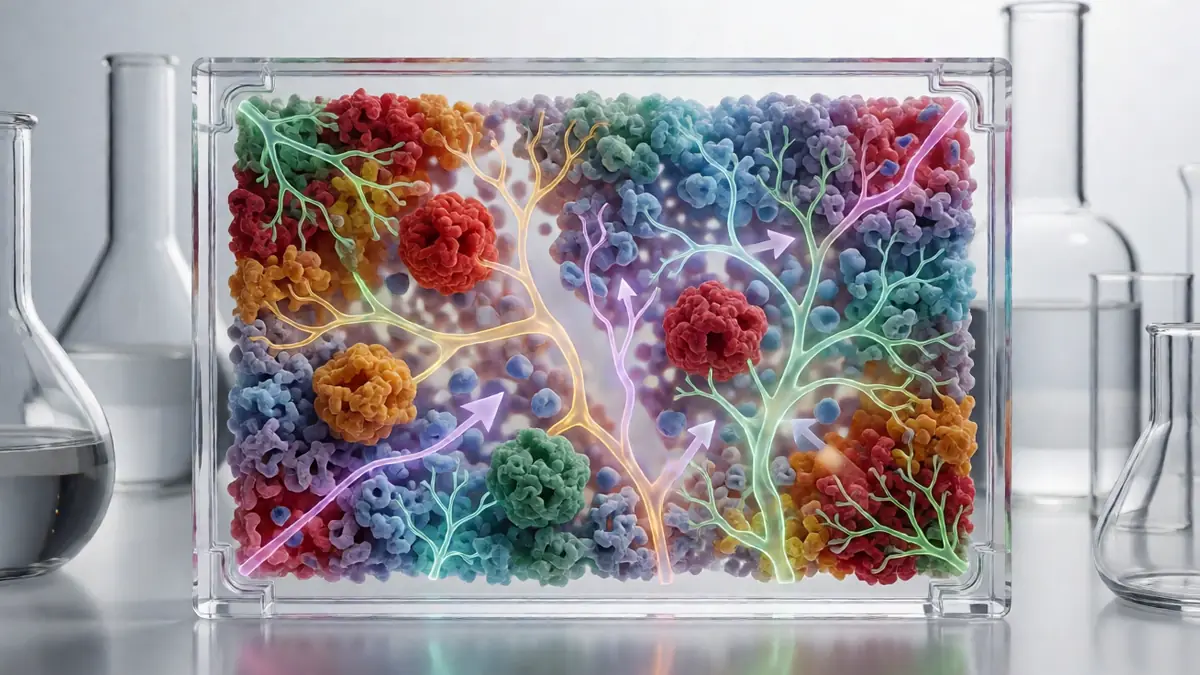
Understanding the tumor microenvironment requires experimental platforms that faithfully recapitulate its key components. Here, we present an innervated and vascularized head and neck squamous cell carcinoma (HNSCC)-on-a-chip platform built with fully defined and tunable engineered extracellular matrices (eECMs). In a stepwise increase of complexity, we first cocultured patient-derived HNSCC cells, cancer-associated fibroblasts, and endothelial cells within tailored eECMs, revealing extracellula
Understanding the tumor microenvironment requires experimental platforms that faithfully recapitulate its key components. Here, we present an innervated and vascularized head and neck squamous cell carcinoma (HNSCC)-on-a-chip platform built with fully defined and tunable engineered extracellular matrices (eECMs). In a stepwise increase of complexity, we first cocultured patient-derived HNSCC cells, cancer-associated fibroblasts, and endothelial cells within tailored eECMs, revealing extracellular matrix-dependent differences in transcriptional state, multicellular self-organization, and chemotherapeutic sensitivity. We then integrated these three-dimensional constructs into a cancer-vasculature interface, which enabled analysis of eECM-dependent directional collective migration and invasion. Finally, we incorporated trigeminal innervation through injectable 3D human bioengineered trigeminal ganglia, establishing a chip-based innervation-tumor-vasculature tri-interface. Together, this all-human platform integrates fully defined ECM, vasculature, and innervation in a single modular system to investigate tumor organization, invasion, and therapeutic responses within a controlled human microenvironment.