Health & Medicine

DCAF6 reprograms TGF-β responses through TRIM33 destruction.

| Source: Proceedings of the National Academy of Sciences of the United States of America

TGF-β signaling plays a pivotal role in regulating numerous cellular processes, primarily through the Smad-dependent pathway. Disruptions of the pathway are associated with developmental disorders and life-threatening diseases, such as cancer. It has been reported that TRIM33 inactivates Smad4 signaling and also drives its own signaling responses. However, the mechanism controlling TRIM33 activity has remained unclear. In this study, we identify DCAF6 as a previously unrecognized ubiquitin

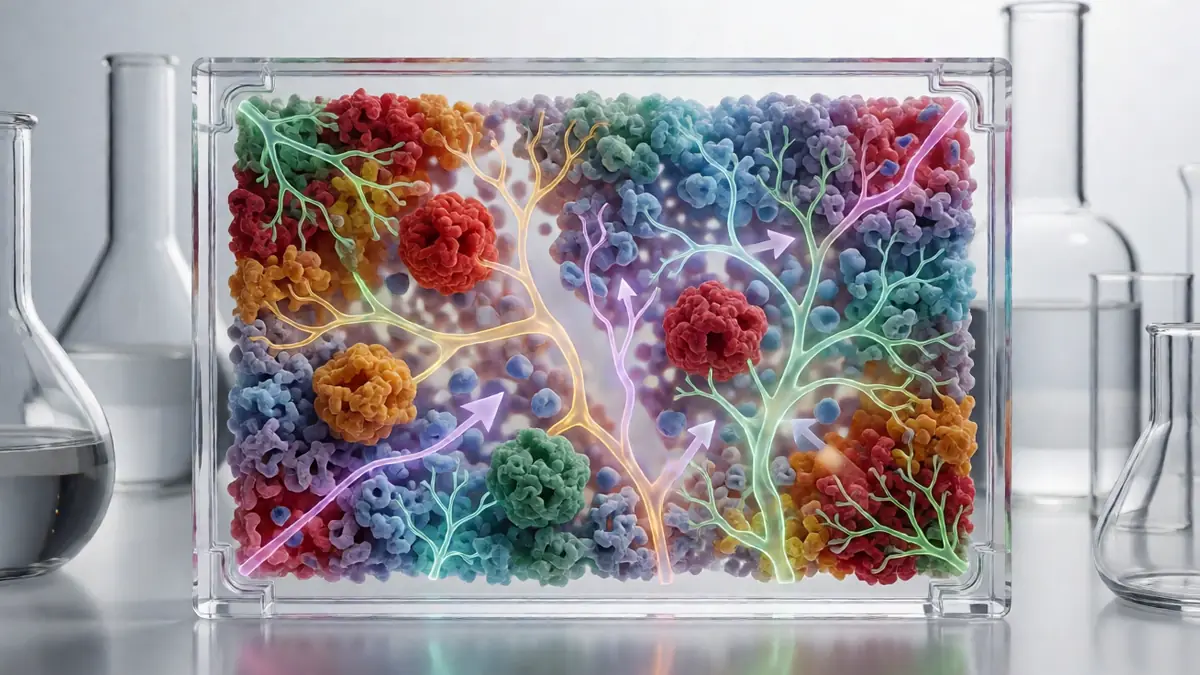
TGF-β signaling plays a pivotal role in regulating numerous cellular processes, primarily through the Smad-dependent pathway. Disruptions of the pathway are associated with developmental disorders and life-threatening diseases, such as cancer. It has been reported that TRIM33 inactivates Smad4 signaling and also drives its own signaling responses. However, the mechanism controlling TRIM33 activity has remained unclear. In this study, we identify DCAF6 as a previously unrecognized ubiquitin ligase for TRIM33. DCAF6 targets TRIM33 at Lys850 for ubiquitin-dependent proteasomal degradation, thus abolishing TRIM33-mediated mono-ubiquitination of Smad4. As such, DCAF6 induces dual consequences: it enhances Smad4-dependent transcriptional and growth inhibitory responses, while simultaneously eliminating TRIM33-dependent developmental responses. Conversely, DCAF6 knockout suppresses Smad4-dependent responses while amplifying TRIM33-dependent responses. Therefore, DCAF6 operates as a critical regulator in the balance of TGF-β signaling between the Smad4 and TRIM33 pathways. These insights deepen our understanding of the dynamics and fate control of TGF-β signaling and may open avenues for therapeutic approaches targeting TGF-β in diseases.

Read the original source →

Related Topics

Related Stories

Health & Medicine

An innervated and vascularized HNSCC-on-a-chip model built on defined and tunable engineered extracellular matrices.

Understanding the tumor microenvironment requires experimental platforms that faithfully recapitulate its key components. Here, we present an innervated and vascularized head and neck squamous cell carcinoma (HNSCC)-on-a-chip platform built with fully defined and tunable engineered extracellular matrices (eECMs). In a stepwise increase of complexity, we first cocultured patient-derived HNSCC cells, cancer-associated fibroblasts, and endothelial cells within tailored eECMs, revealing extracellula

Continue reading
Health & Medicine

Septin binding restricts Shigella growth and triggers intracellular tolerance.

Pathogen survival relies on their ability to adapt to changing environments, yet how intracellular bacteria tolerate cell-autonomous immunity remains unclear. Septins assemble into cage-like structures around cytoplasmic Shigella targeted by autophagy, but their antibacterial activity was unknown. Using advanced microscopy and cell-free reconstitution, we show that septins polymerize into circumferentially oriented filaments that inhibit bacterial growth. RNA-sequencing reveals that septin bindi

Continue reading
Health & Medicine

The honey bee stinger: An unusual pump with collapsible double pistons.

Most stinging animals deliver venom by contracting muscles around a venom reservoir, but honey bees employ a fundamentally different strategy. The stingers of worker bees have the unique ability to autotomize, separating from the body, to continue to sting independently. Despite more than a century of anatomical descriptions, the mechanics of venom pumping have remained unresolved due to the challenges of observing them in action. We recorded high-speed videos of active, autotomized stingers, co

Continue reading
Health & Medicine

mechanoLight: A genetically encoded fluorescent biosensor for visualizing 5-HT2AR mechanotransduction in live cells.

G protein-coupled receptors (GPCRs) are pivotal sensors of the mechanical environment, yet how they sense and transduce physical stimuli into biochemical signals within live cells remains largely elusive. Here we introduce mechanoLight, a genetically encoded red fluorescent biosensor designed to report the mechanical activation of the 5-hydroxytryptamine 2A receptor (5-HT2AR). By incorporating a circularly permuted mApple (cp-mApple) into the third intracellular loop of 5-HT2AR with the optimize

Continue reading
Health & Medicine

Neuromodulatory control of cortical function: Cell-type-specific regulation of neuronal information transfer.

Neuromodulatory systems such as dopamine and acetylcholine enable cortical circuits to rapidly shift between behavioral states, yet it remains unclear how receptor-specific signaling reshapes what single neurons compute. Here, we combined whole-cell recordings from excitatory and inhibitory neurons in layer 2/3 of mouse somatosensory cortex with information-theoretic analyses under frozen-noise stimulation. We quantified stimulus-to-spike information transfer and profiled each neuron across four

Continue reading