Mechanical instability generates monodisperse colloidosomes.
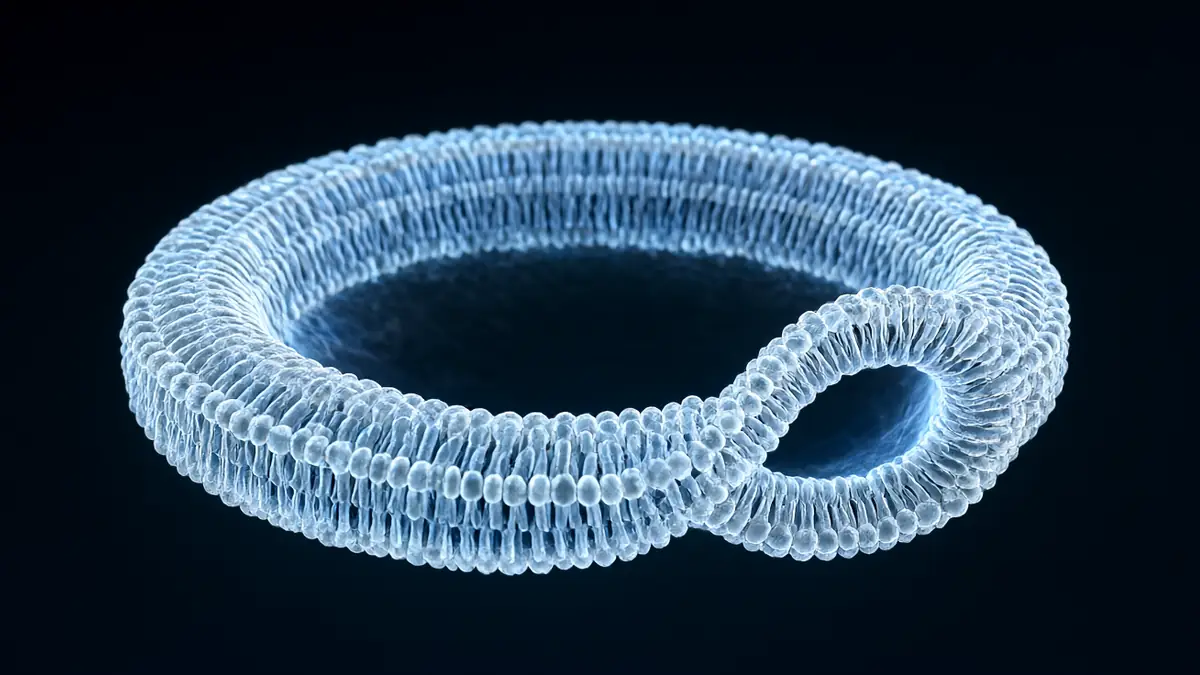
Formation and rupture of vesicles are fundamental processes underlying diverse phenomena in biology, materials science, and biomedical applications. Vesicles form when the area of a growing disk-like membrane reaches the instability point at which the energy barrier to the disk-to-vesicle transition vanishes. Observing such topological transitions in lipid bilayers is a challenge because of their nanoscale dimensions and rapid dynamics. We study a scaled-up model of membranes assembled from rod-
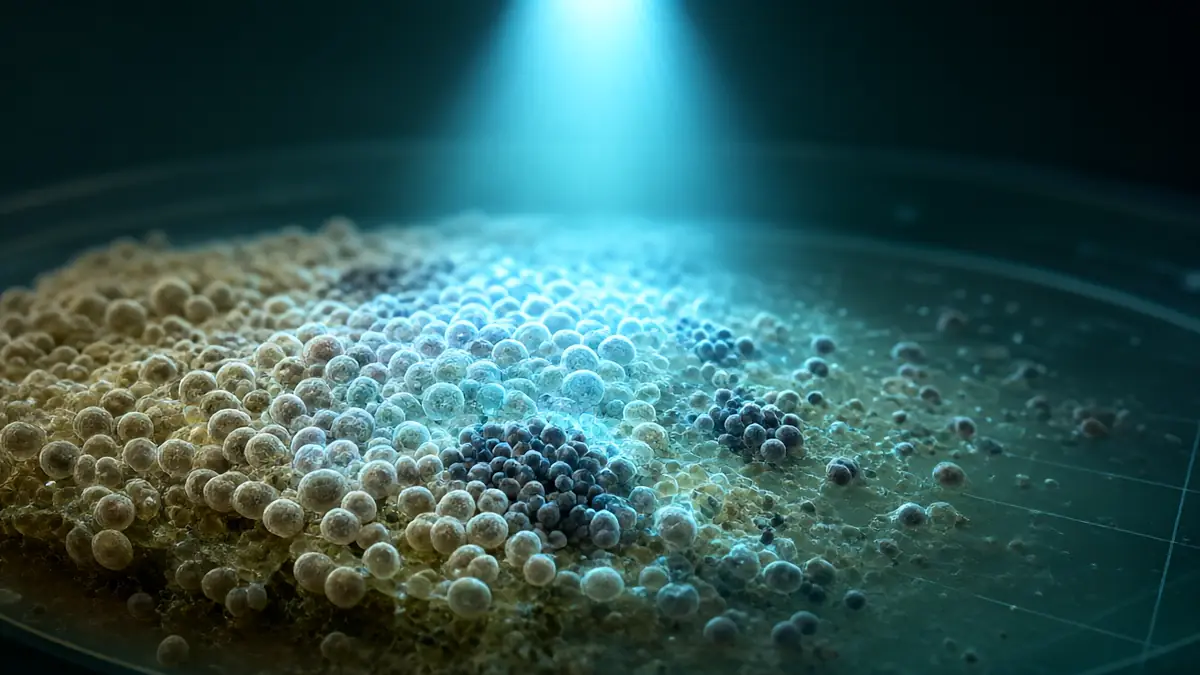
Formation and rupture of vesicles are fundamental processes underlying diverse phenomena in biology, materials science, and biomedical applications. Vesicles form when the area of a growing disk-like membrane reaches the instability point at which the energy barrier to the disk-to-vesicle transition vanishes. Observing such topological transitions in lipid bilayers is a challenge because of their nanoscale dimensions and rapid dynamics. We study a scaled-up model of membranes assembled from rod-shaped colloidal particles. The unique features of colloidal membranes enable the real-time visualization of spontaneous vesicle closure driven by an instability arising from competition between edge and bending energies that is universal to all membrane-based materials. A continuum theory with independently measured material parameters quantitatively predicts the instability point for vesicle formation and intermediate membrane conformations during the disk-to-vesicle transition. The instability generates monodisperse, selectively permeable colloidosomes whose size is controlled by gravity and membrane elasticity, providing a scalable and programmable platform for diverse applications.