Environment

Chemical Control of Quorum Sensing Rewires Mixed Bacterial Communities.
| Source: Journal of the American Chemical Society

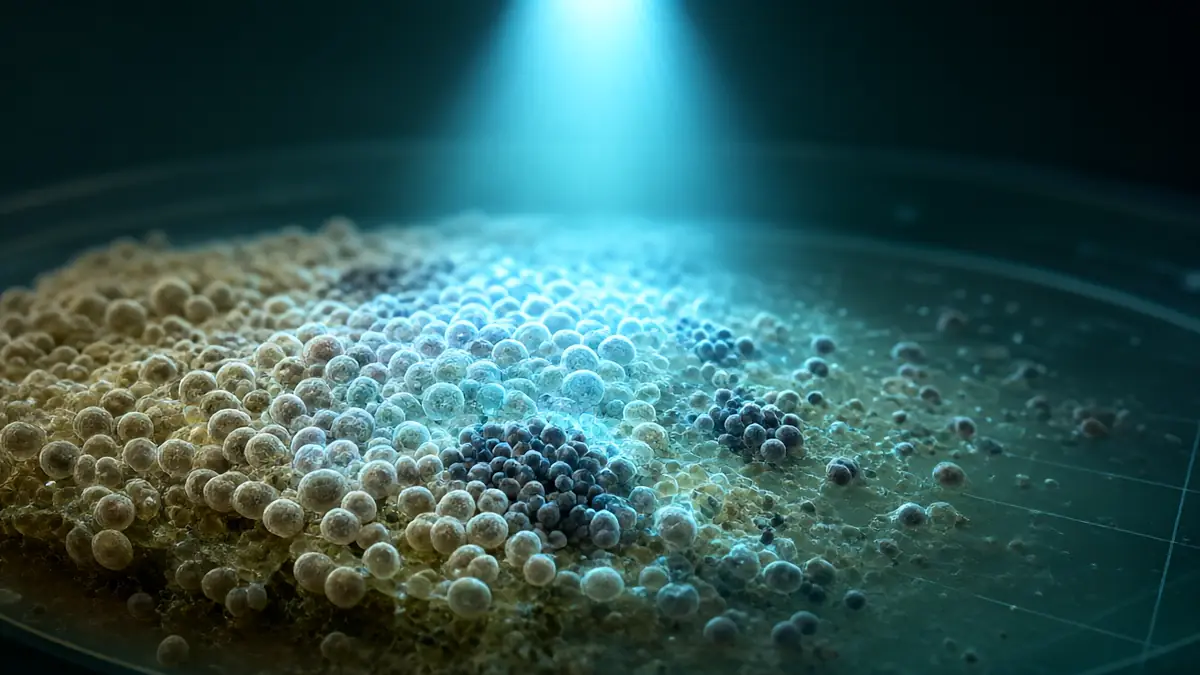
Microbial communities are central to host and environmental health, yet their dysregulation can drive diseases. Chemical strategies for selectively reprogramming community composition remain limited. Here, we show that agonists of the accessory gene regulator (agr) quorum sensing system provide a powerful, nonbactericidal approach to reshape staphylococcal biofilm communities. In mixed biofilms of multiple Staphylococcus epidermidis strains, selective agr activation produces pronounced sequence-

Microbial communities are central to host and environmental health, yet their dysregulation can drive diseases. Chemical strategies for selectively reprogramming community composition remain limited. Here, we show that agonists of the accessory gene regulator (agr) quorum sensing system provide a powerful, nonbactericidal approach to reshape staphylococcal biofilm communities. In mixed biofilms of multiple Staphylococcus epidermidis strains, selective agr activation produces pronounced sequence-dependent shifts in community composition in vitro. This targeted remodeling enhances the susceptibility of the community to antibiotic treatment. Extending this strategy to interspecies systems, we demonstrate that agr agonists reduce the abundance of methicillin-resistant Staphylococcus aureus by >95% in mixed biofilms with S. epidermidis without relying on bactericidal activity. Notably, the efficacy of agr-mediated community control is modulated by iron availability, revealing an environmental layer of regulation. Together, these findings support quorum sensing agonism as a chemically precise strategy to manipulate microbial communities by exploiting intrinsic signaling differences with implications spanning human health and agriculture.

Read the original source →

Related Topics

Related Stories

Environment

Mechanical instability generates monodisperse colloidosomes.

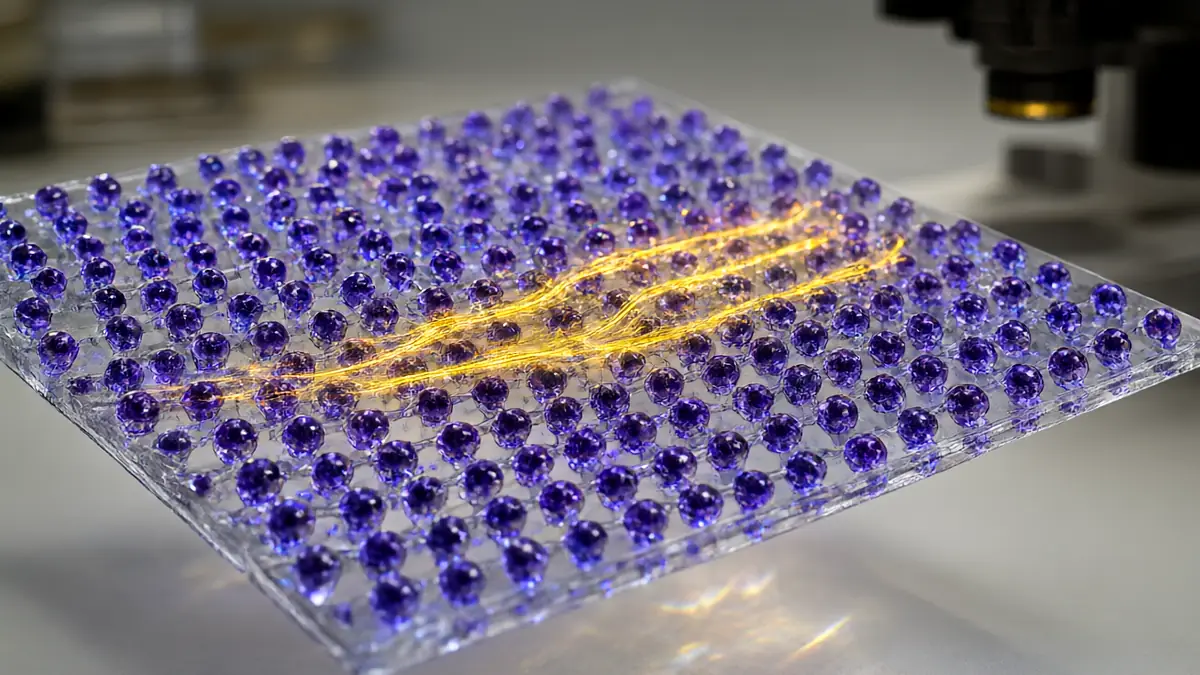
Formation and rupture of vesicles are fundamental processes underlying diverse phenomena in biology, materials science, and biomedical applications. Vesicles form when the area of a growing disk-like membrane reaches the instability point at which the energy barrier to the disk-to-vesicle transition vanishes. Observing such topological transitions in lipid bilayers is a challenge because of their nanoscale dimensions and rapid dynamics. We study a scaled-up model of membranes assembled from rod-

Continue reading
Environment

Windblown dunes are born in sand at the brink of transport.

Windblown dunes are found everywhere in the Solar System where a supply of loose sediment is mobilized by gas flows, from the sluggish winds of Venus to speed-of-sound sublimation flows on comets. Their abundance is nontrivial because dunes only form where grains hop ballistically ("saltate"). This implies that winds across the Solar System reach "goldilocks" speeds that are just right to initiate and maintain saltation of whatever sediment is available despite vast variations in material and fl

Continue reading
Environment

Unlocking the unparalleled paleoclimate record of Antarctic blue ice areas.

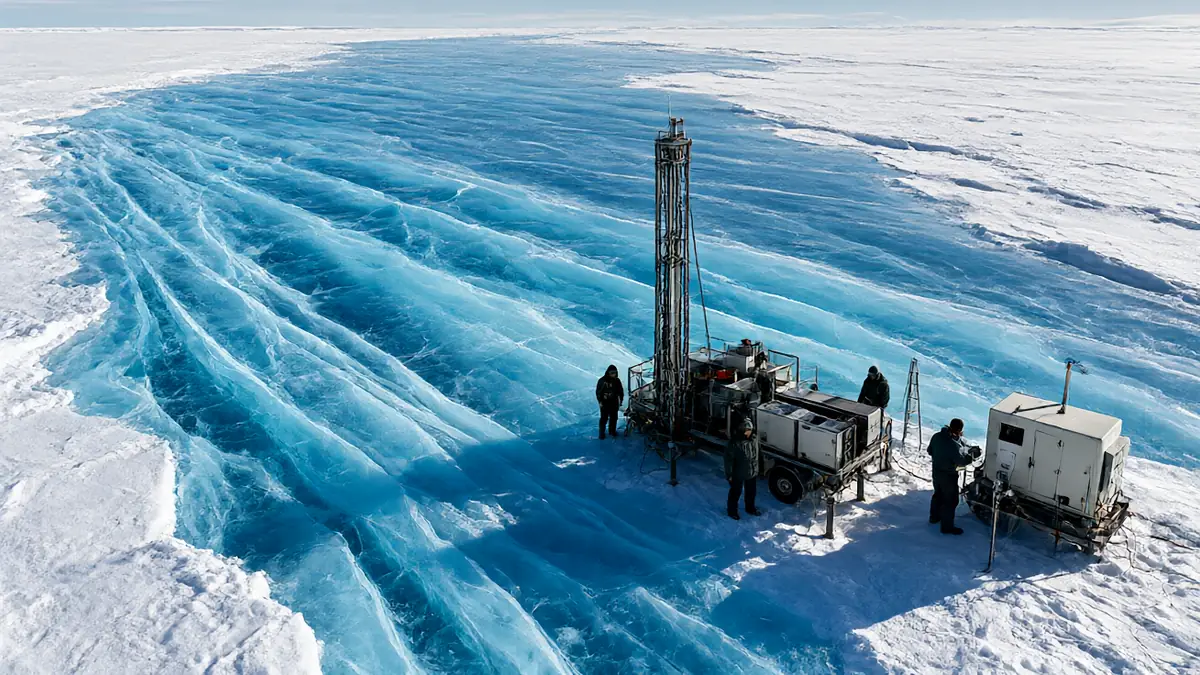
Ice uniquely provides direct samples of ancient atmosphere, enabling measurements of greenhouse gases contemporaneous to temperature reconstructions. Blue ice areas (covering 1% of the surface of Antarctica) hold a largely underexplored paleoclimate record that can extend beyond deep ice cores (that is, older than 1.5 My), covering periods in which global surface temperatures were similar to projected future temperatures. Blue ice areas expose ancient ice directly at the surface or at shallow de

Continue reading
Environment

Submillimetre hot-electron transport in manganese-doped quantum dot solids.

Colloidal quantum dot solids are promising for photoconversion and photochemistry, but their performance is fundamentally limited by rapid hot-carrier cooling, low carrier mobility and short transport ranges 1 . Here we demonstrate a spin-exchange-driven phototransport regime in manganese-doped quantum dot films that enables the generation, long-range transport and regeneration of hot carriers. Ultrafast spin-exchange-mediated Auger upconversion promotes electrons into high-energy, delocalized s

Continue reading
Environment

Mussels possess distinct vanadium and iron storage systems for fabricating metal-reinforced adhesive fibers.

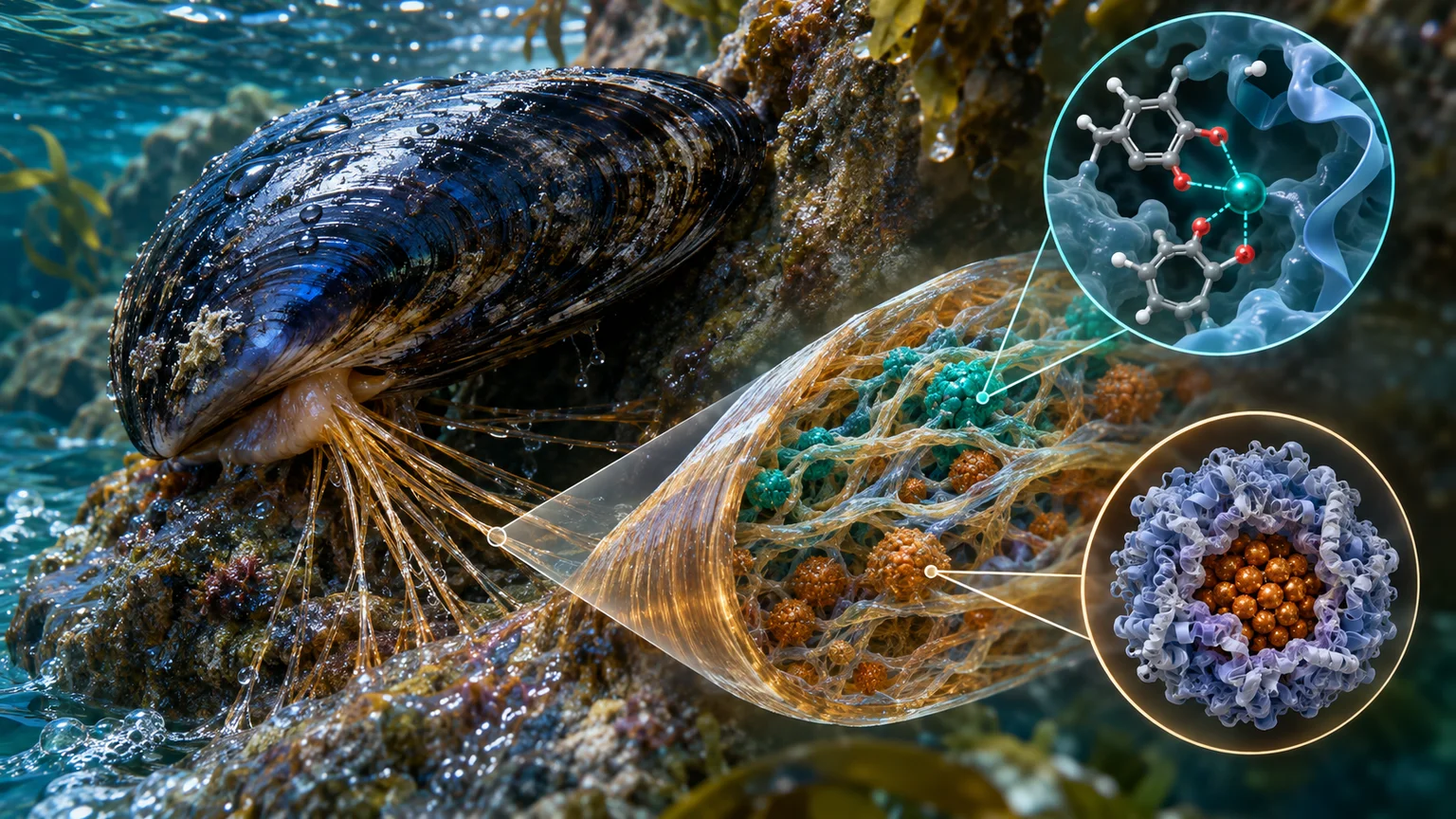
Mussels fashion a protein-based fibrous adhesive holdfast known as a byssus to tether themselves in marine habitats against crashing waves. The capacity of mussels to anchor securely is dependent on load-bearing protein-metal cross-links mediated by 3,4-dihydroxyphenylalanine (DOPA) residues coordinated to metal ions, which significantly enhance byssus mechanical properties (e.g., adhesive strength, abrasion resistance, toughness, self-healing capacity). However, the natural metal incorporation

Continue reading