Health & Medicine

Lineage and renewal dynamics of sebaceous glands govern skin barrier integrity in mice.

| Source: Proceedings of the National Academy of Sciences of the United States of America

Sebaceous glands (SGs) are essential for maintaining skin homeostasis and barrier function. However, the cell biology and lineage of SGs remain poorly understood in vivo. Here we performed bulk isolation of murine SGs, uncovered their molecular features, and generated SG-specific tool mouse models. Tracing with SG-Chaser mice revealed SG heterogeneity and their dynamic and distinct responses to common external stimuli. Specifically, some SG stem cell (SGSC) descendants homed back to the bulge an

Sebaceous glands (SGs) are essential for maintaining skin homeostasis and barrier function. However, the cell biology and lineage of SGs remain poorly understood in vivo. Here we performed bulk isolation of murine SGs, uncovered their molecular features, and generated SG-specific tool mouse models. Tracing with SG-Chaser mice revealed SG heterogeneity and their dynamic and distinct responses to common external stimuli. Specifically, some SG stem cell (SGSC) descendants homed back to the bulge and underwent redifferentiation, the toggling of which is critical for preserving stem cell pool and maintaining SG homeostasis. Combining single-cell RNA sequencing with lineage tracing, we identified the origin of murine SGs and found that Krt15 + cells gave rise to both typical and atypical SGs via divergent differentiation trajectories. As lipid-rich cells, murine sebocytes exhibit a differentiation program closely resembling that of adipocytes and highly reliant on Pparγ. Topical pharmacological regulation of Pparγ can effectively modulate sebocytes homeostasis in both mice and humans. Together, these results unveil the multilayered dynamics of murine SGs and suggest viable approaches to modulate SG homeostasis and maintain barrier integrity.
Read the original source →

Related Stories

Health & Medicine

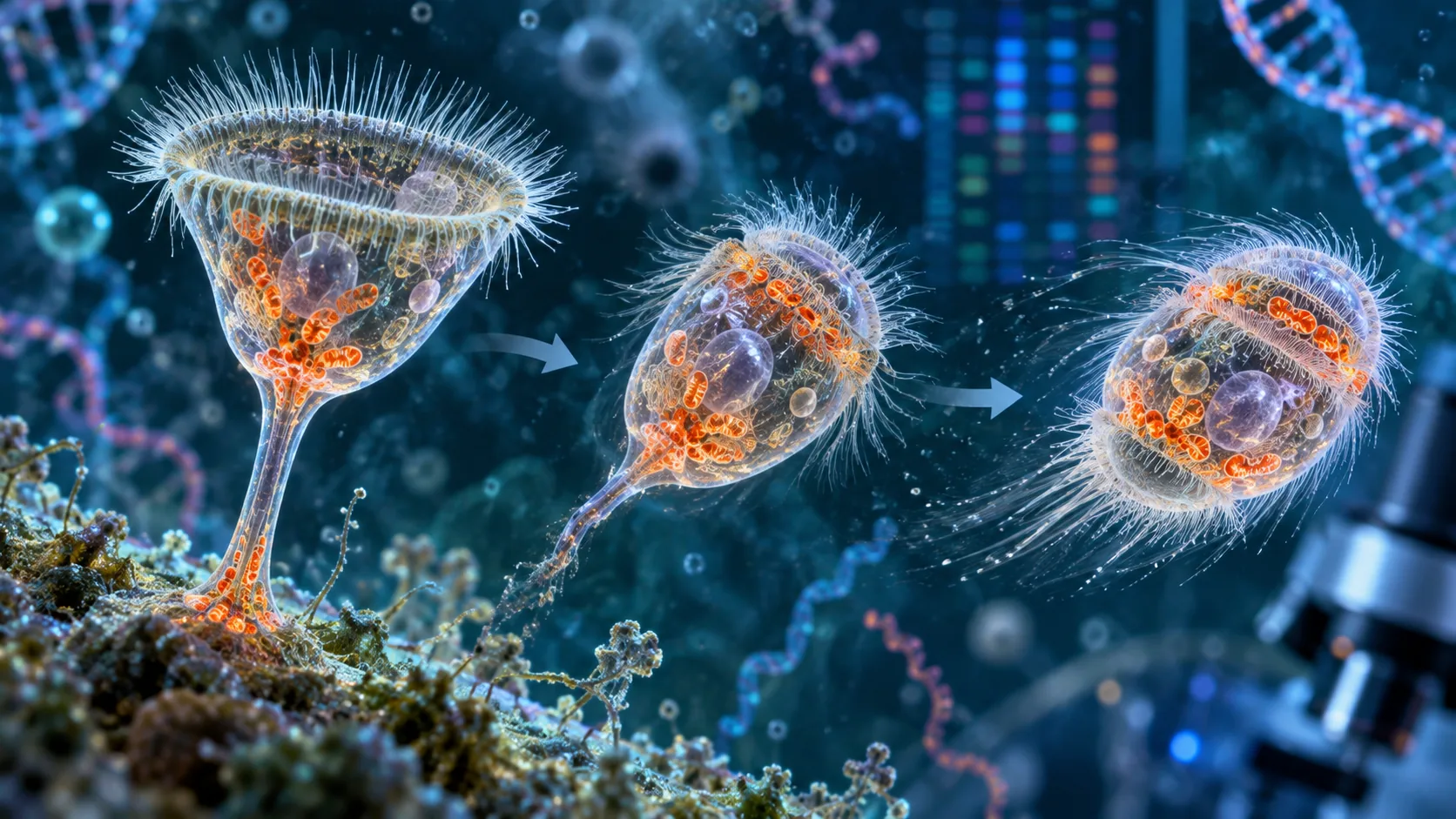
Cellular remodeling during reversible life-stage transition in sessile ciliates: Genomic and transcriptomic insights.

Unraveling mechanisms driving dramatic life-stage transitions in response to environmental stress is central to understanding cellular adaptation. We studied a distinctive group of sessile ciliates that undergo profound morphological and organellar remodeling when transitioning from sessile trophonts to motile telotrochs. We generated chromosome-level genomes for two colonial species ( Campanella sinica , Epistylis hentscheli ) and one solitary species ( Vorticella campanula ), revealing genome

Continue reading
Health & Medicine

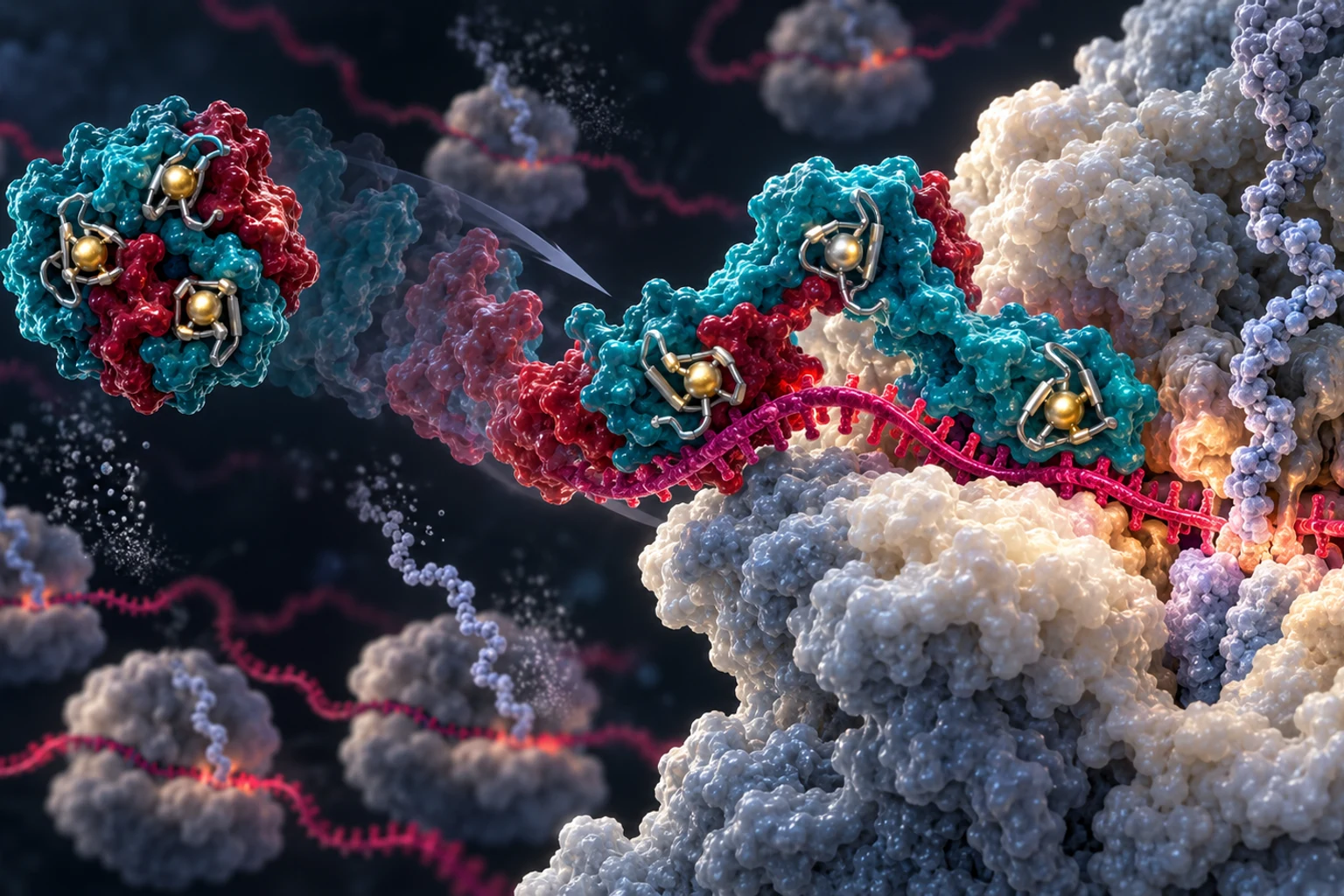
Zinc mediates the allosteric activation of Shiftless to suppress programmed -1 ribosomal frameshifting.

Many medically important viruses, including HIV-1 and severe acute respiratory syndrome coronavirus 2, utilize programmed -1 ribosomal frameshifting (-1 PRF) to synthesize certain proteins essential for the viral life cycle. Shiftless (SHFL) is an interferon-simulated, zinc finger-containing protein that restricts -1 PRF and viral infection. However, its regulatory spectrum and mechanism remain largely unclear. Here, we showed that SHFL orthologs potently suppress a wide variety of viral and cel

Continue reading
Health & Medicine

Tandem RNA-binding domain architecture drives PKR activation through an intramolecular interface.

Tandem repeats of RNA-binding domains (RBDs), often linked by intrinsically disordered sequences, are prevalent among RNA-binding proteins (RBPs). The inherent flexibility of these arrangements, however, raises the question of whether such domains can adopt defined configurations critical for function. Here, we reveal that in Protein Kinase R (PKR)-an RBP that triggers the innate immune response upon sensing double-stranded RNAs (dsRNAs)-its two dsRNA-binding domains (dsRBDs) assemble into a uni

Continue reading
Health & Medicine

Targeted extracellular degradation of LRP8 promotes ferroptosis in cancer cells.

Tumor reliance on antioxidant defenses creates a vulnerability to ferroptosis, yet strategies to therapeutically disable these systems remain limited. Here, we identify targeted degradation of the selenium uptake receptor lipoprotein receptor-related protein 8 (LRP8) as an effective approach to decrease the abundance of the ferroptosis-protective enzyme glutathione peroxidase 4 (GPX4). Using bispecific cytokine receptor-targeting chimeras (KineTACs) that couple LRP8 to cytokine receptor internal

Continue reading
Health & Medicine

LAT condensation gates PLCγ1 activation via bimodal LAT phosphorylation.

T cells can respond to even a single molecular binding event of antigen to a TCR. A key step in the TCR signaling pathway that definitively exhibits this single-molecule response is the initiation of calcium influx by activation of PLCγ1 in the LAT protein condensate. Here, we describe detailed kinetic measurements examining how protein condensation of LAT regulates activation of PLCγ1 using a reconstituted membrane system. The results reveal that membrane recruitment of PLCγ1

Continue reading