Acute degradation of Pumilio proteins reveals a biphasic posttranscriptional regulatory hierarchy in embryonic stem cell fate decision.
Posttranscriptional regulation is critical for mammalian embryogenesis yet has been underexplored. We previously showed that RNA-binding Pumilio proteins (Pum1/2) are essential for early mouse embryogenesis and embryonic stem cell (ESC) functions. Here, using acute protein degradation systems combined with time-resolved RNA sequencing and enhanced crosslinking and immunoprecipitation, we delineate a two-phase regulatory hierarchy modulated by Pum1/2 in mouse ESCs. The first phase, occurring with
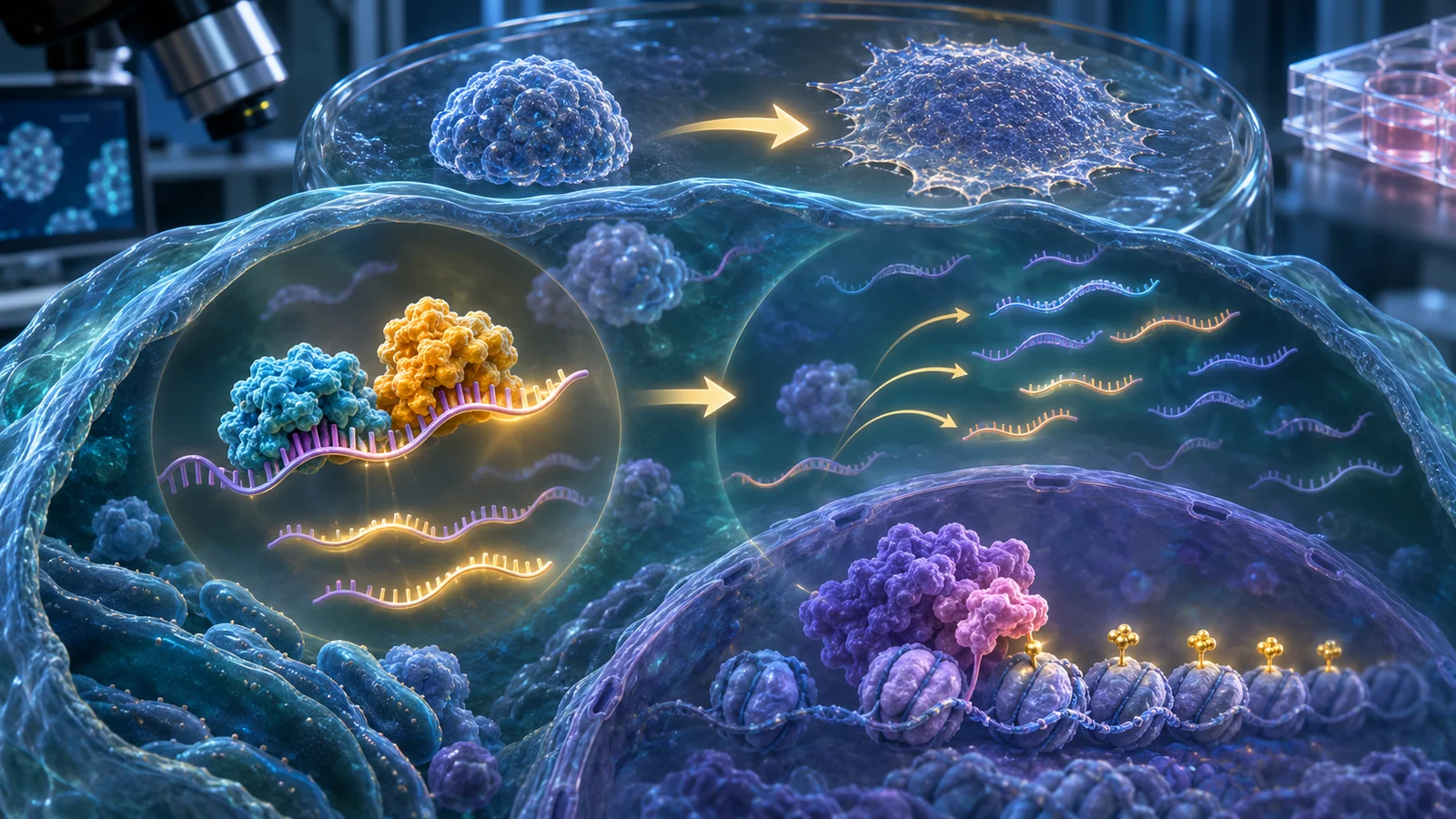
Posttranscriptional regulation is critical for mammalian embryogenesis yet has been underexplored. We previously showed that RNA-binding Pumilio proteins (Pum1/2) are essential for early mouse embryogenesis and embryonic stem cell (ESC) functions. Here, using acute protein degradation systems combined with time-resolved RNA sequencing and enhanced crosslinking and immunoprecipitation, we delineate a two-phase regulatory hierarchy modulated by Pum1/2 in mouse ESCs. The first phase, occurring within 10 h of Pum1/2 depletion, is predominantly stabilization of over 100 Pum1/2-target mRNAs, while the second phase, occurring in subsequent 66 h, propagates to over 1,000 mRNAs mostly through indirect regulatory effects. Functionally, Pum1/2 depletion delays transition from naïve to formative pluripotency and alters expression trajectories of neuroectoderm and germline genes during early differentiation. Mechanistically, Pum1/2 directly repress mRNAs encoding Polycomb Repressive Complex 2 subunits, including Suz12 , thereby potentially constraining H3K27me3 deposition at neuroectodermal gene loci. These findings establish Pum1/2 as biphasic posttranscriptional regulators of pluripotency and lineage balance.