Artificial Intelligence

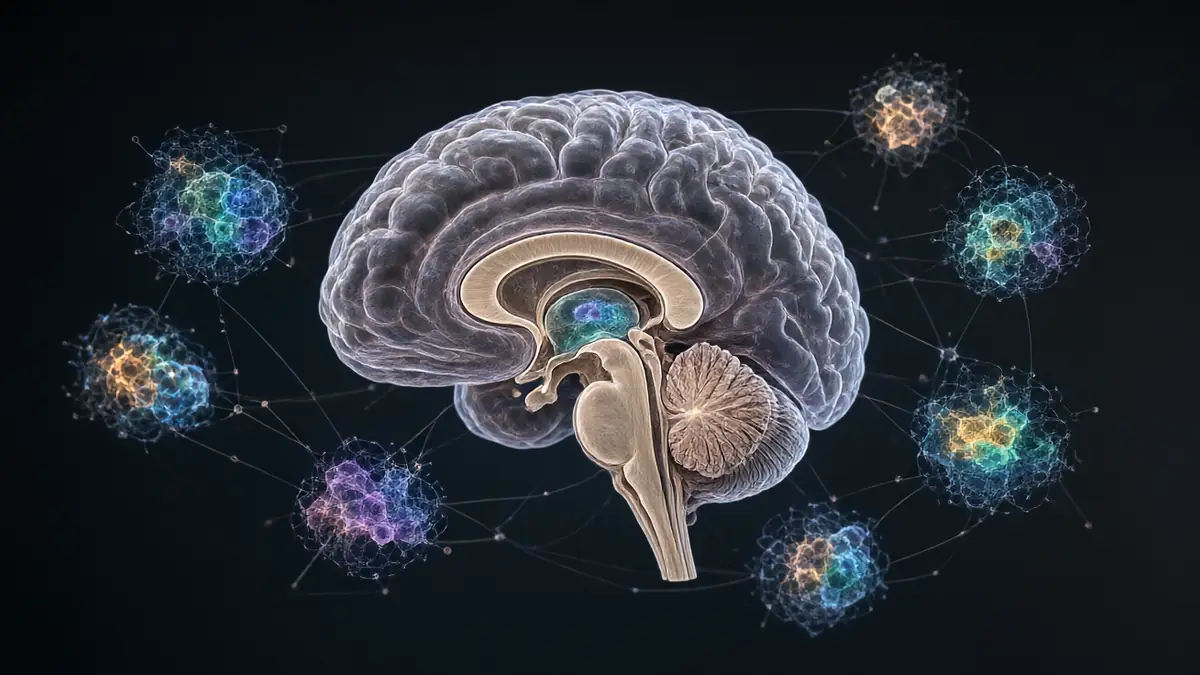
Hypothalamic volume and cell-type changes in ageing and Alzheimer's disease.
| Source: Nature

Alterations in metabolism, stress response, sleep, circadian rhythms and neuroendocrine processes are key features of ageing and neurodegeneration 1,2 . These fundamental processes are regulated by the hypothalamus, yet how its functionally distinct subregions and cell types change during human ageing and Alzheimer's disease (AD) remains largely unexplored. Here we present HypoAD, an atlas of the human hypothalamus in ageing and AD, including high-resolution magnetic resonance imaging from 458 i

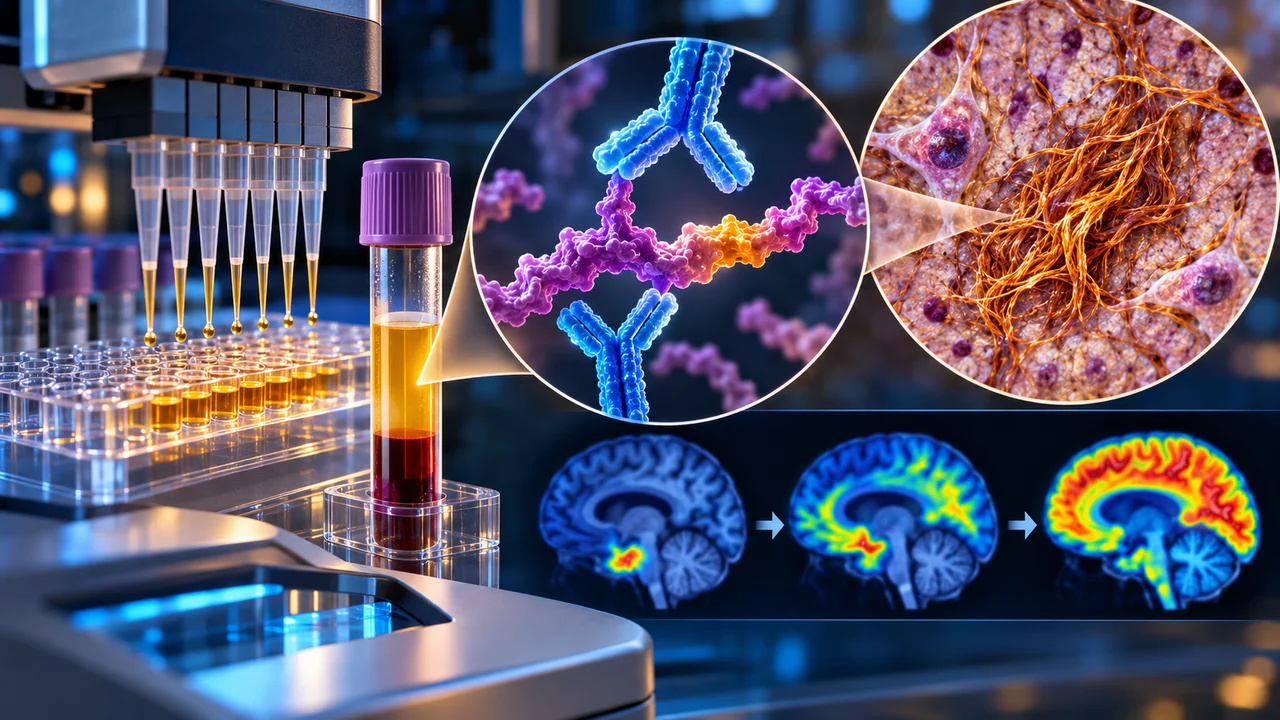
Alterations in metabolism, stress response, sleep, circadian rhythms and neuroendocrine processes are key features of ageing and neurodegeneration 1,2 . These fundamental processes are regulated by the hypothalamus, yet how its functionally distinct subregions and cell types change during human ageing and Alzheimer's disease (AD) remains largely unexplored. Here we present HypoAD, an atlas of the human hypothalamus in ageing and AD, including high-resolution magnetic resonance imaging from 458 individuals and single-nucleus RNA sequencing of 614,403 nuclei from young participants, patients with AD and age-matched non-dementia control participants. We show that hypothalamic subregions governing metabolism, stress and circadian rhythms are particularly vulnerable, showing notable changes in both volumes and gene expression during ageing and AD. At the molecular level, machine learning models identified the inflammatory response and regulators of circadian rhythms as key cellular predictors of AD. These signatures were reflected in specific cell types: microglia transitioned to a pro-inflammatory state, whereas inhibitory neurons within sleep-regulating and circadian-regulating hypothalamic subregions showed the most profound transcriptional alterations, including disruptions in ligand-receptor interactions and G-protein-coupled receptor signalling. HypoAD provides a high-resolution volumetric map and a transcriptomic atlas of the human hypothalamus in ageing and AD, relating lifestyle and behavioural changes to the relevant volumetric and molecular pathways. In addition, HypoAD provides a framework to investigate hypothalamic dysfunction and establishes a roadmap for targeted interventions aimed at mitigating physiological disruptions to potentially slow disease progression.
Read the original source →

Related Stories

Artificial Intelligence

Simply aging.

Biological aging is complex and resists any single mechanistic narrative. This article develops a conceptual framework for aging biology through a series of brief statements on central topics in the field, with the goal of discussing aging simply, directly and accessibly. The organizing principle is that aging is a default outcome of living: because biological processes are inherently imperfect, deleterious changes (the deleteriome) accumulate over time and progressively erode functional reserve

Continue reading
Artificial Intelligence

A Plasma eMTBR-Tau Immunoassay for Detection of Advanced Insoluble Tau Pathology.

Blood biomarkers that reflect neurofibrillary tau burden, a defining hallmark of Alzheimer disease (AD), remain limited. Endogenously cleaved microtubule-binding region tau 243 (eMTBR-tau243) has shown promise when measured by mass spectrometry; a scalable immunoassay could broaden research access and support clinical evaluation. To determine whether plasma levels of eMTBR-tau measured by a novel immunoassay are associated with tau neurofibrillary tangle pathology defined by neuropathology and t

Continue reading
Artificial Intelligence

An integrative single-cell epigenomic atlas annotates the regulatory genome of the adult mouse brain.

Histone modifications underpin the cell-type-specific gene regulatory programs that drive the remarkable cellular diversity of the mammalian brain. Here, we jointly profiled four histone modifications and the transcriptome in 2.5 million nuclei from the adult mouse brain. By integrating these data with chromatin accessibility, DNA methylation, and three-dimensional genome organization, we constructed a unified epigenomic atlas spanning over 100 brain cell subclasses and assigned active, primed,

Continue reading
Artificial Intelligence

Sub-second dopamine reinforcement shapes juvenile social play.

Juvenile social play is critical for neurodevelopment, yet the neural mechanisms organizing moment-to-moment interactions remain elusive. Using social behavior sequencing (Social-seq)-an occlusion-robust 3D pose estimation and unsupervised clustering pipeline-we found that nucleus accumbens (NAc) dopamine was tightly coupled to sub-second social syllables during naturalistic interactions. In wild-type juveniles, males exhibited a sharper dopaminergic contrast between proactive play and forced su

Continue reading
Artificial Intelligence

Where intention goes, responsibility flows: Grounding AI accountability in the machine learning paradigm.

An opening salvo of lawsuits in US courts has begun holding AI companies accountable through independent doctrinal routes: Product liability and agency law cut as swords, while the shields of Section 230 immunity and First Amendment doctrine begin to crack. This Perspective points out that these converging paths share a unifying principle, built on the very engineering architecture of machine learning (ML) itself. Every ML system, across all variants, is constituted by a human-specified objectiv

Continue reading