Human papillomavirus (HPV) infection, vaccination, and cervical screening in Britain from 1999 to 2024: findings from the repeated cross-sectional National Surveys of Sexual Attitudes and Lifestyles (
Human papillomavirus (HPV) vaccination and cervical screening have substantially reduced overall cervical cancer risk, but differences in uptake must be quantified to inform equitable access. This study aimed to provide population-level evidence of the impact of HPV vaccination on HPV types 16 and 18 (hereafter HPV-16/18) prevalence in England, Scotland, and Wales (hereafter Britain), and uptake of cervical cancer prevention interventions (ie, vaccination and screening), 15 years after the intro
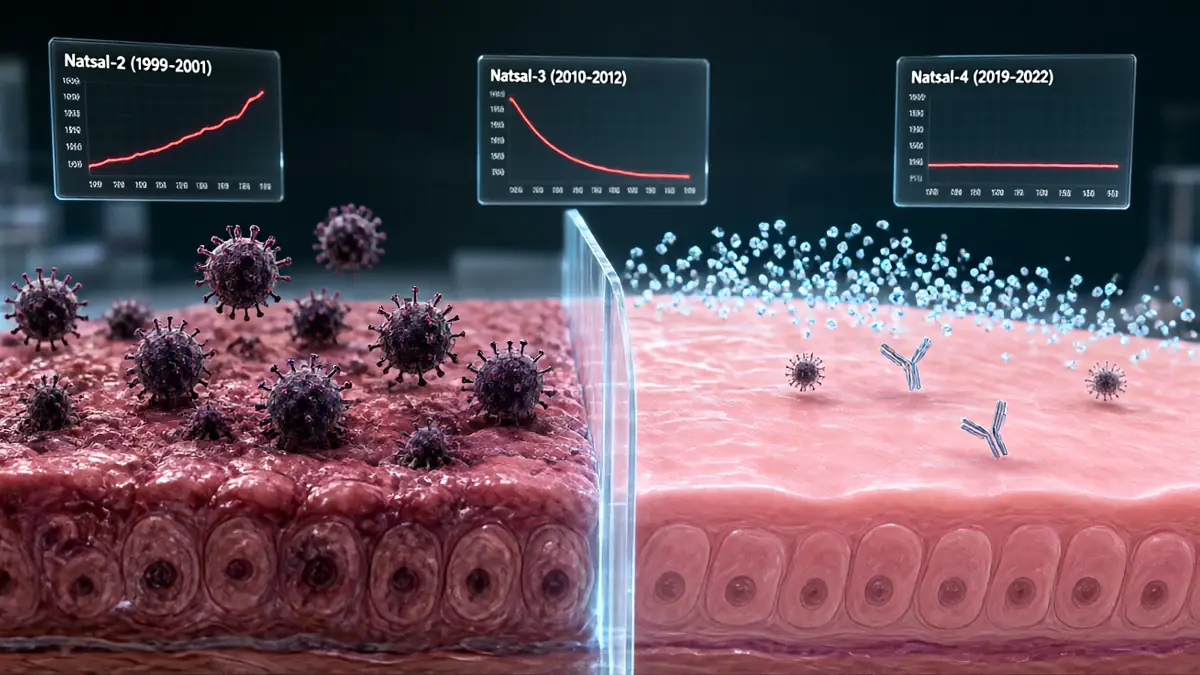
Human papillomavirus (HPV) vaccination and cervical screening have substantially reduced overall cervical cancer risk, but differences in uptake must be quantified to inform equitable access. This study aimed to provide population-level evidence of the impact of HPV vaccination on HPV types 16 and 18 (hereafter HPV-16/18) prevalence in England, Scotland, and Wales (hereafter Britain), and uptake of cervical cancer prevention interventions (ie, vaccination and screening), 15 years after the introduction of the vaccination programme in 2008. We conducted the National Surveys of Sexual Attitudes and Lifestyles (Natsal), which are nationally representative, cross-sectional population surveys with individual-level data and HPV testing of biosamples. Data from Natsal-2 (1999-2001; before the vaccination programme was introduced, and included urine biosamples), Natsal-3 (2010-12; early in the vaccination programme, and included urine biosamples), and Natsal-4 (2022-24; after the vaccination programme was established, and included vaginal swab and urine biosamples) were analysed. Age-adjusted prevalence ratios (aPRs) for HPV-16/18 infection were estimated among women eligible for routine vaccination (born from Sept 1, 1995) compared with same-aged women before the vaccination programme was introduced. Combined Natsal-4 probability and non-probability data assessed factors associated with self-reported HPV vaccination and cervical screening. Among 10 418 Natsal-4 women (aged 16-59 years), 1059 women in the probability sample group (aged 18-44 years) provided usable biosamples (Natsal-2 n=1849; Natsal-3 n=2407). HPV-16/18 prevalence was 86% lower (aPR 0·14, 95% CI 0·02-0·84) among those aged 18-29 years in Natsal-4 (1·6%, 95% CI 0·3-8·2) than in Natsal-2 (8·7%, 95% CI 6·7-11·3). All HPV-16/18 infections reported in Natsal-4 occurred in unvaccinated women. Of 733 routine vaccination-eligible women, 23·0% (95% CI 19·4-27·0) reported being unvaccinated. Among 3530 women (aged 25-59 years) eligible for cervical screening, 5·3% (95% CI 4·4-6·3) reported never attending screening. Non-uptake of vaccination and screening was higher among minority ethnic groups, religious groups, and those born outside the UK. Prevalence of high-risk, non-vaccine-preventable HPV (HPV 35, 39, 51, 56, and 59) infections was 4·9% (95% CI 3·7-6·4) in the total population, without any statistically significant differences between these subgroups. Women with higher-risk sexual behaviours were more likely to both be vaccinated and attend for screening. Britain's HPV vaccination programme has driven a dramatic decline in HPV-16/18 prevalence and WHO cervical cancer elimination targets might be achievable overall if this is sustained. However, women from minority ethnic groups, religious groups, and those not born in the UK are less likely to be vaccinated and screened while remaining at risk. It is crucial to improve the reach of prevention interventions to more equitably reduce cervical cancer morbidity and mortality. Wellcome Trust, Economic and Social Research Council, and the National Institute for Health Research.