Global greenhouse gas cobenefits of US irrigated agriculture.
Land use and land conversion for agriculture contribute nearly a quarter of global greenhouse gas (GHG) emissions, making the sector a key priority for emissions reductions. Crop yields are one factor that modulate agricultural land demand, with, all else equal, global land use change increasing with yield declines and decreasing with yield gains. Therefore, agricultural practices drive both direct, on-farm emissions, and indirect land use change emissions through yield effects. Here, we couple
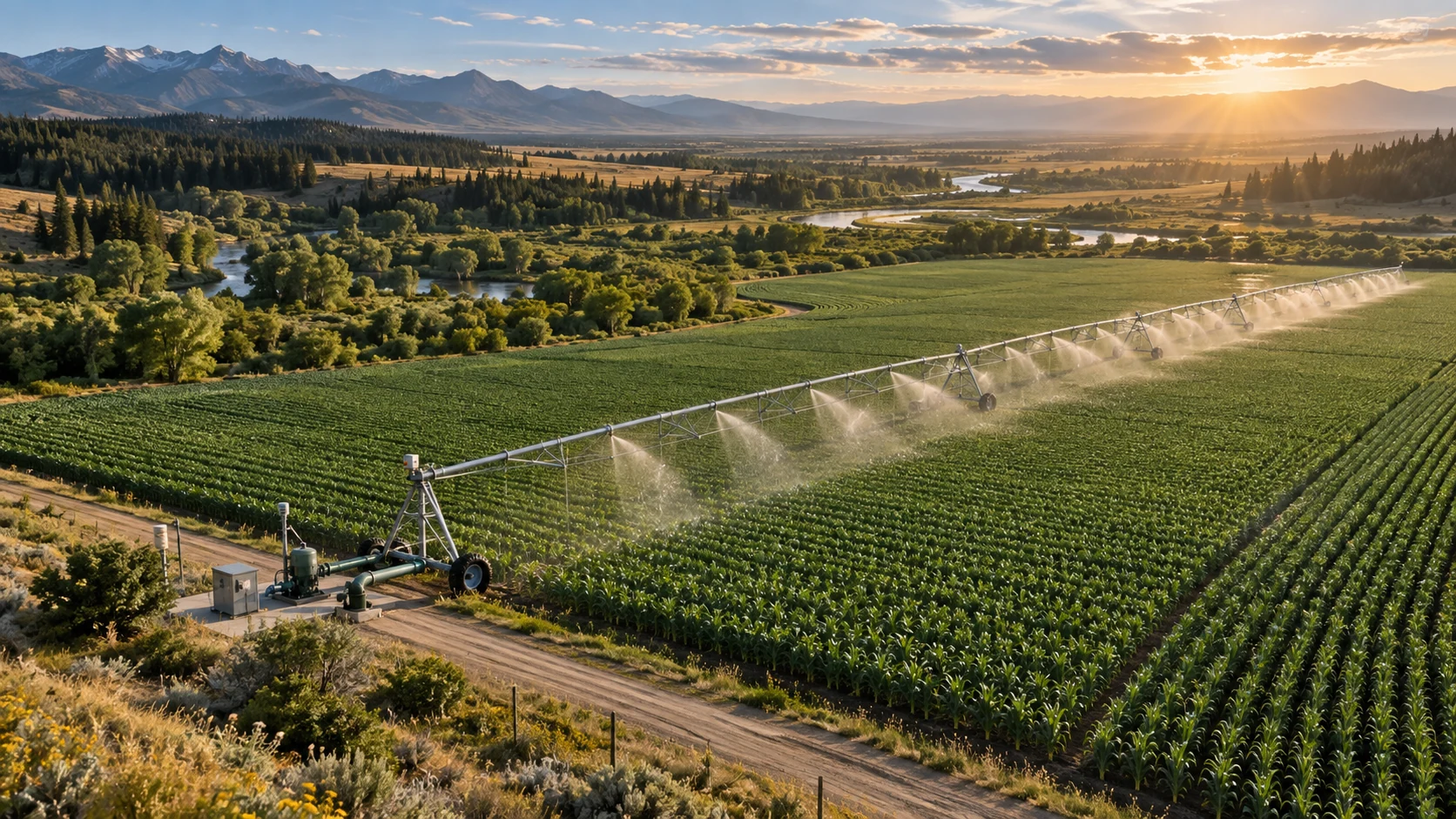
Land use and land conversion for agriculture contribute nearly a quarter of global greenhouse gas (GHG) emissions, making the sector a key priority for emissions reductions. Crop yields are one factor that modulate agricultural land demand, with, all else equal, global land use change increasing with yield declines and decreasing with yield gains. Therefore, agricultural practices drive both direct, on-farm emissions, and indirect land use change emissions through yield effects. Here, we couple estimates of direct emissions from US irrigation with an assessment of its productivity impacts and associated avoided indirect land use change. We find that US irrigation increases crop production by 3 to 39% across crop types, providing at least USD $31.9 billion in additional revenue. Using a spatially explicit global economic model, we project that these productivity benefits avoid net conversion of forests (-32 Mha) and other natural vegetation (-7 Mha) to grasslands (+35 Mha) and croplands (+4 Mha) globally. Due to land sparing, US irrigation provides an estimated gross GHG benefit of 6.86 Gt CO 2 e, while producing 0.019 Gt CO 2 e of direct emissions annually. Our findings highlight the necessity of jointly accounting for direct and indirect emissions to guide effective agricultural emissions mitigation policy.