Economics

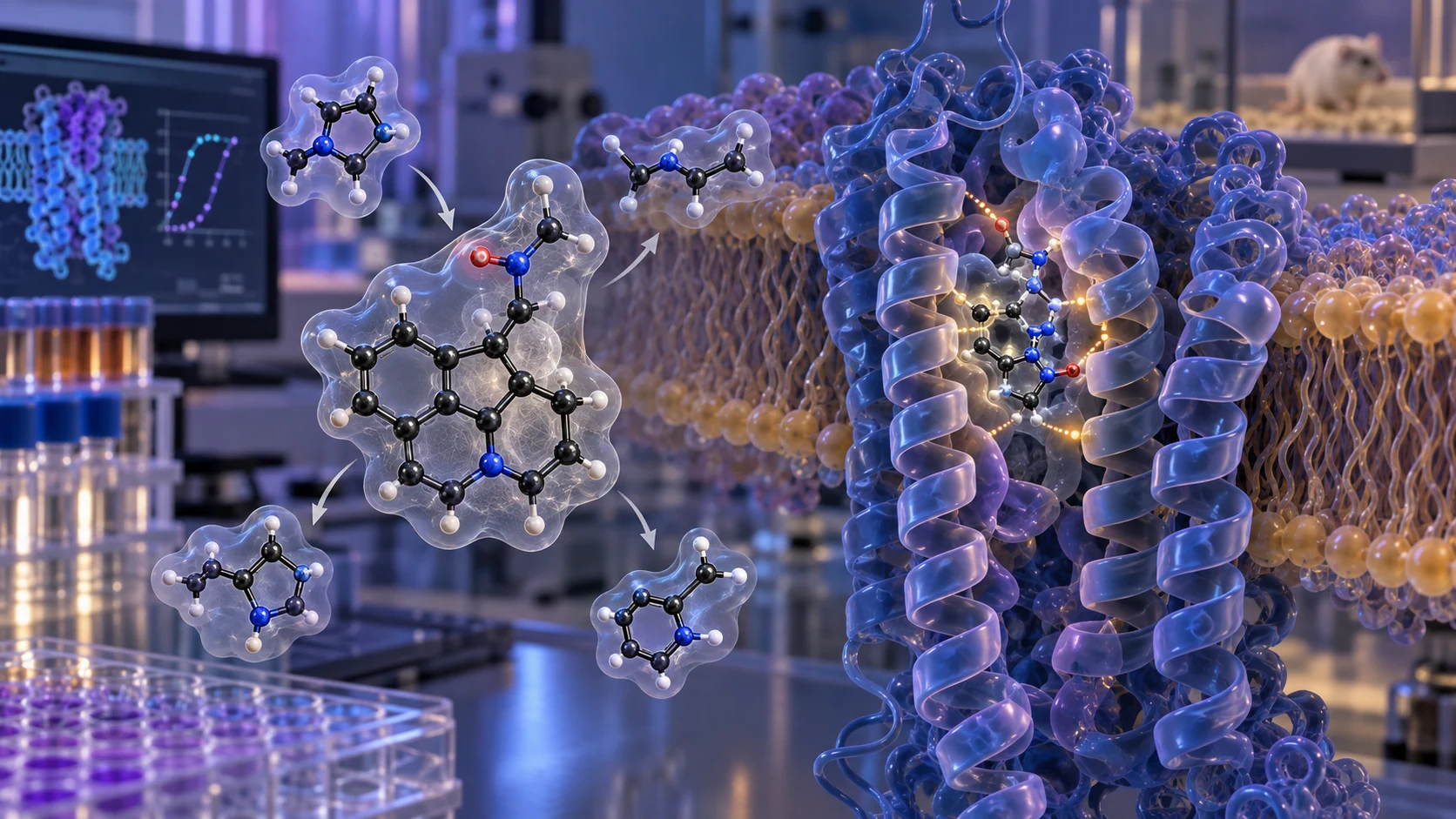
Deconstruction of lysergic acid diethylamide.
| Source: Proceedings of the National Academy of Sciences of the United States of America

Of the classic psychedelics, lysergic acid diethylamide (LSD) is perhaps the best-known, but its complex chemical architecture has limited synthetic investigations aimed at generating analogues with improved safety and efficacy profiles. Here, we systematically deconstruct the tetracyclic ergoline core of LSD to create 9 simplified ergoline analogues (i.e., ergologs) and evaluate them in pharmacological assays relevant to 5-HT2A, 5-HT2B, and 5-HT2C receptor function. Our work revealed the key mo

Of the classic psychedelics, lysergic acid diethylamide (LSD) is perhaps the best-known, but its complex chemical architecture has limited synthetic investigations aimed at generating analogues with improved safety and efficacy profiles. Here, we systematically deconstruct the tetracyclic ergoline core of LSD to create 9 simplified ergoline analogues (i.e., ergologs) and evaluate them in pharmacological assays relevant to 5-HT2A, 5-HT2B, and 5-HT2C receptor function. Our work revealed the key molecular features and minimal pharmacophore of LSD necessary to produce maximal agonism of 5-HT2A receptors and hallucinogenic behavioral effects. Furthermore, we established strategies for reducing the hallucinogenic and cardiotoxic potential of LSD and identified UCD0094 and UCD0076 as ergologs with improved safety profiles. In stark contrast to LSD, UCD0076 exhibits preference for activating 5-HT2C receptors over other 5-HT2 receptors and produces antipsychotic-like properties in mouse behavioral assays.

Read the original source →

Related Stories

Economics

A glycan superbinder reveals polysialylated-CD56 as a precision biomarker for pancreatic cancer.

Pancreatic cancer remains one of the most lethal malignancies, largely due to the lack of reliable biomarkers for early detection. Aberrant glycosylation presents a promising source of diagnostic signatures, yet polysialic acid (polySia), a distinctive glycan, has remained underexplored, primarily owing to limitations in detection methods and recognition tools. Here, we report the development of a polySia "superbinder," a nanoscale molecularly imprinted polymer (nanoMIP) that exhibits superior s

Continue reading
Economics

Evolution of the arbuscular mycorrhizal regulatory network through differential GRAS gene retention and protein interaction in land plants.

Plants rely on an ancient genetic "toolkit" to establish arbuscular mycorrhizal symbiosis (AMS) with fungal partners. However, the symbiotic outcomes vary among AMS hosts, indicating divergence in downstream transcriptional reprogramming after the perception of symbiotic signals. To uncover the cross-species variation of the AMS regulatory network, we traced the evolutionary trajectory of the GRAS gene family, which encodes the major group of transcription factors in AMS regulation. Phylogenetic

Continue reading
Economics

Meta-analysis of 990 EBV genomes identifies EBER2 SNP7048 and its interaction with HLA-A*11:01 driving nasopharyngeal carcinoma risk.

Nasopharyngeal carcinoma (NPC) is a major health burden in East and Southeast Asia (SEA). While EBV infection is a primary driver, the specific viral strains responsible for NPC development and their interaction with host genetics across geographically diverse endemic regions remain poorly understood. We performed a whole-genome sequencing of 388 EBV isolates and matched host whole-exome sequencing in a Singaporean cohort. To define the global significance of these findings, we conducted a meta-

Continue reading
Economics

Ancient DNA challenges to admixture narratives: Insights from Notre-Dame Cemetery (1683-1796) in Colonial Montreal, Canada.

Historical narratives of early colonization in Quebec frequently portray French-Indigenous relations as cooperative and characterized by admixture; which are often mobilized in modern debates on false-indigeneity. These narratives have been studied through genealogical, genetic, and bioarchaeological analyses, yet individuals of African descent remain mostly absent from them, while Indigenous peoples are framed largely in relation to colonists. Notre-Dame Cemetery (1683-1796) in Tiohtià:ke-

Continue reading
Economics

Understanding consciousness (biological and artificial) as a society of self-schemas.

This article argues that human cognition is more than the performance of functions such as memory, decision-making, and attention. The brain also builds schematic models of those cognitive functions and uses those models to monitor, predict, and partially control them. When you introspect, your understanding of who you are and what is happening inside of you is derived from those schematic, sometimes inaccurate, but generally useful models, rather than from the actual cognitive functions that ar

Continue reading