Distinct cellular phenotypes of language and executive decline in amyotrophic lateral sclerosis.
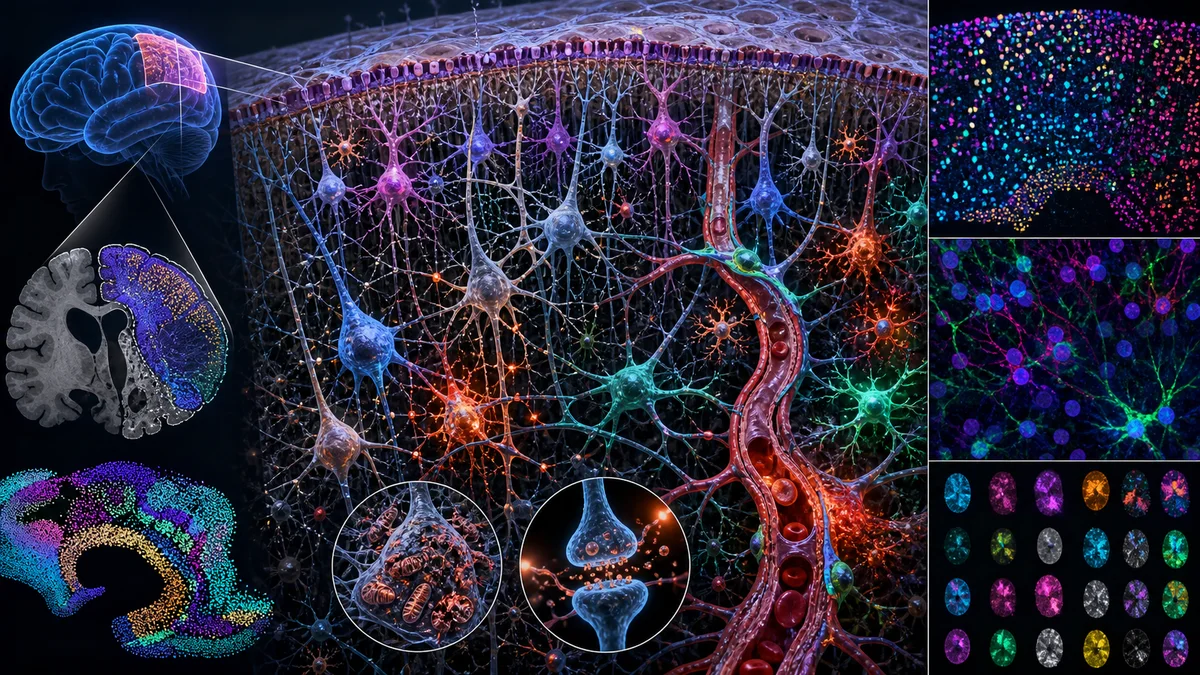
Cognitive manifestations, including impairments in language and executive functions, are seen in amyotrophic lateral sclerosis (ALS), but the underlying mechanisms remain unclear. We mapped prefrontal cortex regions from ALS patients by integrating spatial and single-nucleus transcriptomics in a cognitively stratified patient cohort. We uncover that cognitive impairment in ALS is associated with distinct patterns of neuronal dysfunction and glial-vascular dysregulation that vary by region and co
Cognitive manifestations, including impairments in language and executive functions, are seen in amyotrophic lateral sclerosis (ALS), but the underlying mechanisms remain unclear. We mapped prefrontal cortex regions from ALS patients by integrating spatial and single-nucleus transcriptomics in a cognitively stratified patient cohort. We uncover that cognitive impairment in ALS is associated with distinct patterns of neuronal dysfunction and glial-vascular dysregulation that vary by region and cognitive subtype. Executive dysfunction is linked to reduced mitochondrial and synaptic activity in deep-layer dorsolateral prefrontal cortex neurons, whereas language-related deficits track with a diffuse pan-regional response involving glial and vascular abnormalities. Our analyses, validated by multiplexed imaging, further identify signatures in the prefrontal cortex that span both motor and cognitive phenotypes, including a multicellular gliosis response. The findings reveal that clinical heterogeneity in ALS is driven by phenotype-specific cellular interactions in motor and non-motor regions of the brain.