Physical/Tech

Differentiation of stem-like CD4 + T cells modulates early effector responses in colorectal cancer
| Source: Science

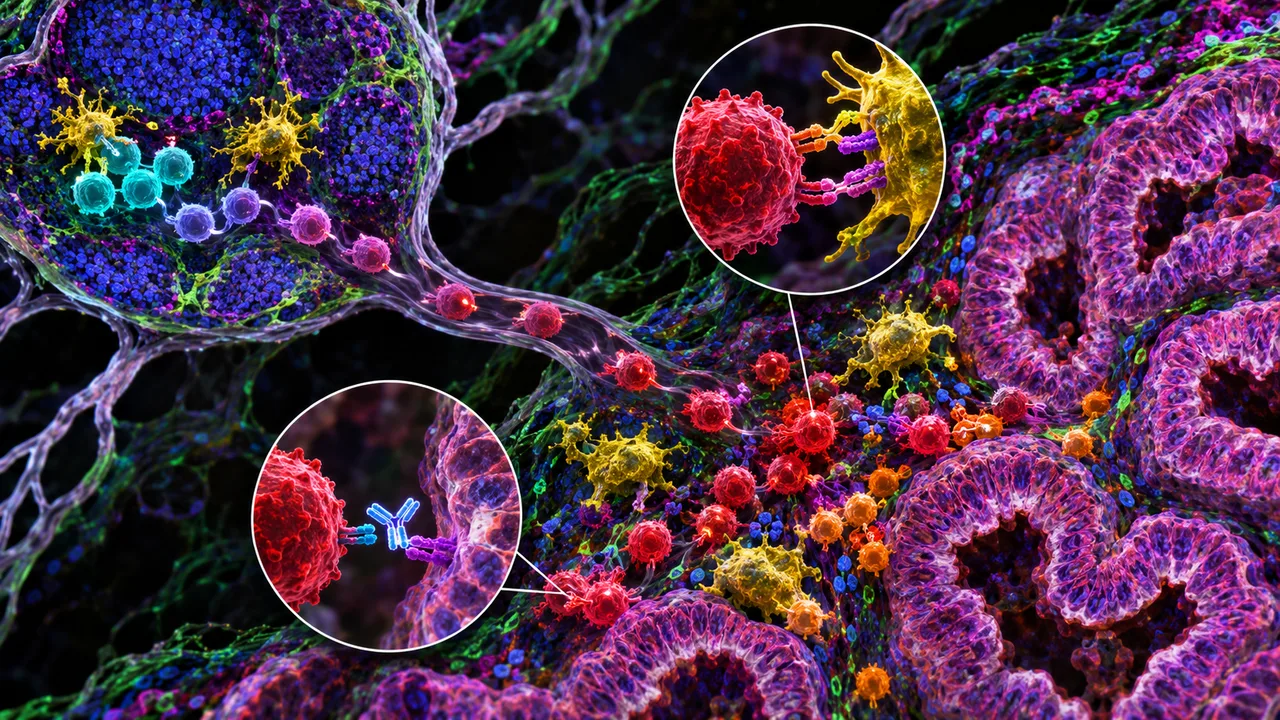
Strategies to improve cancer immunotherapy have largely focused on the intratumor immunosuppressive microenvironment, whereas approaches to amplify peripheral T cells and promote tumor recruitment have not been thoroughly explored. Using imaging mass cytometry in patients with colorectal cancer (CRC), we observed T helper 1 (T H 1)–like immune architectures in mismatch repair–deficient tumors associated with response to anti–programmed cell death protein 1 (PD-1) immunotherapy. By contrast, mism

Strategies to improve cancer immunotherapy have largely focused on the intratumor immunosuppressive microenvironment, whereas approaches to amplify peripheral T cells and promote tumor recruitment have not been thoroughly explored. Using imaging mass cytometry in patients with colorectal cancer (CRC), we observed T helper 1 (T H 1)–like immune architectures in mismatch repair–deficient tumors associated with response to anti–programmed cell death protein 1 (PD-1) immunotherapy. By contrast, mismatch repair–proficient (pMMR) tumors showed regulatory T–dominant spatial interactions. Clonal analyses revealed that stem-like CD4 + T cells differentiated into T H 1-like cells after PD-1 blockade. In pMMR CRC mouse models, combined OX40 agonist and PD-1 blockade suppressed tumor progression by expanding Il7r + early effector CD4 + intermediates in tumor-draining lymph nodes, promoting migration and connection with T H 1-like cells. This was accompanied by interferon-γ–dependent induction of immunostimulatory monocyte-macrophages and CD8 + effector T cells. These findings suggest that leveraging peripheral CD4 + T cell amplification may improve immunotherapy responses.
Read the original source →

Related Stories

Physical/Tech

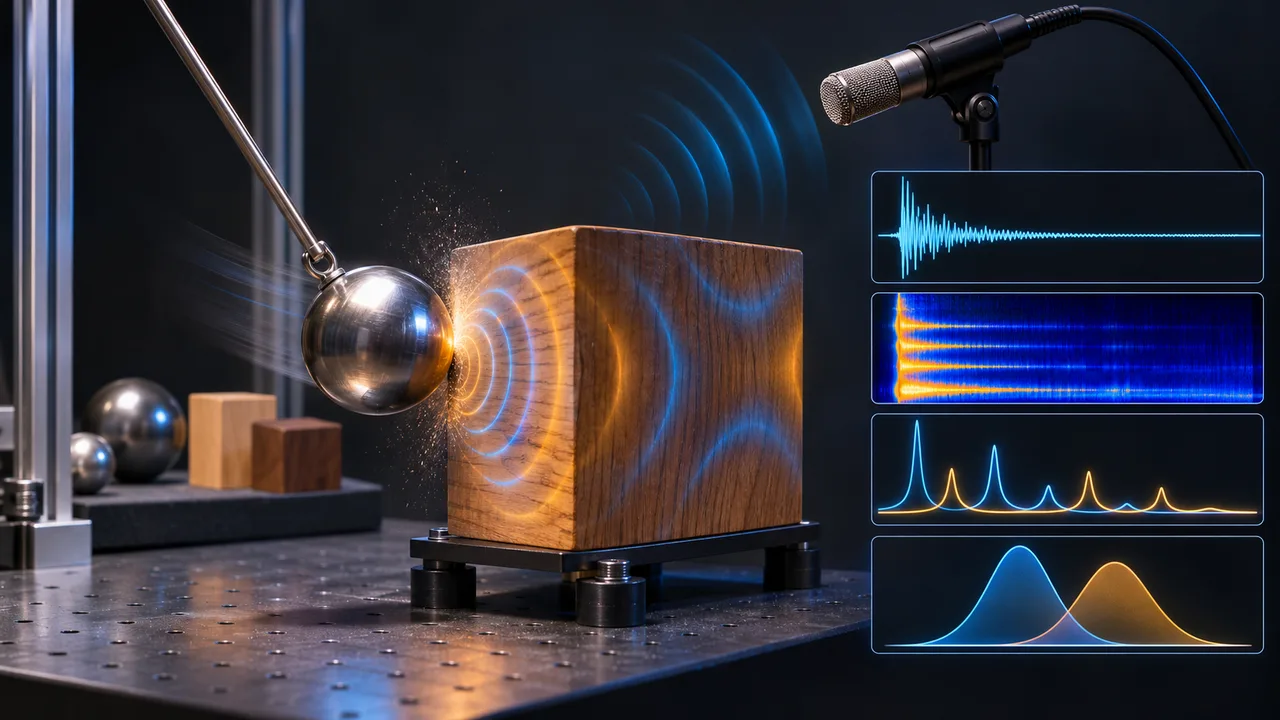
Intuitive knowledge of object acoustics enables perceptual separation of physical variables from impact sounds.

Upon hearing objects collide, humans can estimate physical attributes such as material and mass. Although the physics of sound generation is well established, the inverse problem that listeners solve-of inferring physical parameters from sound-remains poorly understood. Classical accounts posit the use of acoustic cues that correlate with physical variables but do not explain how humans might distinguish multiple concurrent physical causes. To study this problem, we measured impulse responses fr

Continue reading
Physical/Tech

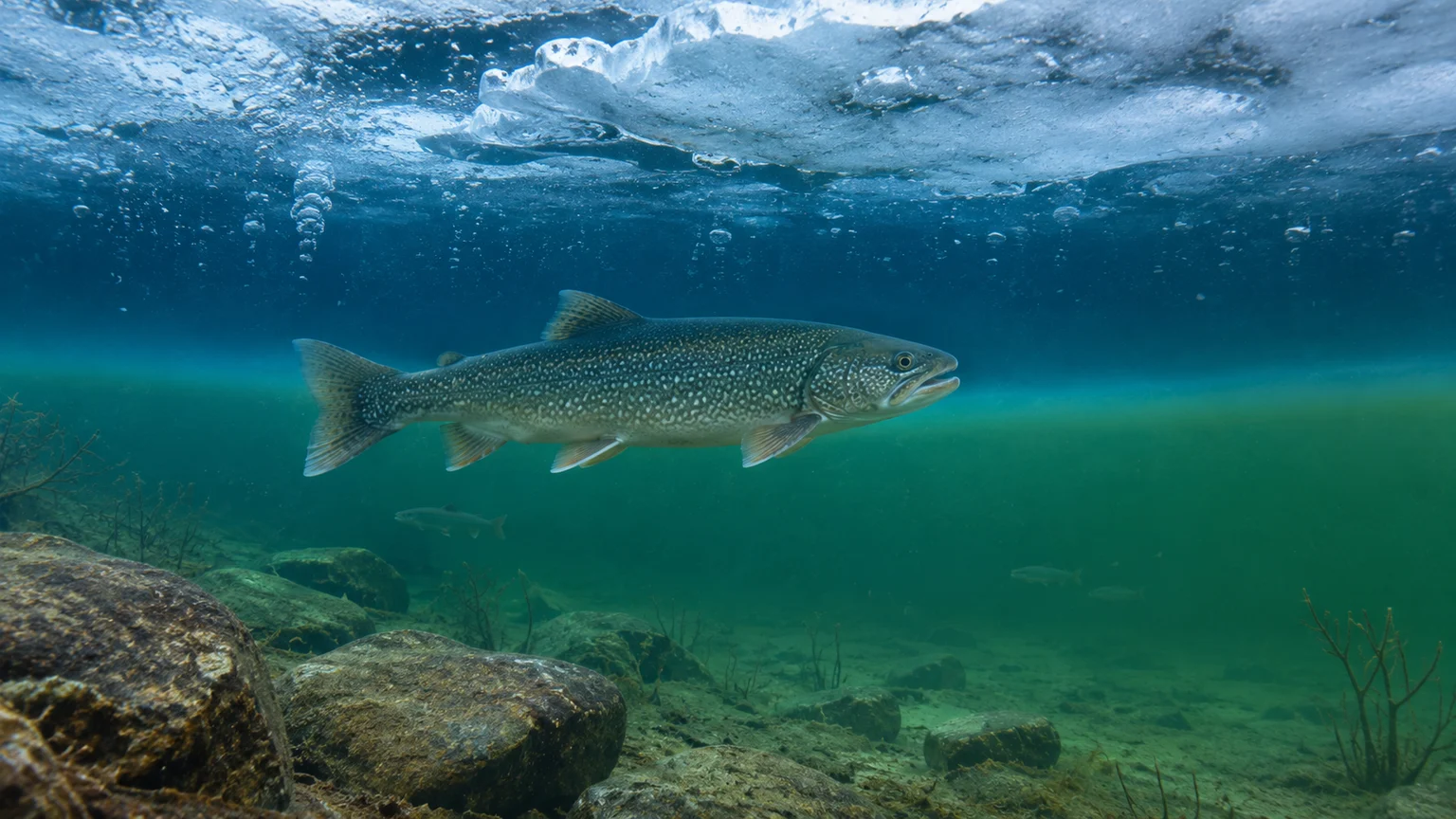
Sub-ice thermal gradients strongly influence winter depth use of an iconic cold-water fish.

In a thermally stratified lake, freshwater fish select habitats that align with their thermal preferences. While most studies of dimictic lakes have focused on habitat selection during summer stratification, less attention has been given to winter when inverse thermal stratification occurs with water temperatures between 0 to 4 °C. Our results show that winter thermal stratifications vary considerably among lakes. Much of the variation in winter depth use by the cold-water predator, Lake Tr

Continue reading
Physical/Tech

Emergent long-tailed dynamics in spin ice.

In this study, we reveal long-tail dynamics spontaneously arising from a magnetic system. Specifically, we consider a classical spin system and demonstrate the emergence of a spin-ice physics when drive-induced heating is well suppressed. We show that at high driving frequencies, magnetic monopole excitations exhibit nonergodic stochastic dynamics characterized by power-law-distributed trapping times with long tails-a behavior that persists even in the absence of driving. At intermediate driving

Continue reading
Physical/Tech

People know who to ask for favors despite underestimating compliance.

Whether and how people approach social interactions hinges on how they expect others to respond. Extensive social psychology research suggests that people are inaccurate interpersonal perceivers, overestimating negative responses (e.g., discomfort) and underestimating positive responses (e.g., appreciation) across a variety of social situations. However, this conclusion is based almost exclusively on mean-level bias analyses that obscure the dyadic nature of interpersonal judgment and rely on a

Continue reading
Physical/Tech

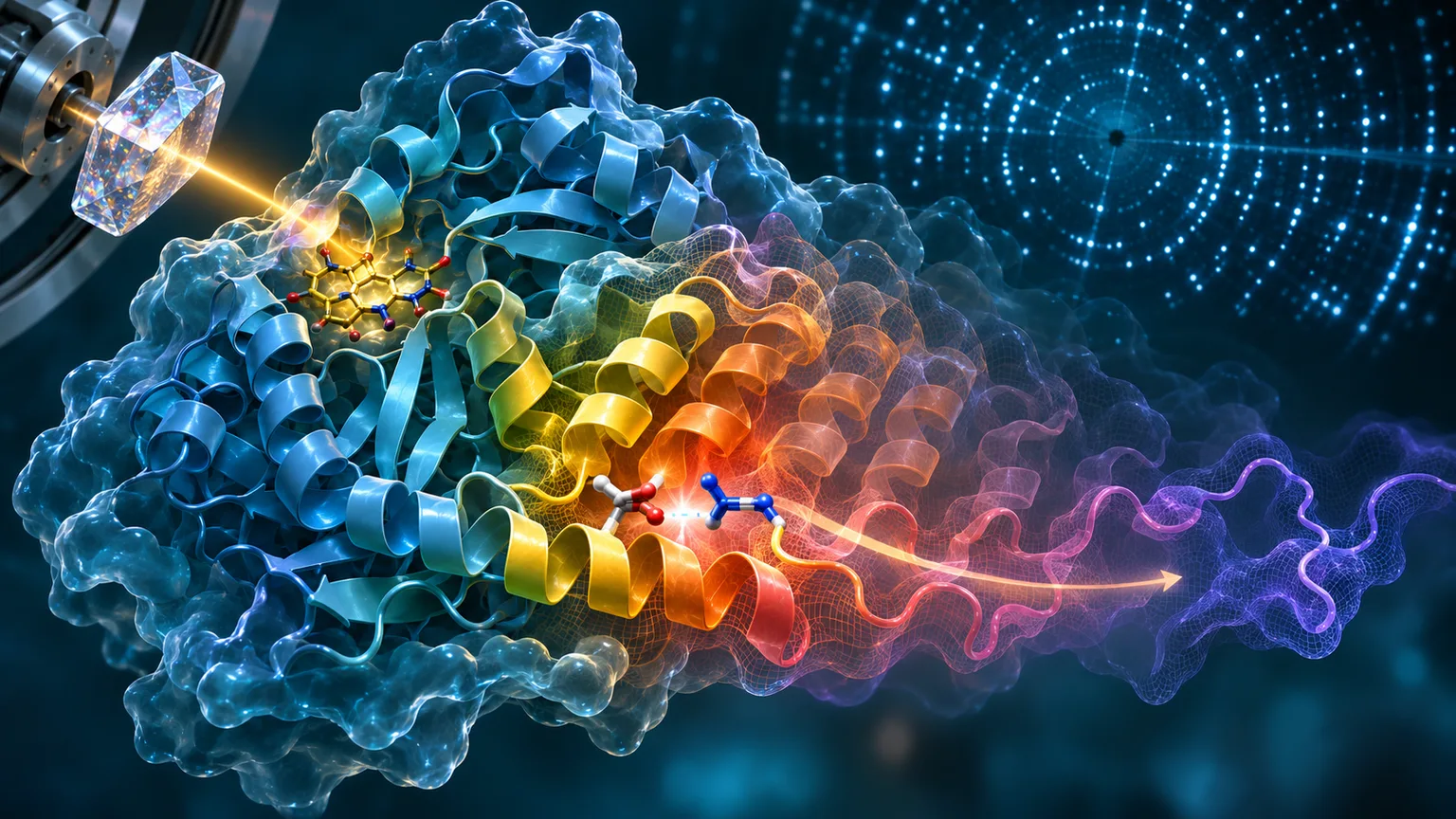
Mapping the Slow Propagation of Disorder across a Photoreceptor's Tertiary Structure with Time-Resolved Crystallography.

Order-disorder transitions allow many proteins to shift between compact and flexible/unfolded states, thereby acting as structural switches that regulate catalysis, signaling, recognition, and allostery. We applied time-resolved serial oscillation crystallography to establish the structural kinetics of the light-triggered order-disorder transition of an animal-like cryptochrome as a six-second-long molecular movie with near-atomic all-residue spatial resolution and millisecond temporal resolutio

Continue reading