Health & Medicine

CXCR4-targeted dual softener for inducing senescence therapy in hepatic fibrosis.
| Source: Proceedings of the National Academy of Sciences of the United States of America

Hepatic fibrosis is a central pathological driver of chronic liver diseases, including metabolic dysfunction-associated steatotic liver disease and alcohol-related liver disease, which collectively impose a growing global health burden. Fibrosis is primarily mediated by persistent activation of hepatic stellate cells (aHSCs) and excessive deposition of stiff extracellular matrix (ECM). The dense and rigid ECM-aHSCs network severely hinders drug delivery and penetration, posing a major challenge

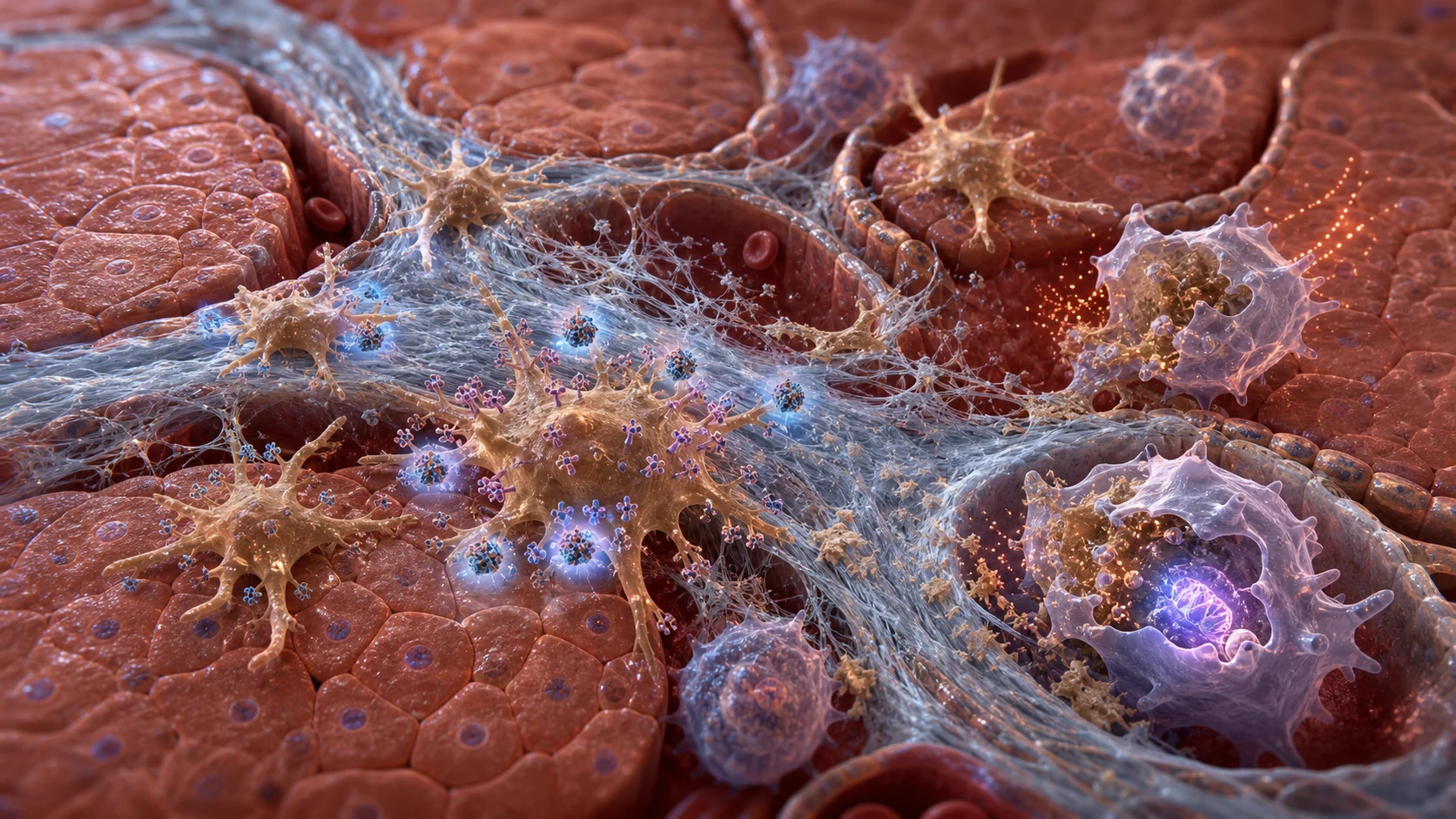
Hepatic fibrosis is a central pathological driver of chronic liver diseases, including metabolic dysfunction-associated steatotic liver disease and alcohol-related liver disease, which collectively impose a growing global health burden. Fibrosis is primarily mediated by persistent activation of hepatic stellate cells (aHSCs) and excessive deposition of stiff extracellular matrix (ECM). The dense and rigid ECM-aHSCs network severely hinders drug delivery and penetration, posing a major challenge for effective antifibrotic therapy. Here, we developed an aHSCs-targeted nanocomplex (AMD3100/MnO 2 @BSA nanoparticles, AMB NPs) to remodel this rigid fibrotic barrier. This platform inhibits the fibrotic process by inducing cellular senescence and activating endogenous immune surveillance. Upon liver accumulation, AMB NPs preferentially recognize CXCR4 on aHSCs and subsequently release Mn 2+ to engage the cyclic GMP-AMP synthase-stimulator of interferon genes (cGAS-STING) innate immune pathway, thereby robustly inducing cellular senescence, suppressing cell proliferation and reducing cellular stiffness. This process enhances the production of senescence-associated secretory phenotype factors, promotes collagen degradation and matrix loosening, and facilitates immune-mediated clearance of senescent aHSCs. These findings demonstrate the potent antifibrotic efficacy of AMB NPs and highlight a synergistic nanomedicine strategy that integrates aHSCs senescence induction, immune surveillance, and ECM remodeling, providing a rational therapeutic framework for hepatic fibrosis intervention.

Read the original source →

Related Topics

Related Stories

Health & Medicine

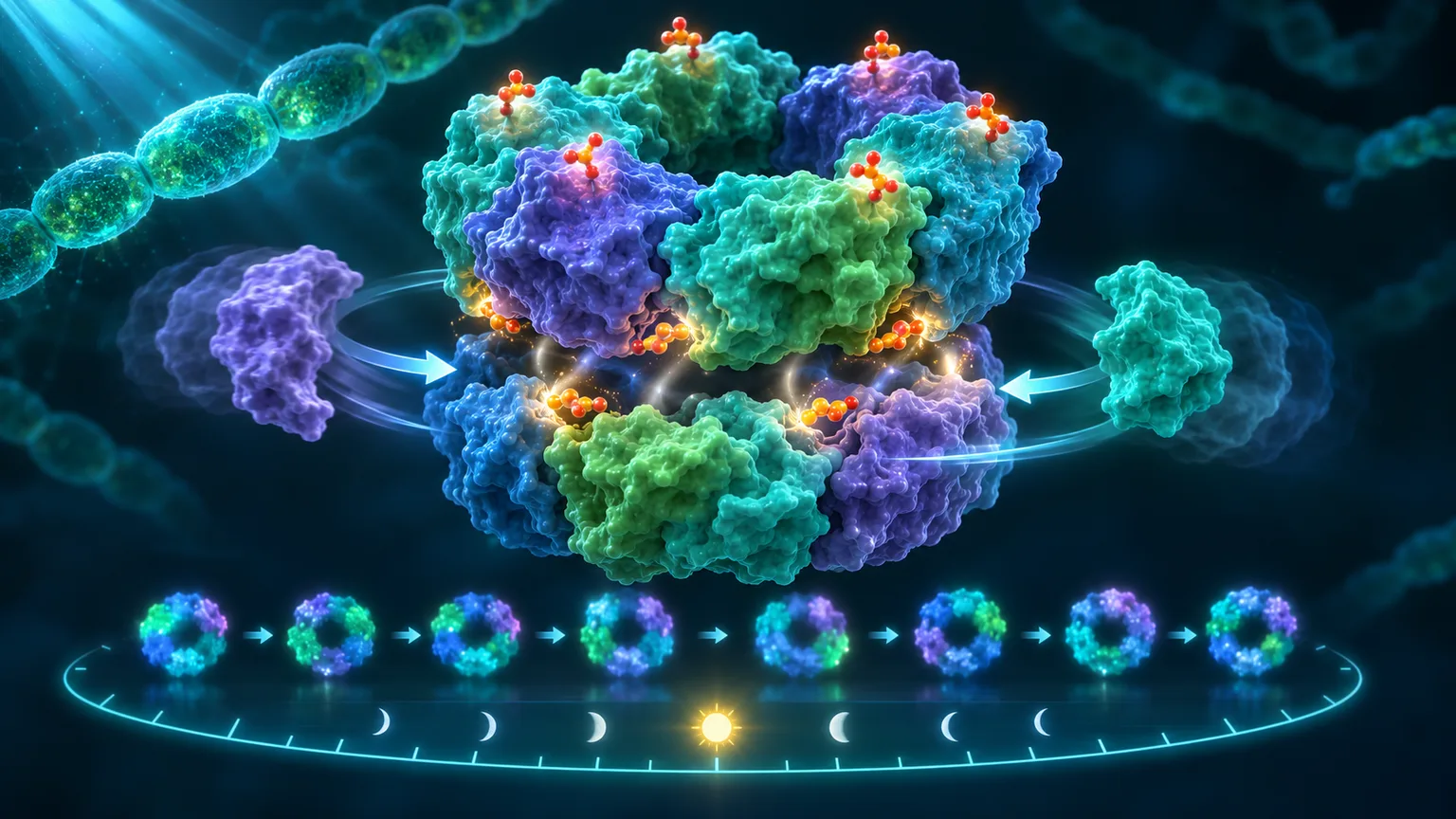
Phosphorylation-dependent ATPase activity regulates subunit shuffling dynamics in cyanobacterial circadian clock proteins.

Protein complexes are essential for cellular functions, with their dynamics increasingly recognized as key regulatory elements. In the cyanobacterial circadian clock, the KaiC hexamer is highly dynamic, undergoing phosphorylation-dependent monomer shuffling that synchronizes individual oscillators. However, the molecular mechanism of monomer shuffling is not fully understood. Here we combine a chromatography-based method with single-molecule fluorescence microscopy to quantify subunit exchange i

Continue reading
Health & Medicine

Telehealth to Support Coordinated Spontaneous Awakening and Breathing Trials in Invasive Ventilation: The TEACH Cluster Randomized Clinical Trial.

Coordinated spontaneous awakening trials and spontaneous breathing trials (C-SAT/SBT) improve outcomes for patients receiving invasive mechanical ventilation, but implementation remains inadequate. To evaluate whether a telehealth intervention added to a standard audit and feedback implementation of C-SAT/SBT increases adherence and improves outcomes compared with standard audit and feedback implementation alone (control). A cluster randomized type 2 hybrid effectiveness-implementation clinical

Continue reading
Health & Medicine

Heterogeneity co-evolves with architecture to determine colon cancer outcome.

Intratumoural heterogeneity, originating from genetic, epigenetic and phenotypic diversity, is pervasive in cancer and a fundamental barrier to curative treatment 1,2 . How these heterogeneous cell states emerge and co-evolve within tumours remains poorly understood. Here we develop a deep-learning framework that quantifies colorectal cancer tissue architecture and nuclear morphology at subcellular resolution to predict patient outcome. Integrating this with spatial transcriptomics, multiplex im

Continue reading
Health & Medicine

Transcription from megabase-scale heterochromatin generates neural barcodes.

Heterochromatin typically represses genes 1,2 , yet some genes paradoxically require it for activation 3-7 . How can the same chromatin environment both silence and promote transcription? Here we address this question by interrogating the clustered protocadherin (Pcdh) locus, where subsets of genes are stochastically expressed while most remain silent 8 . In neurons, stochastic and combinatorial expression of Pcdh genes generates unique cell-surface barcodes required for self-non-self discrimina

Continue reading
Health & Medicine

Structural basis of RNA-guided DNA integration by type I CAST systems.

CRISPR-associated transposases (CASTs) achieve site-specific DNA integration by combining the RNA-guided targeting action of a nuclease-deficient CRISPR-Cas system with the assembly of a Tn7-like transpososome complex 1,2 . Understanding the detailed mechanisms of this elaborate process is paramount to engineering CAST systems into programmable genetic tools 3-6 . Type I-F Pseudoalteromonas CAST (PseCAST) shows the highest activity in mammalian cells so far 7 and has been adapted extensivel

Continue reading