CRISPR screens identify targets to rescue age-related T cell dysfunction in cancer.
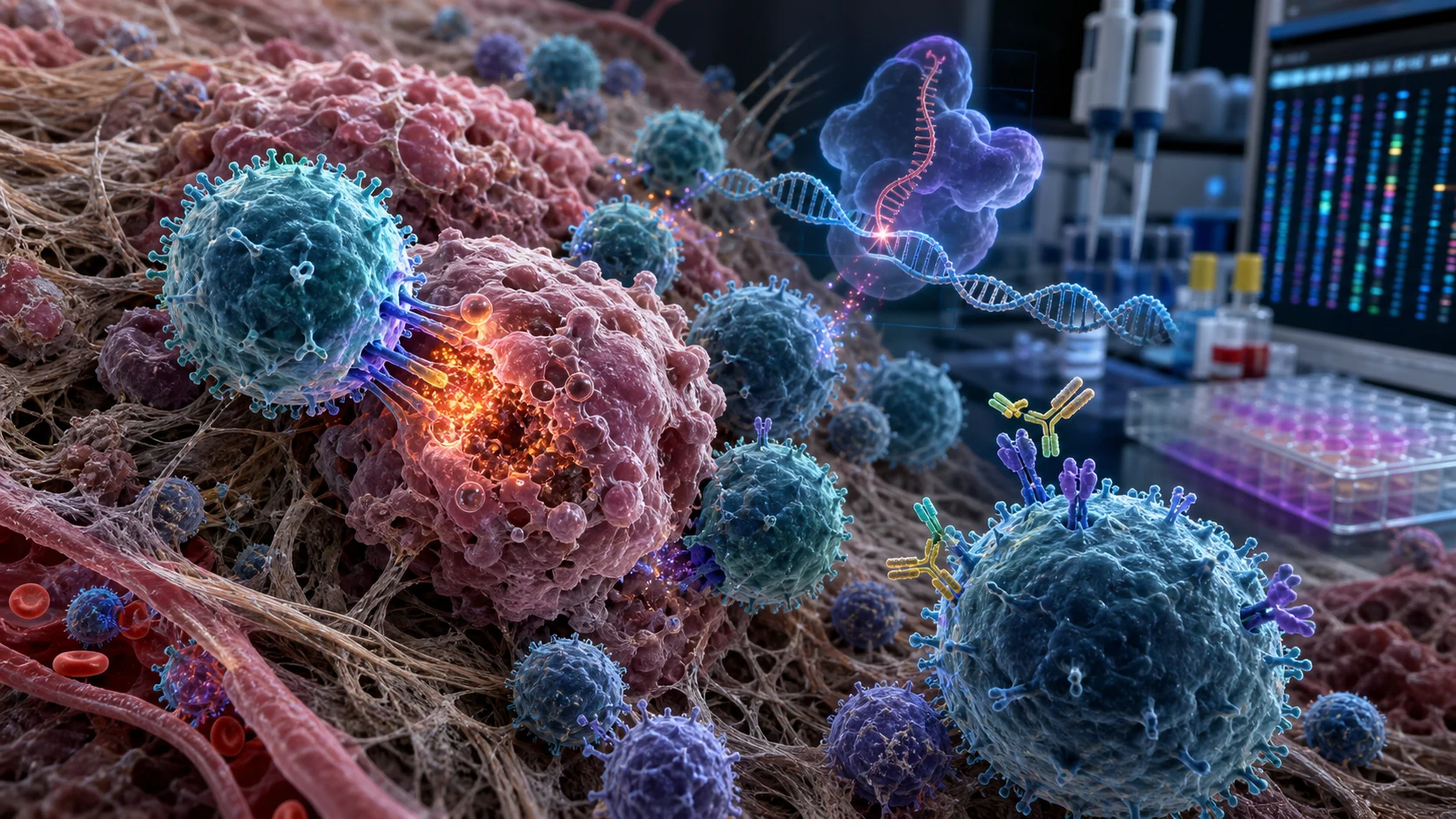
Immune aging impairs T cell-mediated tumor control as well as cancer immunotherapy outcomes. The most important drivers of T cell dysfunction in aged tumors remain unknown. We performed single-cell CRISPR screens to identify Dusp5 and Zfp219 as key regulators of CD8 + T cell persistence and effector differentiation within aged tumors. Loss of Dusp5 increased extracellular signal-regulated kinase (ERK) phosphorylation and globally enhanced T cell proliferation. Conversely, Zfp219 deletion induced
Immune aging impairs T cell-mediated tumor control as well as cancer immunotherapy outcomes. The most important drivers of T cell dysfunction in aged tumors remain unknown. We performed single-cell CRISPR screens to identify Dusp5 and Zfp219 as key regulators of CD8 + T cell persistence and effector differentiation within aged tumors. Loss of Dusp5 increased extracellular signal-regulated kinase (ERK) phosphorylation and globally enhanced T cell proliferation. Conversely, Zfp219 deletion induced epigenetic reprogramming and increased expression of cytotoxic molecules, enhancing antitumor immunity specifically in aging. Levels of the human ortholog ZNF219 were higher within intratumoral CD8 + T cells from older cancer patients, which correlates with worse survival following immunotherapy. Zfp219 ablation synergized with immune checkpoint inhibitors to expand effector-like CD8 + T cells, leading to tumor clearance in aged mice. Our findings highlight Dusp5 and Zfp219 as critical drivers of age-related T cell dysfunction that can be targeted to rejuvenate antitumor immunity in older cancer patients.