Climate change threatens malaria elimination in the Asia Pacific.
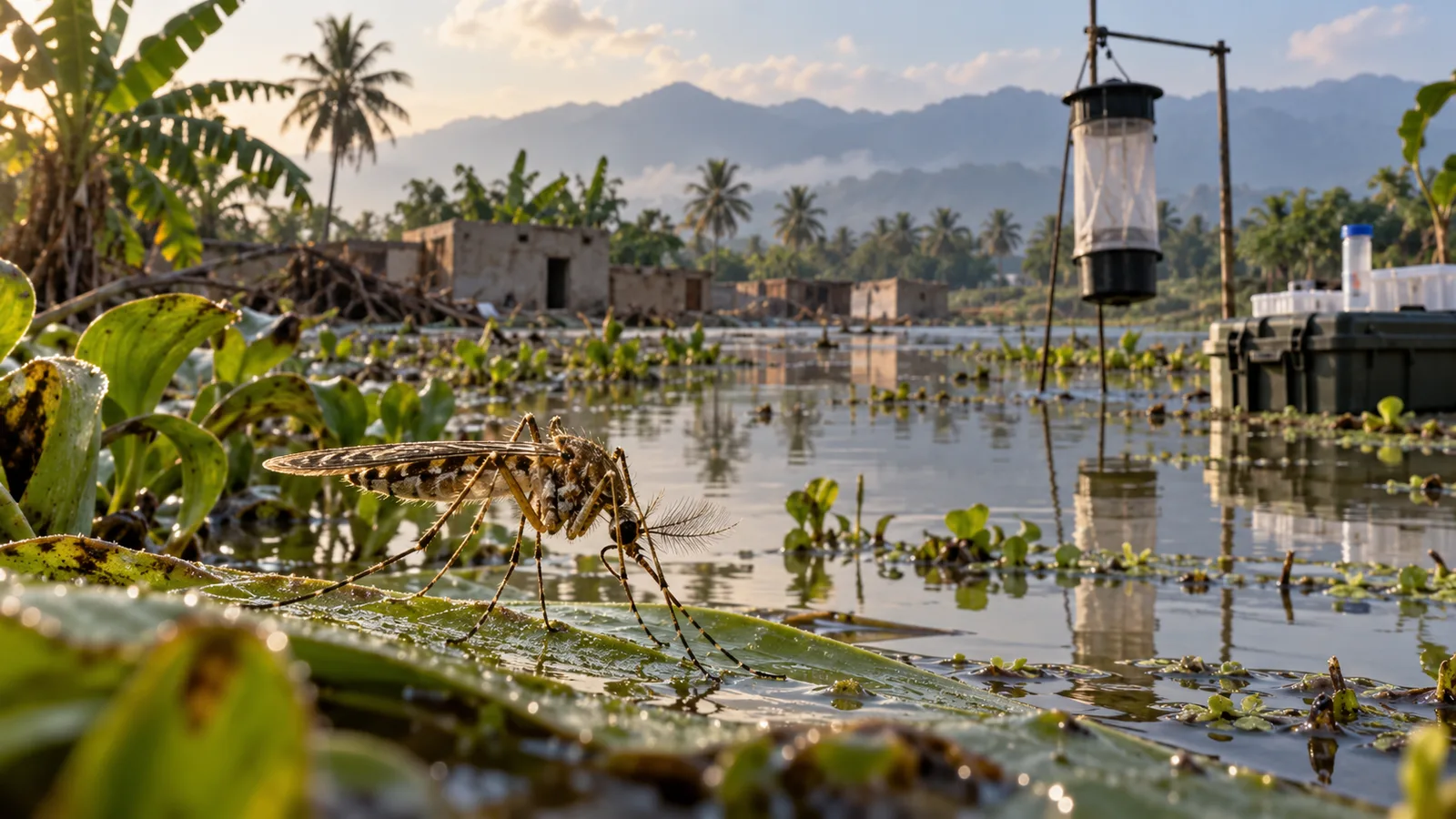
Climate change threatens decades of progress toward malaria elimination across the Asia Pacific. In recent years, reported cases have increased sharply in several regions, including Pakistan following the 2022 floods. However, current research and adaptation strategies have largely focused on gradual warming and shifting transmission seasons and may not fully capture acute operational disruptions in endemic settings. Here we examine how climate change influences malaria through cascading disrupt
Climate change threatens decades of progress toward malaria elimination across the Asia Pacific. In recent years, reported cases have increased sharply in several regions, including Pakistan following the 2022 floods. However, current research and adaptation strategies have largely focused on gradual warming and shifting transmission seasons and may not fully capture acute operational disruptions in endemic settings. Here we examine how climate change influences malaria through cascading disruptions to health systems, population displacement and ecological change. As a multidisciplinary group of policymakers and researchers, we identify priority actions: integrating malaria control into disaster response, deploying adaptive vector control for displaced populations, strengthening cross-border data sharing, linking early warnings to anticipatory action, and incorporating land-use data into surveillance. Leveraging existing advances in climate policy, digital surveillance and community engagement will be critical. Sustaining elimination will require complementing long-term projections with preparedness for near-term system shocks.