CIP2A–TOPBP1 complex and PP2A dynamically regulate Polθ recruitment and phosphorylation at mitotic DNA double-strand breaks
DNA double-strand breaks (DSBs) that occur during mitosis are primarily repaired by Polθ-mediated microhomology-mediated end joining (MMEJ). The CIP2A–TOPBP1 complex has been shown to tether broken chromatin at mitotic DSBs, but whether it coordinates with or functions independently of Polθ remains unknown. Here, we show that the CIP2A–TOPBP1 complex is recruited to mitotic DSB sites, where it directly interacts with Polθ and corecruits Polθ to chromatin. CIP2A sustains Polθ phosphorylation by i
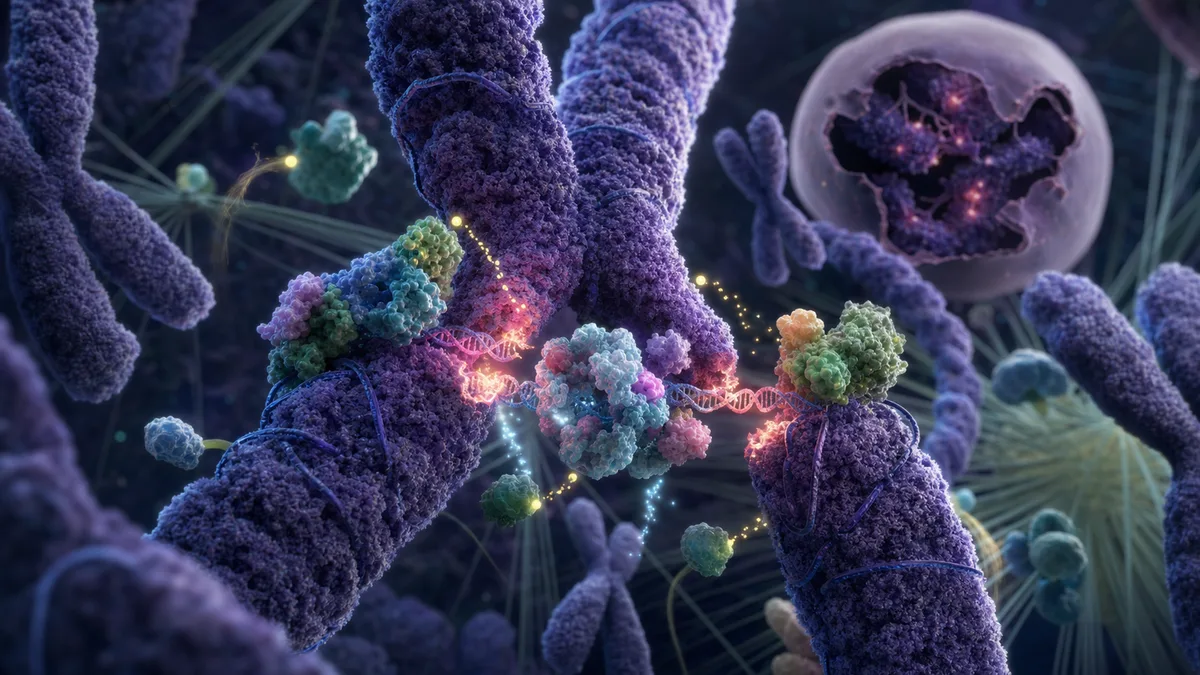
DNA double-strand breaks (DSBs) that occur during mitosis are primarily repaired by Polθ-mediated microhomology-mediated end joining (MMEJ). The CIP2A–TOPBP1 complex has been shown to tether broken chromatin at mitotic DSBs, but whether it coordinates with or functions independently of Polθ remains unknown. Here, we show that the CIP2A–TOPBP1 complex is recruited to mitotic DSB sites, where it directly interacts with Polθ and corecruits Polθ to chromatin. CIP2A sustains Polθ phosphorylation by inhibiting PP2A, thereby prolonging Polθ chromatin retention and enabling efficient repair. Upon repair completion, the CIP2A–TOPBP1 complex dissociates, PP2A dephosphorylates Polθ, and Polθ is released from chromatin. Loss of CIP2A impairs tumor growth, while disruption of CIP2A–Polθ binding leads to persistent DNA damage, micronucleus formation, and synthetic lethality in BRCA1/2-deficient cells. These findings uncover a cooperative mechanism by which CIP2A–TOPBP1 dynamically regulates Polθ in mitotic DSB repair and provide insights into the synthetic lethal interaction of CIP2A with BRCA1/2 under radiotherapy.