Cargo crosslinking nucleates AP-1 lattice formation.
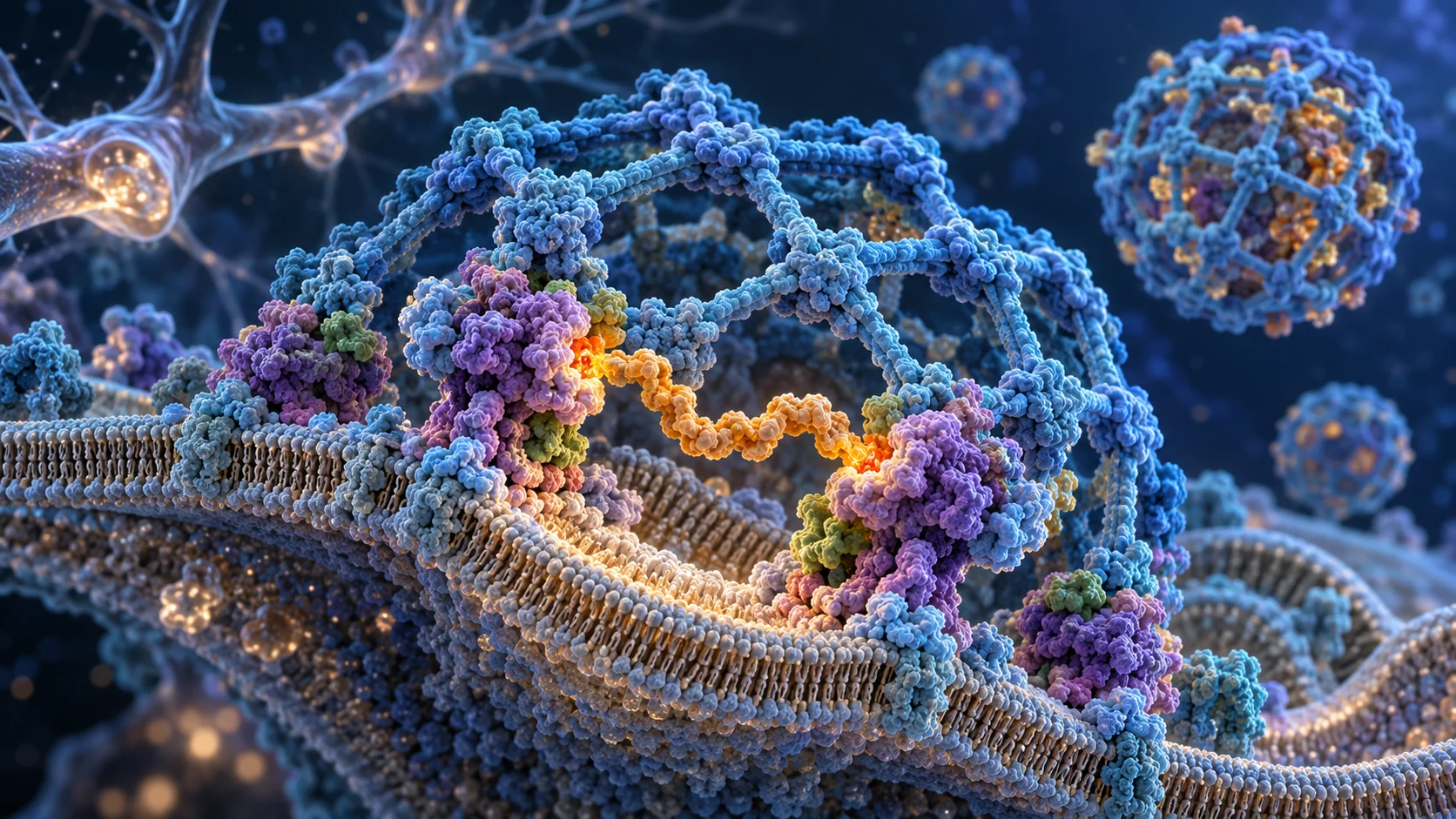
Vesicle trafficking is critical for proper distribution of proteins and lipids within eukaryotic cells. This process relies on the selective incorporation of cargo into transport carriers by coat systems, including adaptor-clathrin complexes. While the molecular basis of cargo recognition is well established, the extent to which cargo contributes directly to coat assembly remains incompletely understood. Here, we present cryo-electron microscopy (cryo-EM) structures of the human AP-1 complex bou
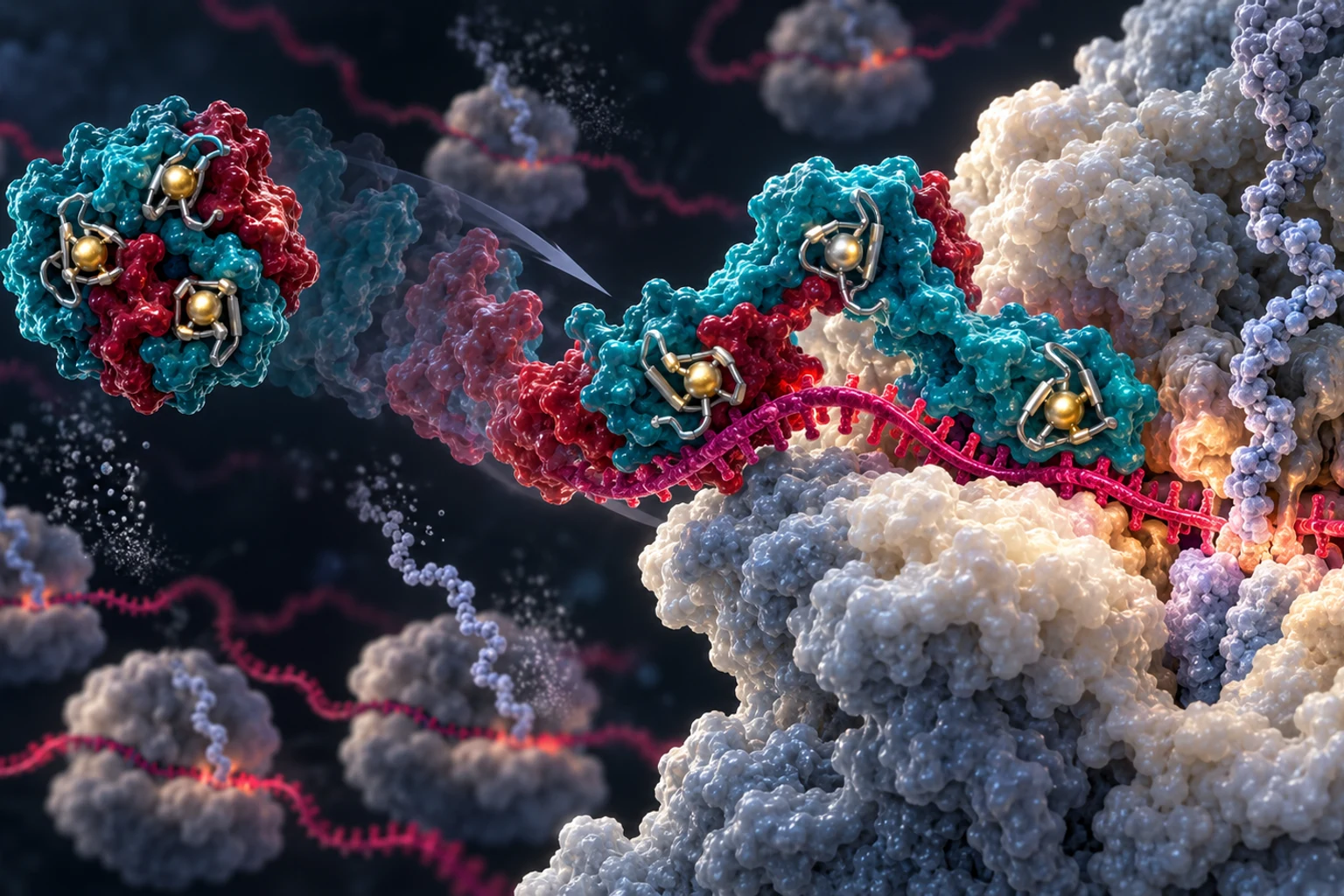
Vesicle trafficking is critical for proper distribution of proteins and lipids within eukaryotic cells. This process relies on the selective incorporation of cargo into transport carriers by coat systems, including adaptor-clathrin complexes. While the molecular basis of cargo recognition is well established, the extent to which cargo contributes directly to coat assembly remains incompletely understood. Here, we present cryo-electron microscopy (cryo-EM) structures of the human AP-1 complex bound to a cargo containing tandem sorting motifs at resolutions of 3.5 and 4.0 Å. The structures reveal that a single cargo molecule bearing tandem motifs can bridge two neighboring AP-1 complexes through a previously unrecognized μ1-σ1 inter-complex interface, thereby promoting adaptor oligomerization. Critically, this interface contributes to efficient AP-1-clathrin cage assembly, cargo trafficking, and neuronal development in zebrafish. Together, these findings support a model in which cargo engagement can facilitate higher-order adaptor assembly under physiological conditions, complementing established coat-driven mechanisms.