Artificial Intelligence

ZFP36L2 orchestrates stress-adaptive plasticity in regeneration and cancer.
| Source: Nature

Phenotypic plasticity is a hallmark of cancer 1 ; however the molecular switches required for cell-fate reprogramming are poorly understood. During intestinal wound-healing and colorectal cancer (CRC) metastasis, differentiated cells can dynamically dedifferentiate into an intestinal stem cell (ISC) state to drive epithelial regeneration and metastatic outgrowth 2-10 . Here we show that the RNA-binding protein ZFP36L2, which is mutated in 5-10% of CRC 11-15 , is a pivotal stress-responsive orche

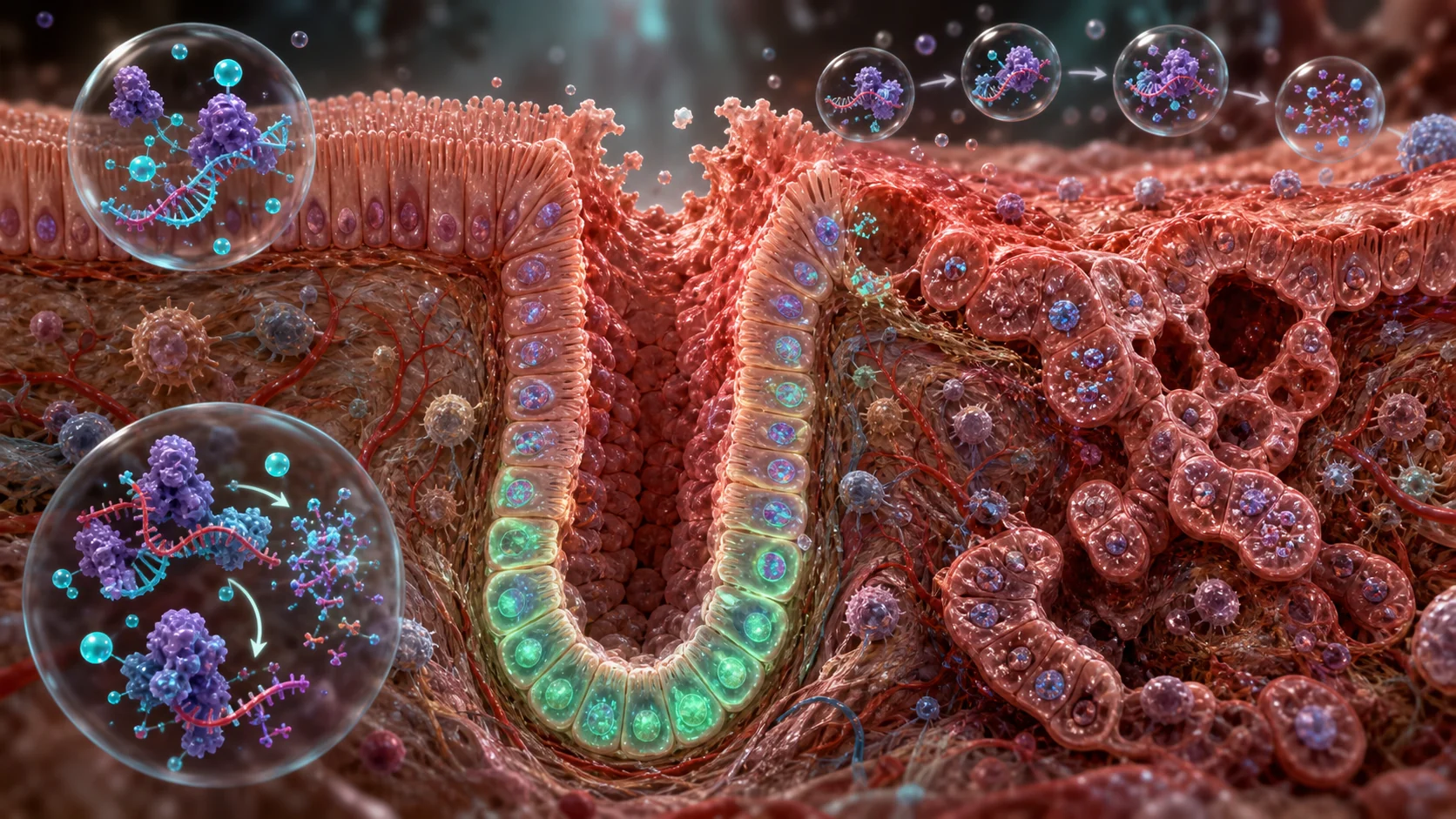
Phenotypic plasticity is a hallmark of cancer 1 ; however the molecular switches required for cell-fate reprogramming are poorly understood. During intestinal wound-healing and colorectal cancer (CRC) metastasis, differentiated cells can dynamically dedifferentiate into an intestinal stem cell (ISC) state to drive epithelial regeneration and metastatic outgrowth 2-10 . Here we show that the RNA-binding protein ZFP36L2, which is mutated in 5-10% of CRC 11-15 , is a pivotal stress-responsive orchestrator of dynamic dedifferentiation. In mouse colon regeneration models, ZFP36L2 ablation inhibits dedifferentiation, ISC gene expression and function and impairs intestinal regeneration. In human CRC, loss of ZFP36L2 function abrogates metastatic seeding and the outgrowth of LGR5 + canonical metastases while promoting lineage plasticity and non-canonical differentiation into heterogeneous cell states. Mechanistically, ZFP36L2 binds to stress-associated mRNAs that contain AU-rich 3' untranslated regions, which induces the formation of dynamic biomolecular condensates associated with mRNA degradation and termination of the stress response. Together, these data show that ZFP36L2 acts as an important molecular switch that couples stress sensing with phenotypic plasticity. This in turn drives cellular dedifferentiation essential for re-establishing the ISC state during wound healing and metastasis. In ZFP36L2-deficient CRC, the inability to re-enter the LGR5 + state during metastatic outgrowth promotes non-canonical lineage plasticity, which is associated with poor clinical outcomes.


Read the original source →

Related Stories

Artificial Intelligence

Iron or Multiple Micronutrient Powder Supplements With Malaria Chemoprevention in Rural Malawian Children: The IRMA Randomized Clinical Trial.

The World Health Organization recommends universal preventive iron interventions for young children in anemia-prevalent areas to alleviate the effects of anemia on child neurodevelopment and other outcomes. However, the functional benefits have not been confirmed in randomized clinical trials and there are concerns that iron interventions may increase infection risk. To determine whether universal iron interventions administered with malaria chemoprevention improve child functional outcomes and

Continue reading
Artificial Intelligence

The Virtual Tissues foundation model resolves spatial proteomics across scales.

Spatial proteomics technologies have transformed our understanding of complex tissue architecture in cancer but present unique challenges for computational analysis 1 . Each study uses a different marker panel and protocol, and most methods are tailored to single cohorts, which limits knowledge transfer and robust biomarker discovery. Here we present Virtual Tissues (VirTues), a general-purpose foundation model for spatial proteomics that learns marker-aware, multi-scale representations of prote

Continue reading
Artificial Intelligence

Dronabinol for nightmares in post-traumatic stress disorder: a randomized controlled trial.

Nightmares are a hallmark of post-traumatic stress disorder (PTSD), yet pharmacological treatments remain limited. Here we conducted a multicenter, double-blind, randomized, placebo-controlled trial to evaluate the efficacy and safety of dronabinol (BX-1; Δ9-tetrahydrocannabinol (THC)) for PTSD-related nightmares. Adults with PTSD and recurrent nightmares were randomly assigned to receive dronabinol (2.5-15 mg) or placebo, once daily before bedtime, for 10 weeks. The primary endpoin

Continue reading
Artificial Intelligence

PLK1-mediated phosphorylation of PHGDH reprograms serine metabolism in advanced prostate cancer.

Metabolic reprogramming is a hallmark of cancer, enabling tumor cells to meet their increased biosynthetic and energetic demands. Although cells possess the capacity for de novo serine biosynthesis, most transformed cancer cells preferentially rely on exogenous serine uptake to sustain their growth, yet the regulatory mechanisms driving this metabolic dependency remain poorly understood. Here, we uncover a mechanism by which Polo-like kinase 1 (PLK1), frequently overexpressed in prostate cancer,

Continue reading
Artificial Intelligence

When coordination is avoidable: A monotonicity analysis of organizational tasks.

Organizations devote substantial resources to coordination, yet which tasks actually require it for correctness remains unclear. The problem is acute in multiagent AI systems, where coordination cost is directly measurable and can exceed the cost of the work itself. Distributed systems theory provides a precise criterion: Coordination is required when a task specification is nonmonotonic, meaning that as histories grow, new information can invalidate prior conclusions. Here we show that Thompson

Continue reading