Whole-transcriptome-scale isoform-resolved spatial imaging of single cells in tissues.
Cell and tissue functions arise from complex interactions among numerous genes, and a systematic understanding of these functions requires isoform-resolved transcriptomic analysis of single cells with high spatial resolution. Here, we introduce an in situ RNA amplification method and its integration with multiplexed error-robust fluorescence in situ hybridization (MERFISH) to detect short RNA sequences and enable whole-transcriptome-scale, isoform-resolved spatial transcriptomics of individual c
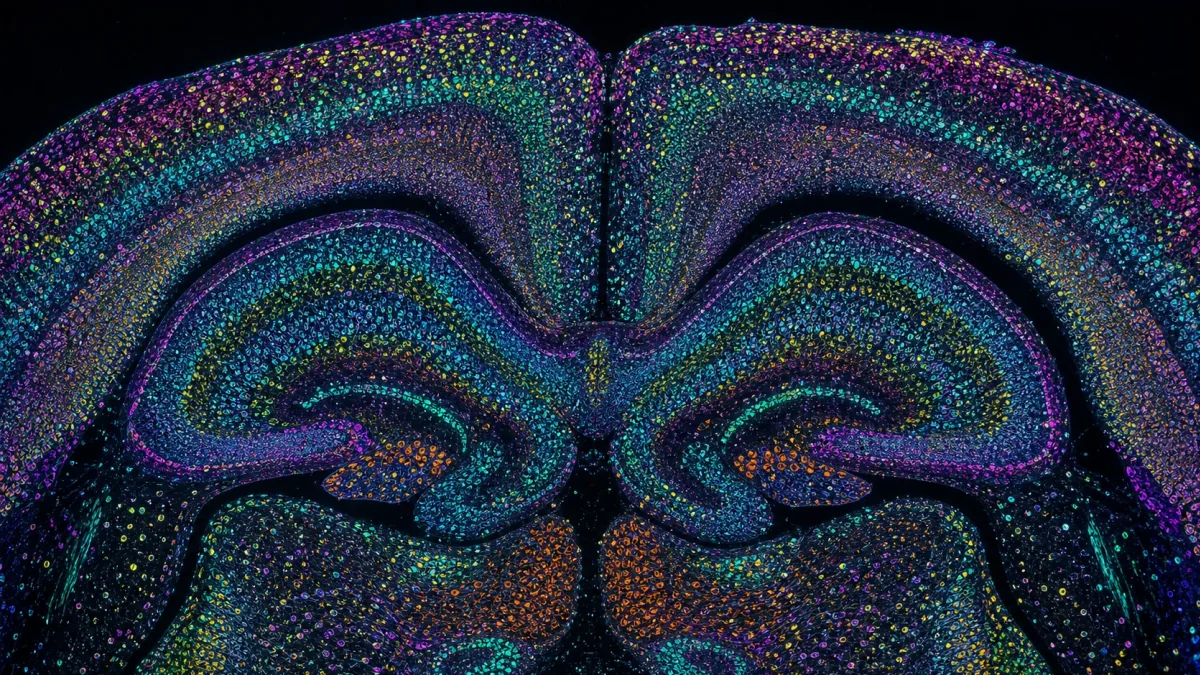
Cell and tissue functions arise from complex interactions among numerous genes, and a systematic understanding of these functions requires isoform-resolved transcriptomic analysis of single cells with high spatial resolution. Here, we introduce an in situ RNA amplification method and its integration with multiplexed error-robust fluorescence in situ hybridization (MERFISH) to detect short RNA sequences and enable whole-transcriptome-scale, isoform-resolved spatial transcriptomics of individual cells in intact tissues. Using this approach, we imaged ∼33,000 distinct RNAs-including ∼23,000 genes and ∼10,000 isoforms-in the mouse brain. Our data enabled systematic analyses of region- and cell-type-specific gene programs and ligand-receptor-based cell-cell communications. These data further revealed rich spatial diversity and cell-type specificity in isoform usage across numerous genes, as well as brain structures particularly rich in isoform specificity. We anticipate broad application of this method for characterizing the molecular and cellular basis of tissue functions, unlocking previously inaccessible discoveries in cell and organismal biology.