The unique Efg1 fungal virulence regulon in the catheterized bladder environment.
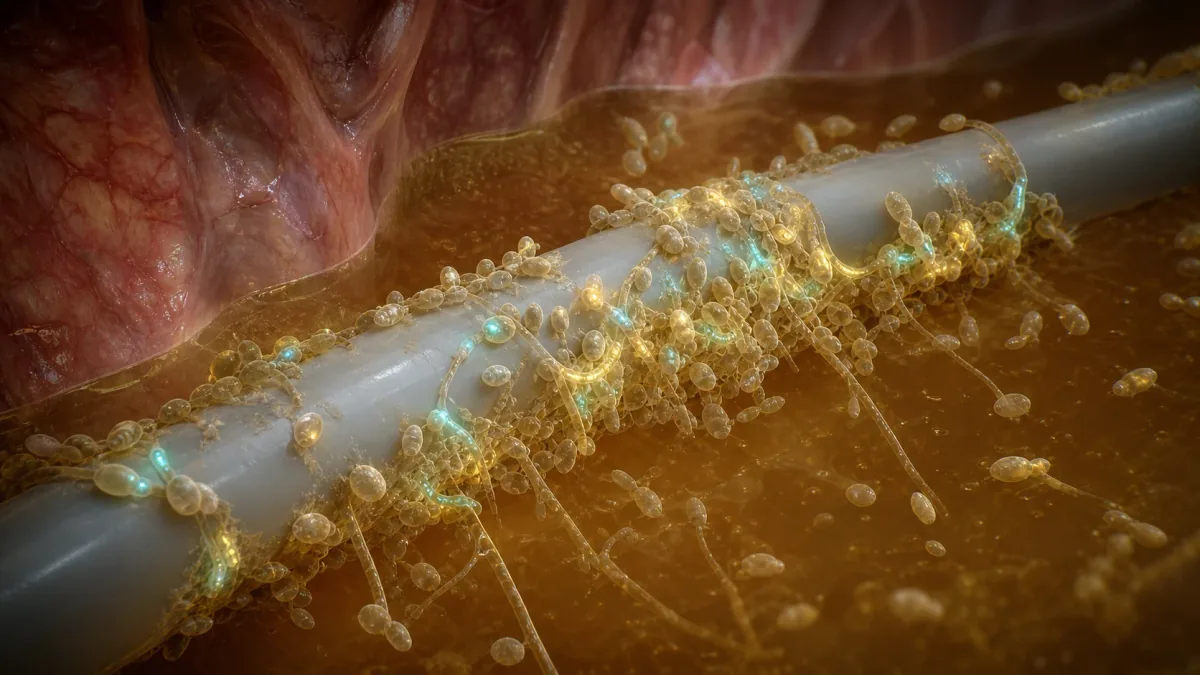
Urinary catheterization, a frequent procedure in hospitals, nursing homes, and other healthcare facilities, is a primary driver of nosocomial infections. The most common of these are catheter-associated urinary tract infections (CAUTIs), which often progress to severe complication, sepsis, and ultimately death. The fungus Candida albicans is a primary causative agent of CAUTIs; yet, its tissue-specific pathogenesis remains poorly understood, which complicates development of efficient treatments.
Urinary catheterization, a frequent procedure in hospitals, nursing homes, and other healthcare facilities, is a primary driver of nosocomial infections. The most common of these are catheter-associated urinary tract infections (CAUTIs), which often progress to severe complication, sepsis, and ultimately death. The fungus Candida albicans is a primary causative agent of CAUTIs; yet, its tissue-specific pathogenesis remains poorly understood, which complicates development of efficient treatments. While Efg1 is a known virulence driver in CAUTI, its specific downstream targets within the unique bladder environment have not been defined. Here, we identify and validate the EFG1 regulon that is active during conditions that mimic the human catheterized bladder and, additionally, confirm the regulon by transcriptional profiling of catheters retrieved from patients with C. albicans infection. We found that this urine-specific signature is highly conserved in clinical samples, with Efg1-dependent genes being among the most robustly induced transcripts during active human infection. Furthermore, we characterized two of these key factors, ECE1 and EED1 , validating their roles in infection both in vitro in human urine and in vivo using a CAUTI mouse model. Elucidating this tissue-specific regulon offers a strategic roadmap for the development of targeted therapies to mitigate these ever-increasing life-threatening fungal infections.