TECR palmitoylation triggers a necrotic cell death program driving acute liver injury.
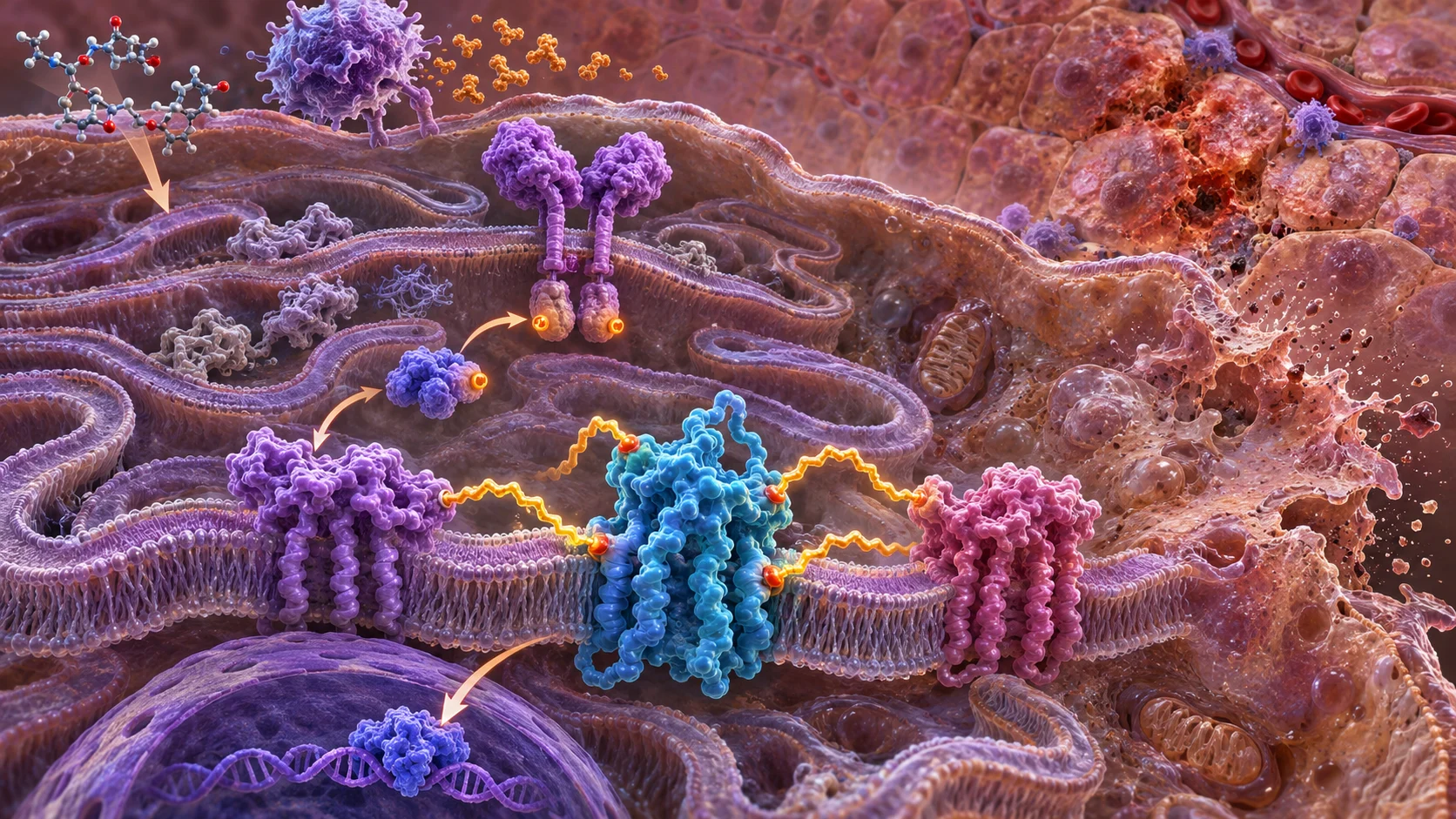
Acute liver injury caused by drug toxicity or immune activation remains a major clinical challenge with limited mechanistic understanding and few effective therapies. Here, we identify a previously unrecognized form of regulated cell death driven by palmitoylation of the endoplasmic reticulum (ER)-resident enzyme trans-2,3-enoyl-coenzyme A (CoA) reductase (TECR). We show that multi-site palmitoylation of TECR, redundantly catalyzed by the palmitoyl acyltransferases ZDHHC5 and ZDHHC2 and dynamica
Acute liver injury caused by drug toxicity or immune activation remains a major clinical challenge with limited mechanistic understanding and few effective therapies. Here, we identify a previously unrecognized form of regulated cell death driven by palmitoylation of the endoplasmic reticulum (ER)-resident enzyme trans-2,3-enoyl-coenzyme A (CoA) reductase (TECR). We show that multi-site palmitoylation of TECR, redundantly catalyzed by the palmitoyl acyltransferases ZDHHC5 and ZDHHC2 and dynamically reversed by the depalmitoylase ABHD10, activates PERK-dependent ER stress signaling to trigger cell death. This cell death pathway is a TECR-dependent, palmitoylation-induced, ER stress-mediated necrotic cell death program (TPNCD). TPNCD contributes to liver injury in mouse models of acetaminophen- and concanavalin A-induced hepatotoxicity and is attenuated by hepatocyte-specific TECR ablation or by pharmacological inhibition of palmitoylation or ER stress signaling. Together, these findings establish TPNCD as a distinct, necrotic cell death pathway underlying acute liver injury and highlight new therapeutic entry points for hepatoprotection.