Health & Medicine

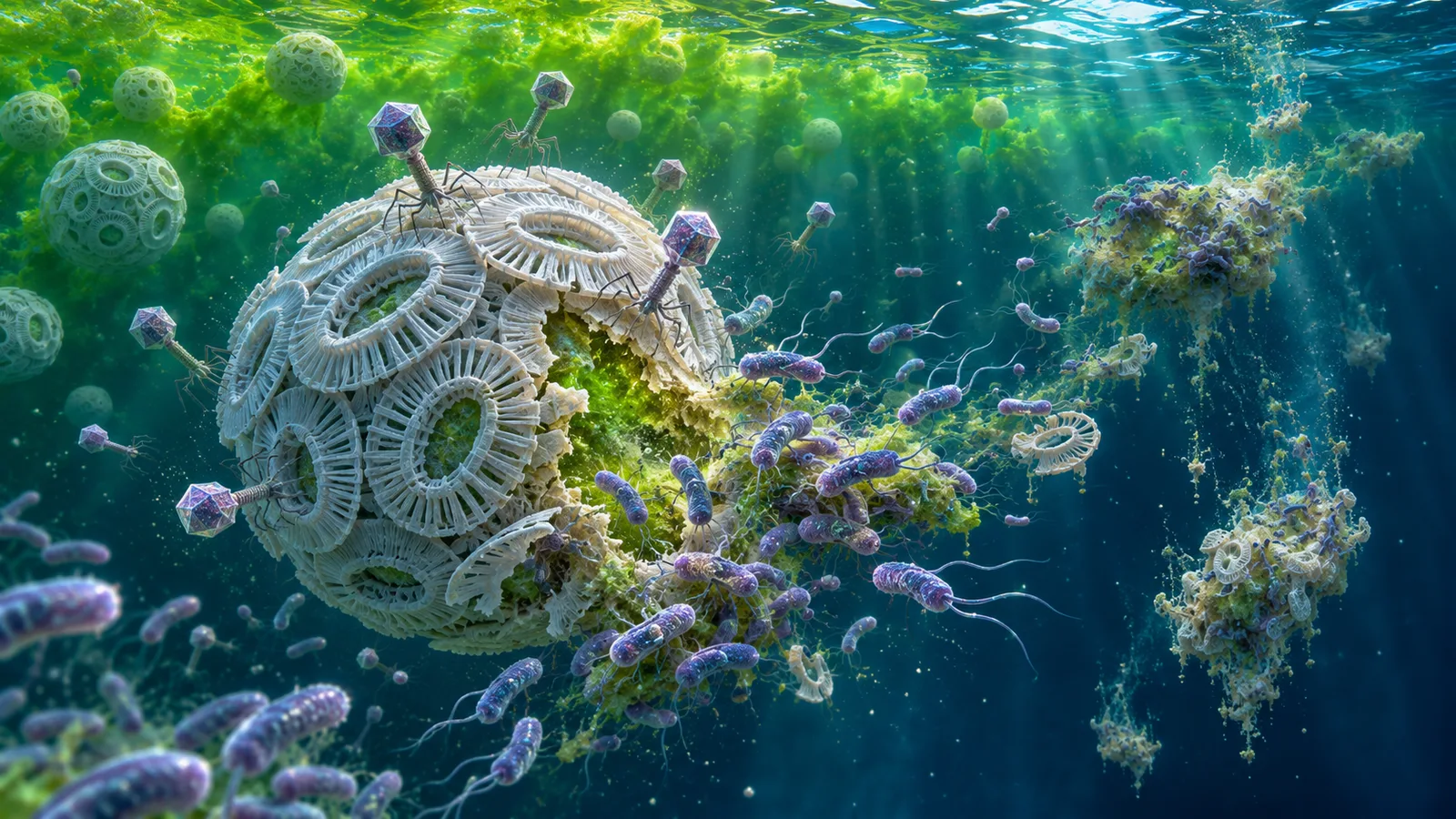
Synergy in viral-bacterial co-infection expedites algal bloom demise.
| Source: Nature

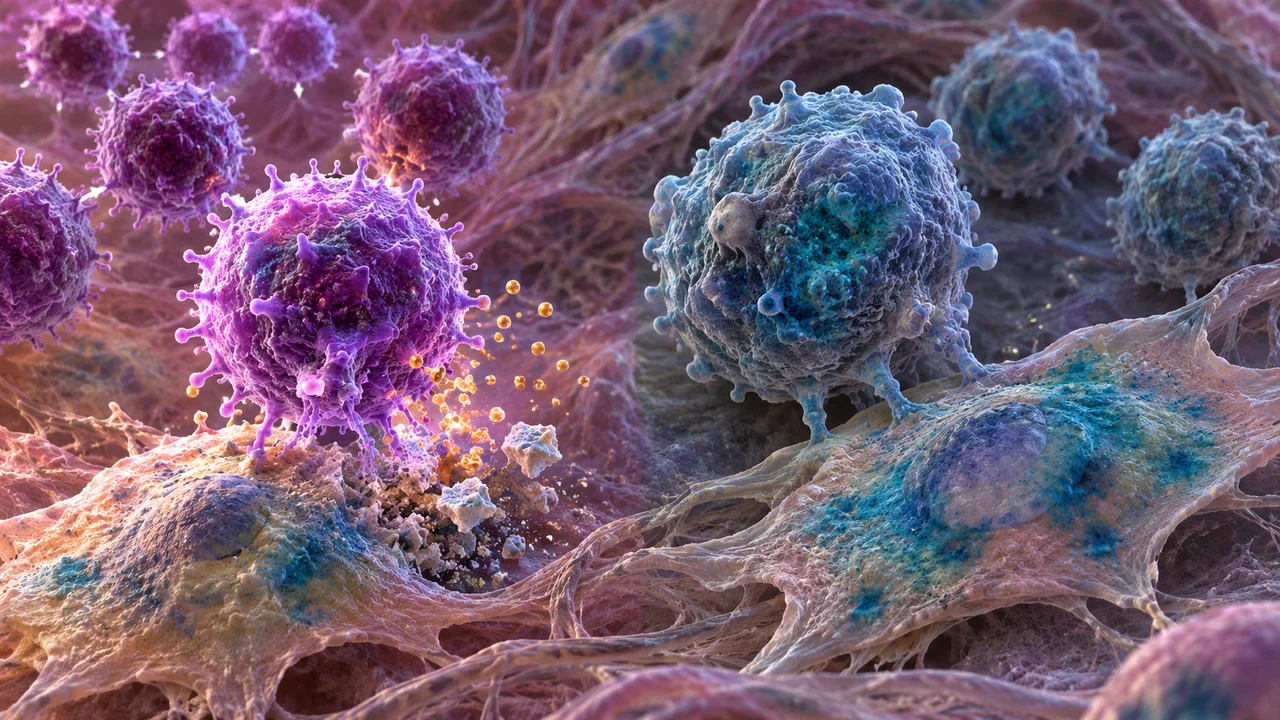
Algal bloom demise, often caused by viruses, is a major driver of carbon cycling in the surface ocean 1,2 . However, although blooms collapse synchronously, fewer than 30% of algal cells are actively infected by viruses 3 , indicating the involvement of additional mortality agents. Here we quantified tripartite interactions within a synthetic community composed of the abundant coccolithophore Gephyrocapsa huxleyi, bacteria and viruses isolated during a bloom. We found that bacteria significantly

Algal bloom demise, often caused by viruses, is a major driver of carbon cycling in the surface ocean 1,2 . However, although blooms collapse synchronously, fewer than 30% of algal cells are actively infected by viruses 3 , indicating the involvement of additional mortality agents. Here we quantified tripartite interactions within a synthetic community composed of the abundant coccolithophore Gephyrocapsa huxleyi, bacteria and viruses isolated during a bloom. We found that bacteria significantly enhanced virus-induced algal mortality in G. huxleyi as well as in three other globally widespread microalgae. We quantified this interaction using two new metrics: the synergy index, which measures viral-bacterial interaction strength, and the benefit index, which assesses changes in bacterial fitness. We identified Alteromonas bacteria as drivers of viral-bacterial co-infection, with consistently high synergy index and benefit index. We found that during algal blooms, Alteromonas displayed high chemoattraction towards infected cell extracts, accumulated in aggregates derived from bloom demise, and increased in abundance during oceanic bloom collapse. Viral-bacterial synergy represents a previously unrecognized mortality agent that controls bloom termination, modulating the balance between the carbon-recycling viral shunt and the carbon-exporting viral shuttle pathways, which influence global carbon cycling 4-6 .
Read the original source →

Related Stories

Health & Medicine

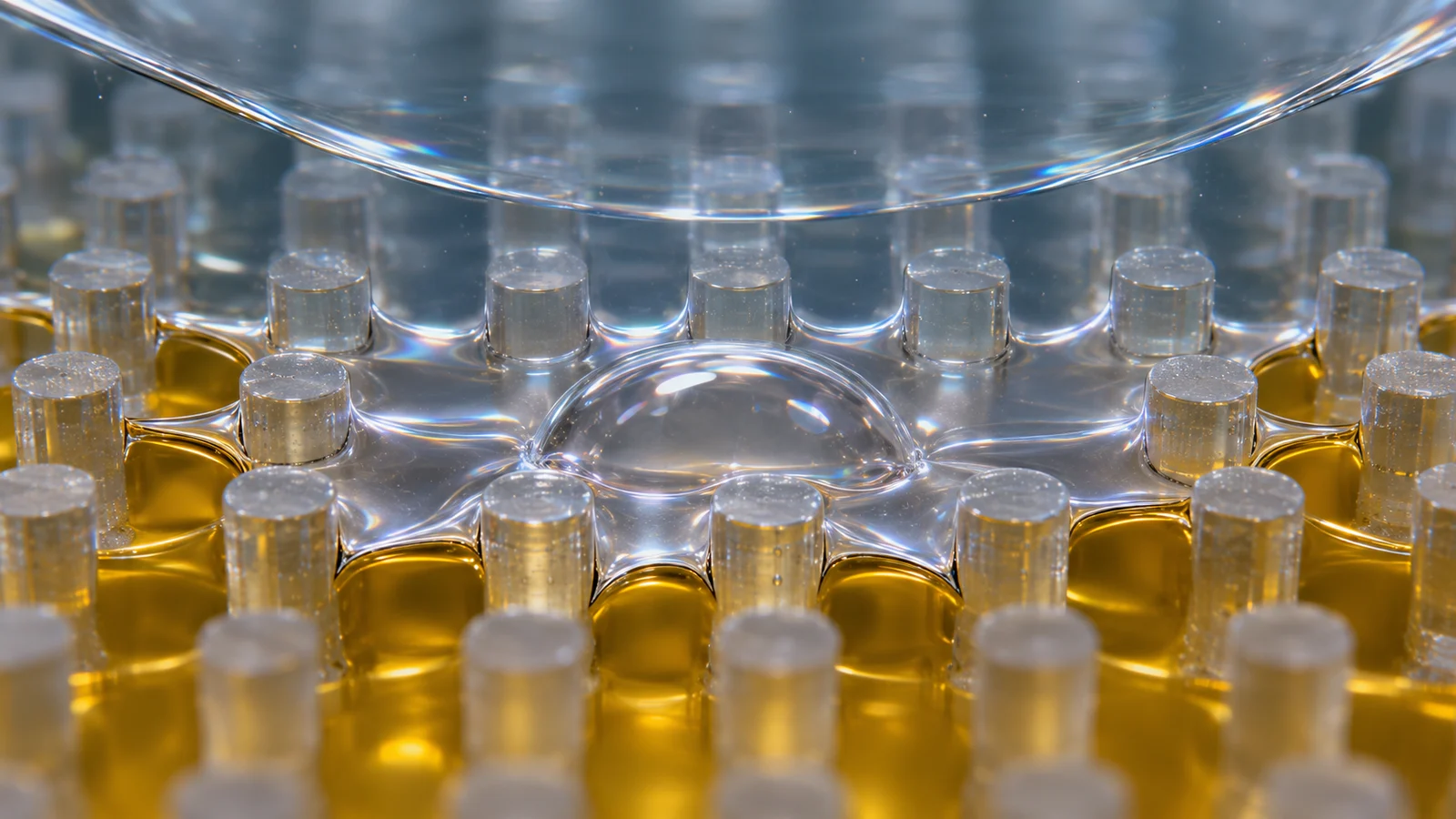
Spontaneous gas film expansion at an oil-water interface.

Spontaneous interfacial separation of oil and water, by inserting a gas film between the two liquids, is thermodynamically unfavorable because the oil-water interface is replaced by oil-gas and water-gas interfaces with a higher combined interfacial energy. Here, we demonstrate that microstructural confinement enables this transition after bubble introduction through the coupling of wetting, capillarity, and gas transport. Spontaneous oil imbibition into a water-submerged micropillar array, toge

Continue reading
Health & Medicine

Senescent CD8 T effector memory cells are functionally impaired, enriched in aging and disease, and a barrier to immunotherapy.

Senescent cells play important roles in various biological processes that promote fitness and health; however, their timely elimination by immune cells is critical to maintain tissue homeostasis and prevent disease. Despite this, senescent cells accumulate systemically with age, suggesting that certain immune cells also become senescent and dysfunctional during aging. In support of this, we previously demonstrated that CD8 T cells, immune cells capable of targeting senescent cells, increasingly

Continue reading
Health & Medicine

Engineered T cell-agonist chimera for logic-gated STING activation and augmented cancer immunotherapy.

The efficacy of adoptive T cell therapy against solid tumors is markedly hindered by the immunosuppressive microenvironment. Here, we demonstrate that stimulator of interferon genes (STING) activation in tumor-associated macrophages (TAM) enhances the intratumoral infiltration and cytotoxicity of adoptive T cells. We next design a TAM-targeted nanoagonist and engineer a T cell - agonist chimera (SNTC) via covalent surface anchoring, to achieve synchronized biodistribution of STING agonist with a

Continue reading
Health & Medicine

Decoding the regulatory programs governing glioblastoma plasticity.

Glioblastoma is incurable and resistant to therapy despite genomic stability under treatment 1-8 , suggesting that non-genetic cellular plasticity is a central driver of progression. Whether such plasticity reflects stochastic state switching or is governed by predictable gene regulation has remained unclear 9-13 . Here we introduce scDORI (single-cell deep multi-omic regulatory inference)-a deep-learning framework that infers enhancer-driven gene-regulatory networks at single-cell resolution-an

Continue reading
Health & Medicine

In vivo CAR-T double knockout screen maps synergistic antitumour gene pairs.

Chimeric antigen receptor (CAR)-T cell therapy has transformed the treatment of haematological malignancies, but its efficacy remains limited by multiple negative regulatory mechanisms intrinsic to T cells 1-4 . Here we perform a high-throughput in vivo CAR-T double-knockout (DKO) CRISPR screen, and identify multiple DKO gene pairs that are both effective and synergistic. The top pair, NR4A1-SOCS3 DKO, has multiple favourable immunological features. Whole-transcriptome profiling and in vivo

Continue reading