Decoding the regulatory programs governing glioblastoma plasticity.
Glioblastoma is incurable and resistant to therapy despite genomic stability under treatment 1-8 , suggesting that non-genetic cellular plasticity is a central driver of progression. Whether such plasticity reflects stochastic state switching or is governed by predictable gene regulation has remained unclear 9-13 . Here we introduce scDORI (single-cell deep multi-omic regulatory inference)-a deep-learning framework that infers enhancer-driven gene-regulatory networks at single-cell resolution-an
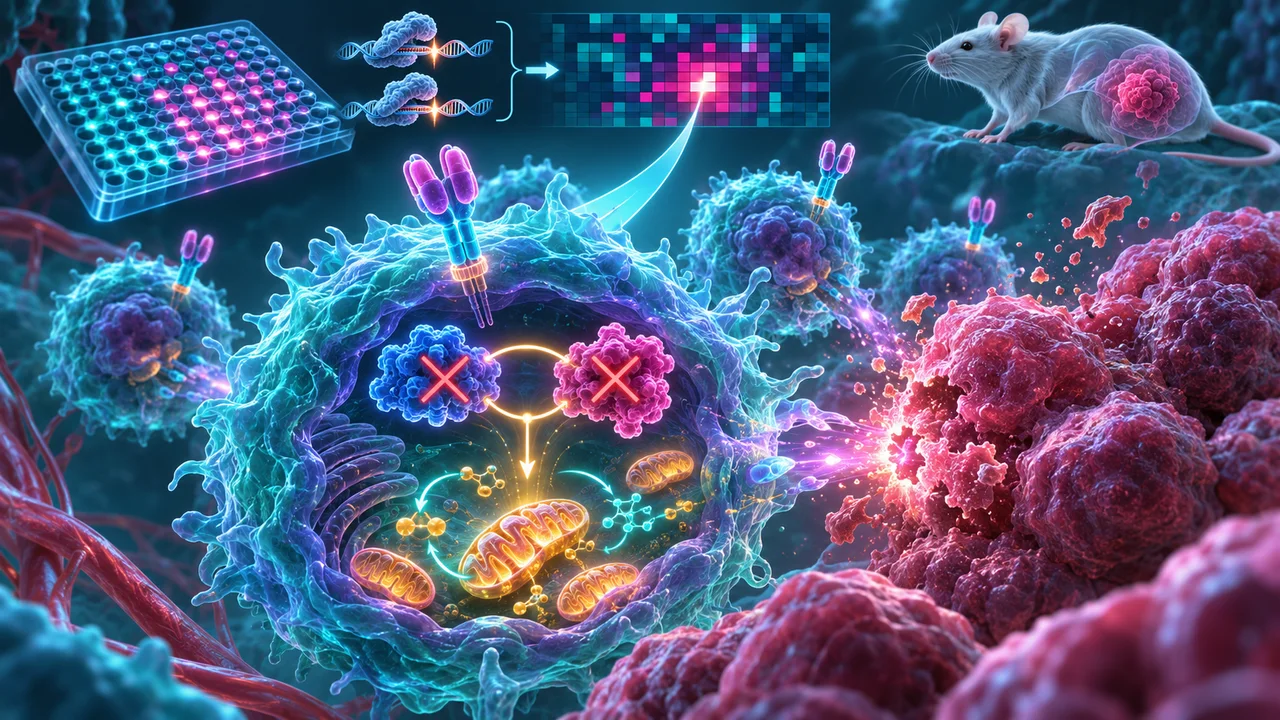
Glioblastoma is incurable and resistant to therapy despite genomic stability under treatment 1-8 , suggesting that non-genetic cellular plasticity is a central driver of progression. Whether such plasticity reflects stochastic state switching or is governed by predictable gene regulation has remained unclear 9-13 . Here we introduce scDORI (single-cell deep multi-omic regulatory inference)-a deep-learning framework that infers enhancer-driven gene-regulatory networks at single-cell resolution-and apply it to single-nucleus multiome profiles of more than one million cells from primary glioblastomas. Integrating computational inference with systematic perturbation screens across patient-derived models, we show that a structured regulatory program with an asymmetric interplay of activators and repressors governs cellular plasticity in glioblastoma. The resulting transition landscape is hierarchical and predictable, but permits cross-lineage trajectories that are absent from normal neurodevelopment. Within this landscape, low-plasticity states such as the neuronal-like state are not stable differentiation end points but actively maintained configurations, stabilized by a network of safeguard repressors that silence alternative fates. We identify MYT1L as the dominant member of this network, and show that it binds to and represses master regulators of every alternative state to consolidate neuronal-like identity. MYT1L restricted plasticity even under standard-of-care therapy and suppressed tumour growth and invasion in vivo. Conversely, loss of MYT1L reactivated plasticity and accelerated malignant features, indicating that low-plasticity identity requires continuous repression. These findings reframe malignant cell state stability as a balance between activation and continuous repression, and nominate safeguard repressors as candidate therapeutic targets that are distinct from differentiation-inducing activators, with potential relevance across cancers in which phenotypic switching drives therapy resistance.