Spatiotemporal multiomics uncover tumor ecosystem dynamics during metastatic colonization
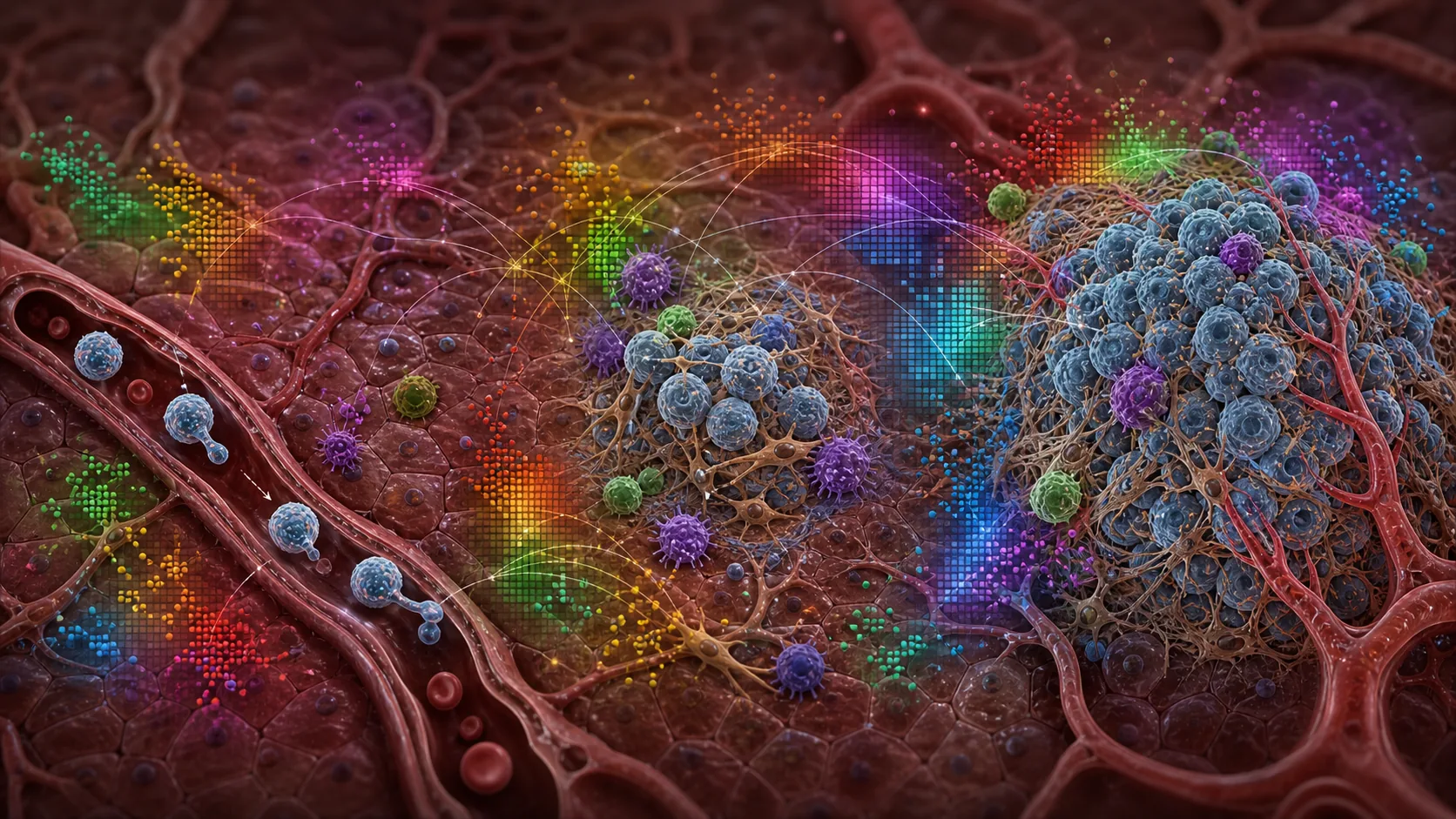
The mechanisms underlying the interactions between disseminated tumor cells (DTCs) and their tissue microenvironment during metastatic colonization are currently poorly understood. We integrated multimodal single-cell and spatial profiling from liver cancer mouse models and human metastases to track the spatiotemporal dynamics of DTCs and their microenvironments from single-cell seeding to overt lung metastasis. We identified a residual population of quiescent Phgdh high DTCs that survived initi
The mechanisms underlying the interactions between disseminated tumor cells (DTCs) and their tissue microenvironment during metastatic colonization are currently poorly understood. We integrated multimodal single-cell and spatial profiling from liver cancer mouse models and human metastases to track the spatiotemporal dynamics of DTCs and their microenvironments from single-cell seeding to overt lung metastasis. We identified a residual population of quiescent Phgdh high DTCs that survived initial innate immune clearance and became transiently enriched in micrometastases. These cells shaped an immune-scarce microenvironment through PHGDH-dependent, H3K27me3-mediated epigenetic silencing of chemokine transcription, thereby promoting metastatic expansion. Cx3cr1 high interstitial macrophages were also transiently enriched before DTC expansion, creating an immune-privileged niche for metastatic outgrowth by recruiting immunosuppressive cells. Inactivating the PHGDH-H3K27me3 axis in DTCs or depleting interstitial macrophages restored immune surveillance and inhibited metastatic colonization. These findings provide insights into the development of micrometastasis-targeting regimens.