Spatial proximity sequencing maps developmental dynamics in the germinal center.
Spatial profiling of proteins and protein interactions facilitates understanding of cell functions within tissues and is essential for studies in signaling, immunity, and cancer. We present spatial proximity sequencing (Sprox-seq) for simultaneous profiling of surface proteins, protein complexes, and mRNAs, recording the tissue location of each molecule. Sprox-seq profiled 32 proteins, 528 pairwise interactions, and thousands of mRNAs with spatial resolution across human tonsils and germinal cen
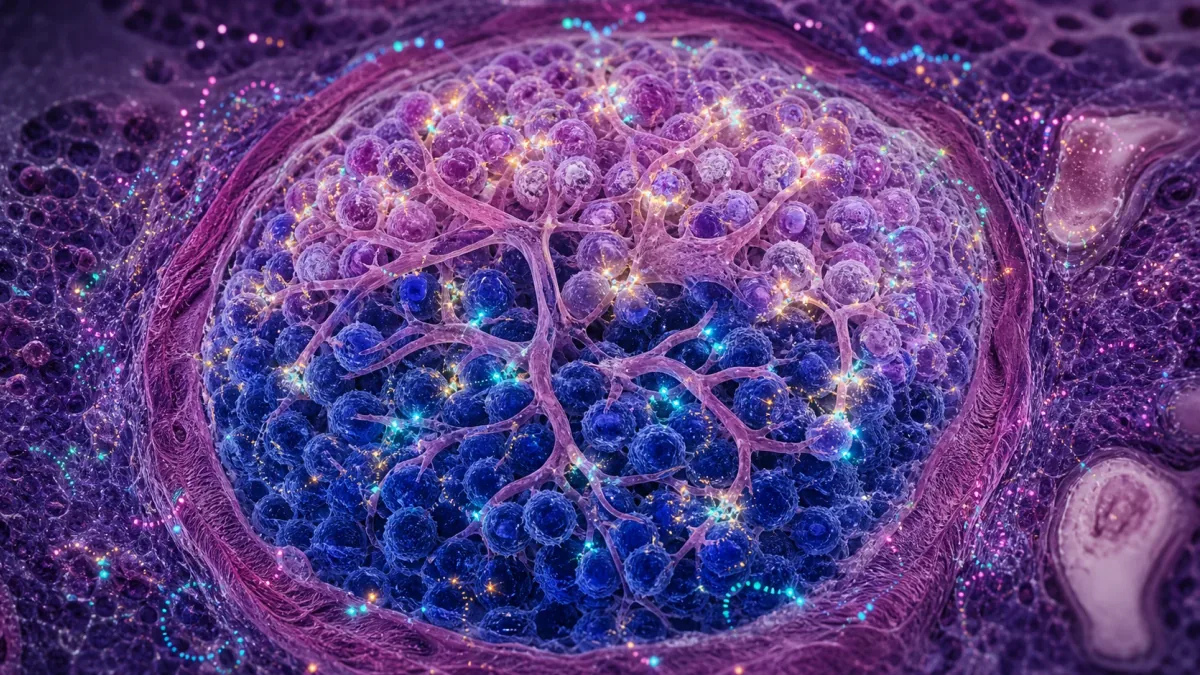
Spatial profiling of proteins and protein interactions facilitates understanding of cell functions within tissues and is essential for studies in signaling, immunity, and cancer. We present spatial proximity sequencing (Sprox-seq) for simultaneous profiling of surface proteins, protein complexes, and mRNAs, recording the tissue location of each molecule. Sprox-seq profiled 32 proteins, 528 pairwise interactions, and thousands of mRNAs with spatial resolution across human tonsils and germinal centers. Mapping tissue-wide protein interactions recapitulated RNA-defined tissue architecture but also revealed higher interaction complexity in the light zone. Protein-interaction trajectories uncovered a B cell state transition distinct from that inferred by RNA. Integrated protein-complex and mRNA analysis related spatially enriched complexes with mitotic pathways. Sprox-seq captured cell-cell interactions, such as B cell-follicular dendritic cell interactions mediated by the receptor complex VLA-4-VCAM1. Sprox-seq provides a spatially resolved multi-modal view of cell states and an integrated study of protein and cellular interactions across tissues.