Spatial atlas of the human brain vasculature reveals specialized cell ensembles.
The brain vasculature comprises diverse specialized cells that are essential for brain function, yet their spatial organization remains poorly understood. Here, we construct a comprehensive cerebrovascular cell atlas encompassing 314,535 transcriptomes that captures the arteriovenous axis and defines consensus cell states. We then perform spatial transcriptomics to map 1,529,740 cells across the human temporal cortex and hippocampus, uncovering stereotyped micro-communities termed vascular cell
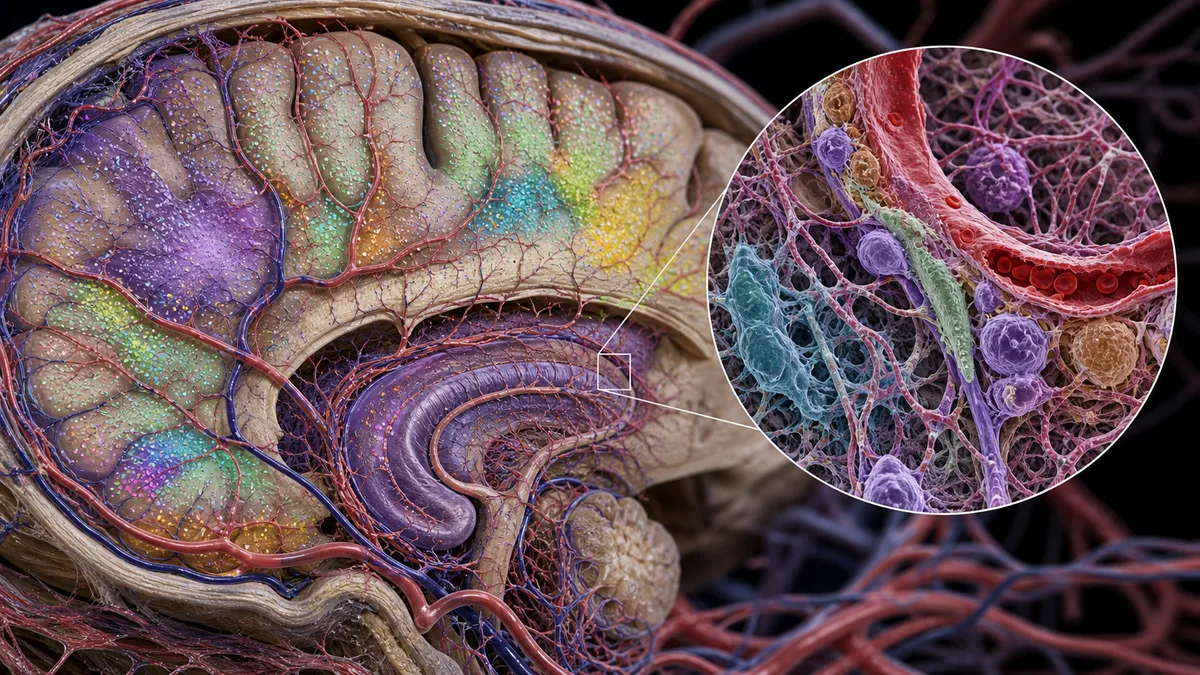
The brain vasculature comprises diverse specialized cells that are essential for brain function, yet their spatial organization remains poorly understood. Here, we construct a comprehensive cerebrovascular cell atlas encompassing 314,535 transcriptomes that captures the arteriovenous axis and defines consensus cell states. We then perform spatial transcriptomics to map 1,529,740 cells across the human temporal cortex and hippocampus, uncovering stereotyped micro-communities termed vascular cell ensembles. These ensembles comprise specialized subsets of endothelial cells, mural cells, fibroblasts, and perivascular macrophages that align with the arteriovenous architecture to coordinate segment-specific functions, such as neurovascular coupling, blood-brain barrier transport, and immune surveillance. By overlaying genetic risk and pharmacologic reactivity, we identify ensemble-specific susceptibilities and candidate therapeutic targets across neurological diseases, including small vessel disease and stroke. This study provides a resource to dissect the spatial and functional logic underlying human cerebrovascular biology and establishes a blueprint for decoding neurological disease susceptibility and therapeutic response.