Health & Medicine

Regulatable membrane-bound IL-15 engineered TIL cell therapy for immune checkpoint inhibitor-resistant advanced melanoma: pooled analysis of phase 1 and 1/2 trials.
| Source: Nature medicine

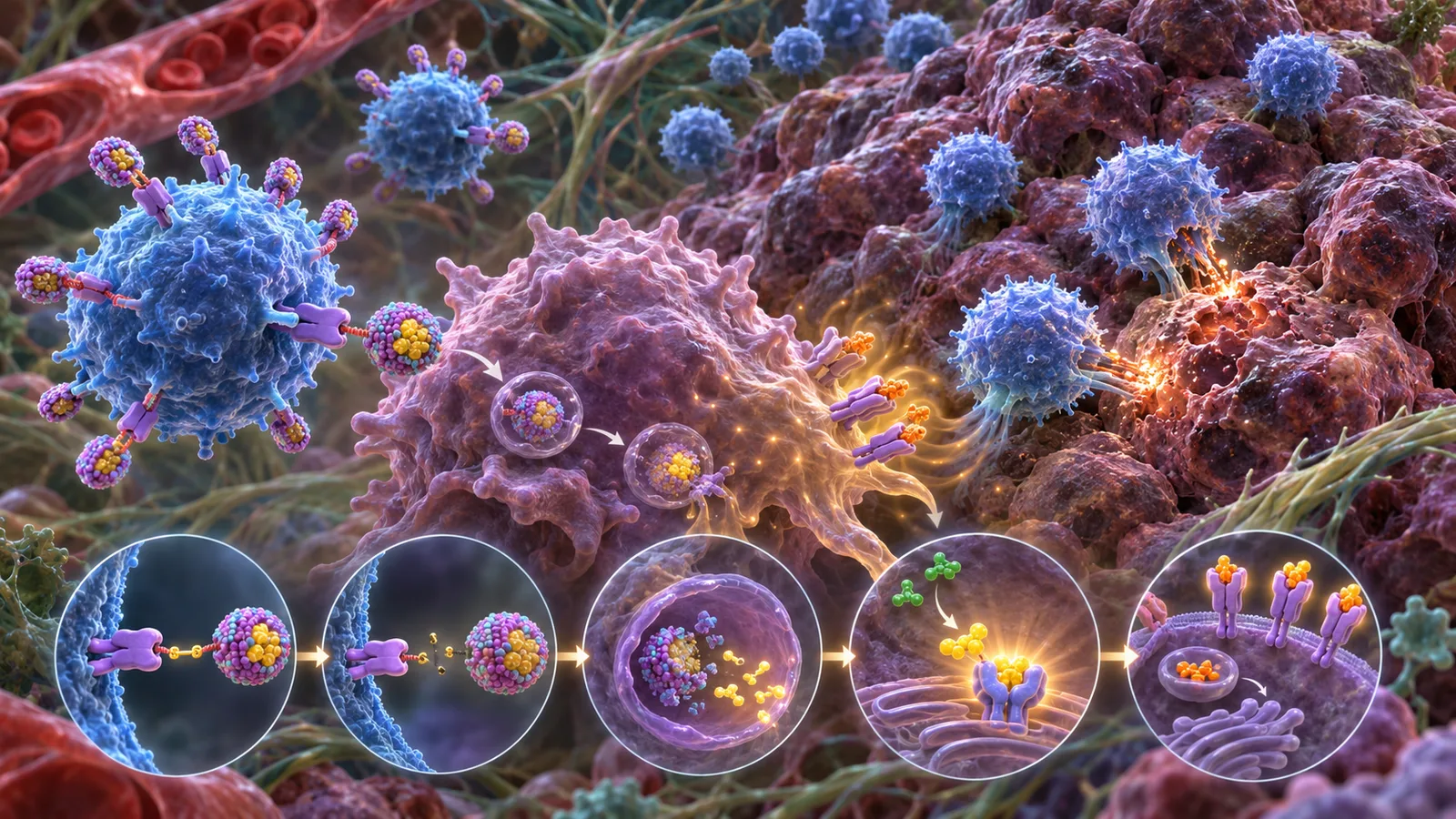
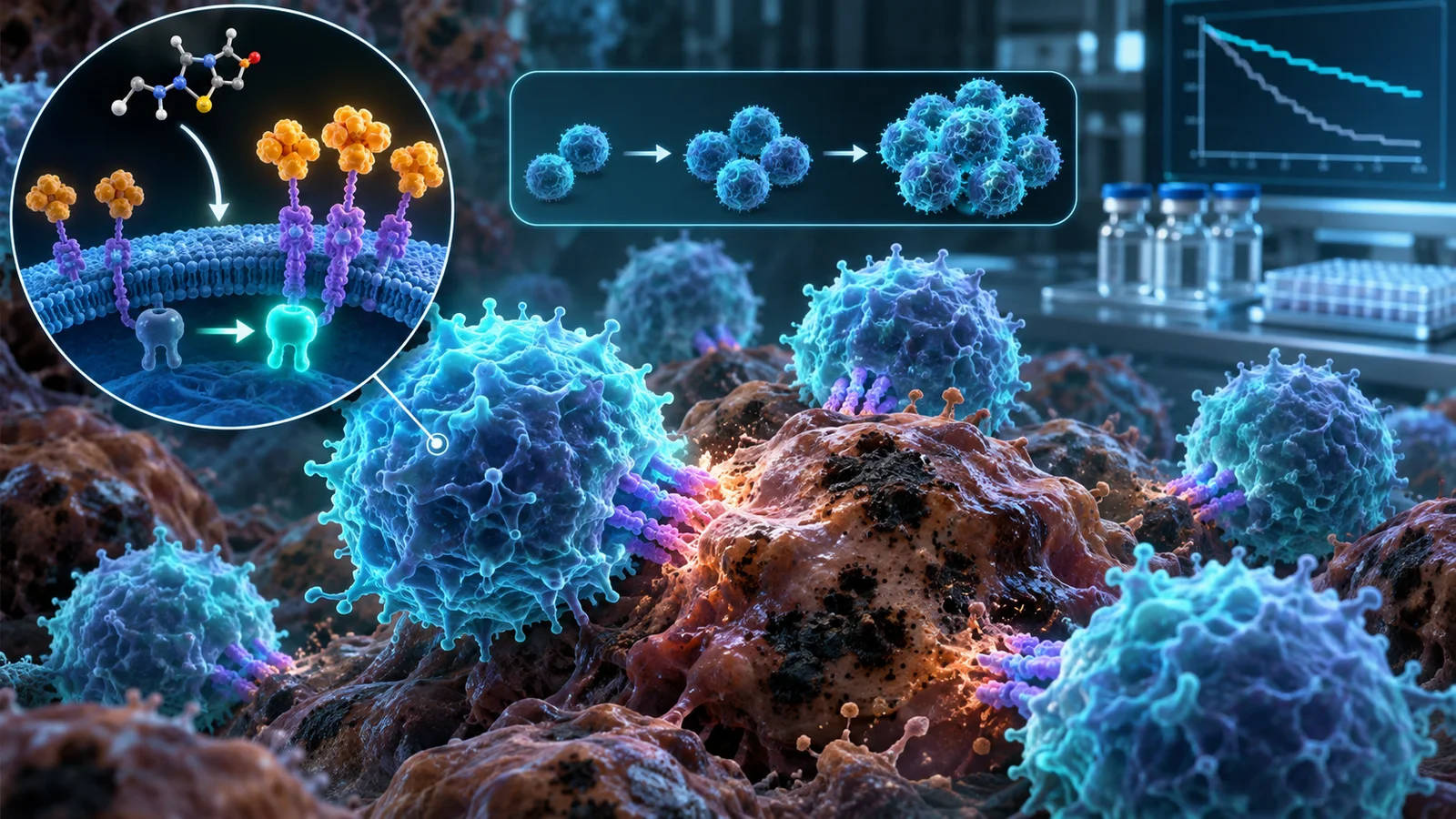
Amsokigene autoleucel (amsoki-cel, OBX-115) is a tumor-infiltrating lymphocyte (TIL) cell therapy engineered to express acetazolamide (ACZ)-regulatable membrane-bound interleukin-15, abrogating the need for interleukin-2. In two single-arm trials (completed phase 1 single-center first-in-human (FIH) and ongoing phase 1/2 multicenter Agni-01), patients with immune checkpoint inhibitor (ICI)-resistant advanced melanoma received lymphodepletion and varying doses and schedules of amsoki-cel and ACZ.

Amsokigene autoleucel (amsoki-cel, OBX-115) is a tumor-infiltrating lymphocyte (TIL) cell therapy engineered to express acetazolamide (ACZ)-regulatable membrane-bound interleukin-15, abrogating the need for interleukin-2. In two single-arm trials (completed phase 1 single-center first-in-human (FIH) and ongoing phase 1/2 multicenter Agni-01), patients with immune checkpoint inhibitor (ICI)-resistant advanced melanoma received lymphodepletion and varying doses and schedules of amsoki-cel and ACZ. The primary objective of FIH and Agni-01 phase 1 was safety, tolerability and recommended phase 2 dose (RP2D); the primary objective of Agni-01 phase 2 was objective response rate (ORR) at the RP2D. The first patient treated experienced rapid lymphocyte expansion and vasogenic edema of a previously irradiated brain metastasis, prompting protocol modifications and dose deescalation in FIH, including 80% reduction in maximum amsoki-cel dose and 75% reduction in ACZ dose. After preliminary demonstration of safety at the lower dose, doses were increased in FIH, and reescalation was initiated in Agni-01. Across studies, 37 patients were treated (FIH, n = 17; Agni-01, n = 20). Post hoc pooled analysis demonstrated no dose-limiting toxicities, ICU care or treatment-related mortality. Most common grade 3 or higher treatment-emergent adverse events (TEAEs) included neutropenia (64.9% (24/37)), leukopenia/lymphopenia (56.8% (21/37) each) and anemia/thrombocytopenia (37.8% (14/37) each). Serious TEAEs were reported for 10 patients, including eight patients with grade 3 or higher events (non-hematologic, 13.5% (5/37); hematologic, 13.5% (5/37)). RP2D was selected based on overall safety and tolerability as well as preliminary anti-tumor activity in Agni-01 phase 1. The phase 2 preliminary ORR was 66.7% (6/9). In total, 15 patients were treated at RP2D and comprise the Key Efficacy Set (Agni-01: phase 1, n = 6; phase 2, n = 9), of which 10 patients (66.7%; 95% confidence interval 38-88%) achieved objective responses (including two complete responses). Amsoki-cel demonstrated favorable safety and promising early clinical activity in patients with ICI-resistant melanoma. A separate phase 2 pivotal Agni-01 cohort is ongoing. ClinicalTrials.gov identifiers: NCT05470283 and NCT06060613 .

Read the original source →

Related Topics

Related Stories

Health & Medicine

Spontaneous gas film expansion at an oil-water interface.

Spontaneous interfacial separation of oil and water, by inserting a gas film between the two liquids, is thermodynamically unfavorable because the oil-water interface is replaced by oil-gas and water-gas interfaces with a higher combined interfacial energy. Here, we demonstrate that microstructural confinement enables this transition after bubble introduction through the coupling of wetting, capillarity, and gas transport. Spontaneous oil imbibition into a water-submerged micropillar array, toge

Continue reading
Health & Medicine

Senescent CD8 T effector memory cells are functionally impaired, enriched in aging and disease, and a barrier to immunotherapy.

Senescent cells play important roles in various biological processes that promote fitness and health; however, their timely elimination by immune cells is critical to maintain tissue homeostasis and prevent disease. Despite this, senescent cells accumulate systemically with age, suggesting that certain immune cells also become senescent and dysfunctional during aging. In support of this, we previously demonstrated that CD8 T cells, immune cells capable of targeting senescent cells, increasingly

Continue reading
Health & Medicine

Engineered T cell-agonist chimera for logic-gated STING activation and augmented cancer immunotherapy.

The efficacy of adoptive T cell therapy against solid tumors is markedly hindered by the immunosuppressive microenvironment. Here, we demonstrate that stimulator of interferon genes (STING) activation in tumor-associated macrophages (TAM) enhances the intratumoral infiltration and cytotoxicity of adoptive T cells. We next design a TAM-targeted nanoagonist and engineer a T cell - agonist chimera (SNTC) via covalent surface anchoring, to achieve synchronized biodistribution of STING agonist with a

Continue reading
Health & Medicine

An innervated and vascularized HNSCC-on-a-chip model built on defined and tunable engineered extracellular matrices.

Understanding the tumor microenvironment requires experimental platforms that faithfully recapitulate its key components. Here, we present an innervated and vascularized head and neck squamous cell carcinoma (HNSCC)-on-a-chip platform built with fully defined and tunable engineered extracellular matrices (eECMs). In a stepwise increase of complexity, we first cocultured patient-derived HNSCC cells, cancer-associated fibroblasts, and endothelial cells within tailored eECMs, revealing extracellula

Continue reading
Health & Medicine

Septin binding restricts Shigella growth and triggers intracellular tolerance.

Pathogen survival relies on their ability to adapt to changing environments, yet how intracellular bacteria tolerate cell-autonomous immunity remains unclear. Septins assemble into cage-like structures around cytoplasmic Shigella targeted by autophagy, but their antibacterial activity was unknown. Using advanced microscopy and cell-free reconstitution, we show that septins polymerize into circumferentially oriented filaments that inhibit bacterial growth. RNA-sequencing reveals that septin bindi

Continue reading