Nicotianamine-driven nickel transport to sink organs underpins maize productivity.
Nickel (Ni), the last essential trace element identified in plants, has long been enigmatic regarding the genetic basis underlying its homeostasis and its agricultural significance. Using genome-wide association analysis, we identified ZmNAET1 as a key transporter controlling Ni allocation to seeds. Mechanistically, ZmNAET1 mediates nicotianamine secretion and enables nicotianamine-dependent phloem loading of Ni in nodes and subsequent Ni translocation into sink organs. Mutants lacking ZmNAET1 e
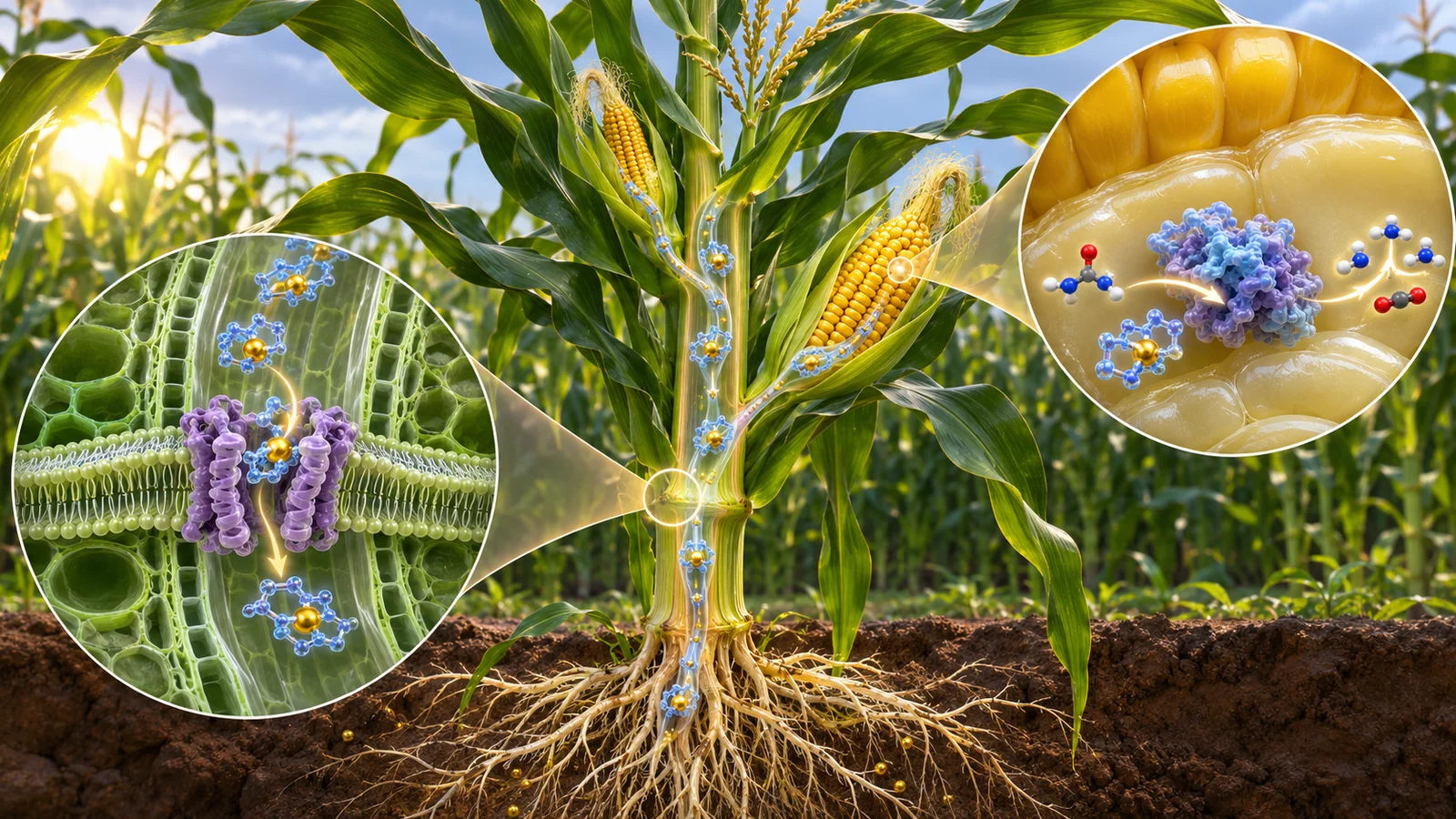
Nickel (Ni), the last essential trace element identified in plants, has long been enigmatic regarding the genetic basis underlying its homeostasis and its agricultural significance. Using genome-wide association analysis, we identified ZmNAET1 as a key transporter controlling Ni allocation to seeds. Mechanistically, ZmNAET1 mediates nicotianamine secretion and enables nicotianamine-dependent phloem loading of Ni in nodes and subsequent Ni translocation into sink organs. Mutants lacking ZmNAET1 exhibit significant yield penalties, decreased seed germination velocity, and drastically shortened seed longevity. In an irreplaceable role, supplemented Ni fully rescued seed germination and proper vegetative development of the mutants. We show that NAET1-dependent delivery of Ni to urease is essential for amino acid turnover in developing sink organs, revealing an unappreciated role of Ni in yield formation of graminaceous plants. This study uncovers an underestimated requirement for nicotianamine and Ni and opens a new research avenue toward optimizing micronutrient provision for cereal crop productivity.