Large-scale whole-genome sequencing reveals the landscape and health implications of de novo mutations.
De novo mutations (DNMs) are an important source of congenital diseases. With delayed parenthood and assisted reproductive technology (ART) use increasing, it is essential to elucidate how these reproductive factors influence DNMs and whether resulting mutations influence offspring health. Here we performed whole-genome sequencing of 24,030 individuals from 7,851 parent-offspring families, identifying 390,924 de novo single-nucleotide variants (dnSNVs). Paternal and maternal aging exhibited dist
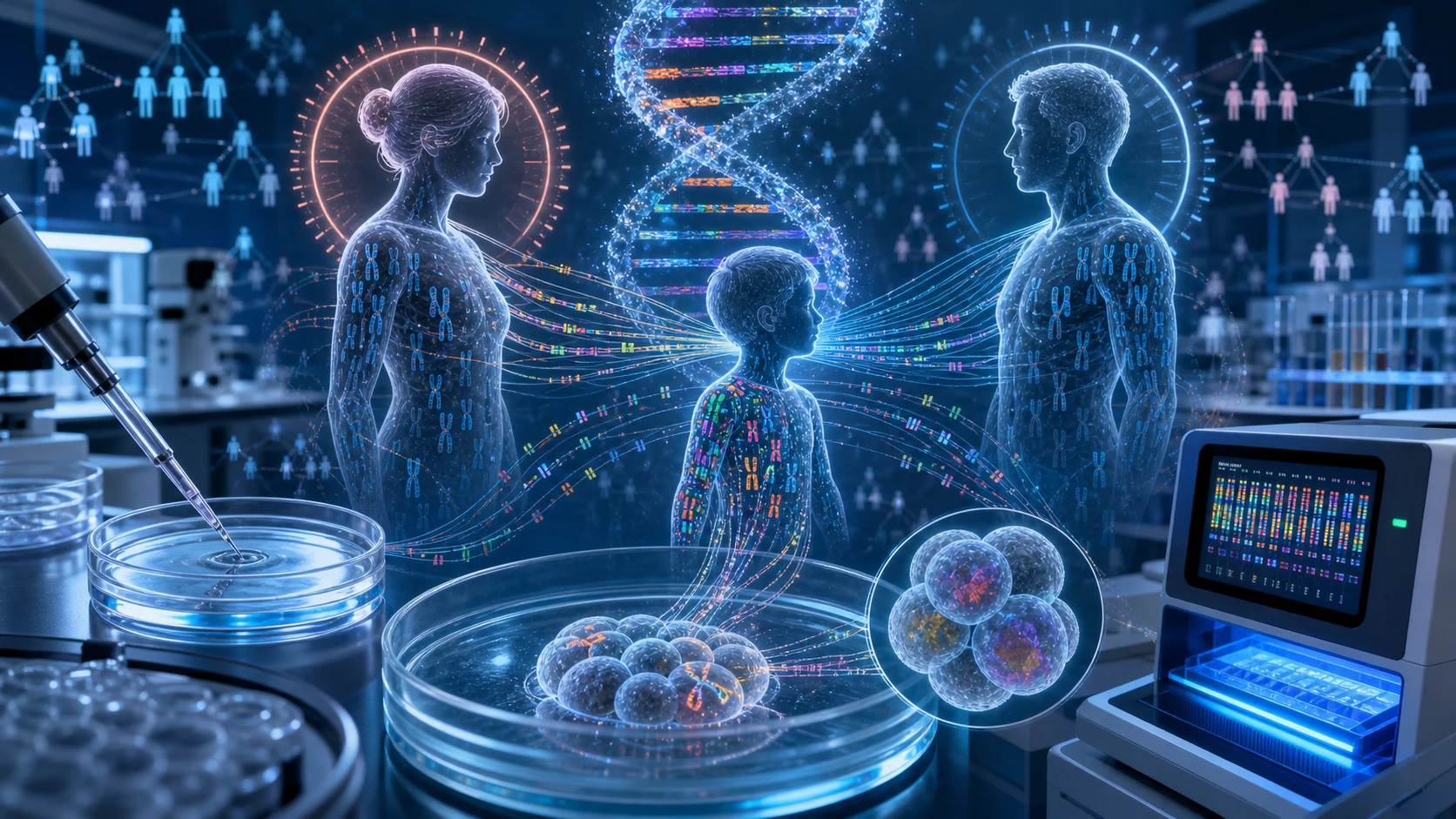
De novo mutations (DNMs) are an important source of congenital diseases. With delayed parenthood and assisted reproductive technology (ART) use increasing, it is essential to elucidate how these reproductive factors influence DNMs and whether resulting mutations influence offspring health. Here we performed whole-genome sequencing of 24,030 individuals from 7,851 parent-offspring families, identifying 390,924 de novo single-nucleotide variants (dnSNVs). Paternal and maternal aging exhibited distinct mutational patterns, with maternal DNM accumulation accelerating at advanced ages. Increased paternal dnSNVs partially accounted for the association between advanced parental age and shorter gestational duration. Moreover, ART showed age-independent, procedure-specific effects: intracytoplasmic sperm injection (ICSI) and ovarian stimulation were associated with increased paternal and maternal dnSNVs, respectively, and ICSI-associated paternal dnSNVs also partially accounted for the association between ICSI and shorter gestational duration. In vitro embryo manipulation was associated with increased early post-zygotic mosaic mutations, particularly C > A substitutions linked to delayed neurocognitive development at 1 year. Collectively, these findings advance understanding of the determinants and consequences of de novo mutagenesis.