Intratumoral injection of EpCAM BITE, IL-12, and GM-CSF mRNA-LNPs blocks the growth of local treated and distant untreated tumors.
We have previously shown that a T cell engaging bispecific humanized anti-human EpCAM-CD3 antibody efficiently kills a human EpCAM positive human xenograft in an NSG partially humanized mouse injected intravenously with human T cells when the anti-EpCAM-CD3 was delivered intratumorally as an mRNA-LNP. To extend these results we tested the effects of combining the anti-human EpCAM-CD3 with various cytokines injected into a tumor on the left side of NSG mice and an uninjected tumor on the right si
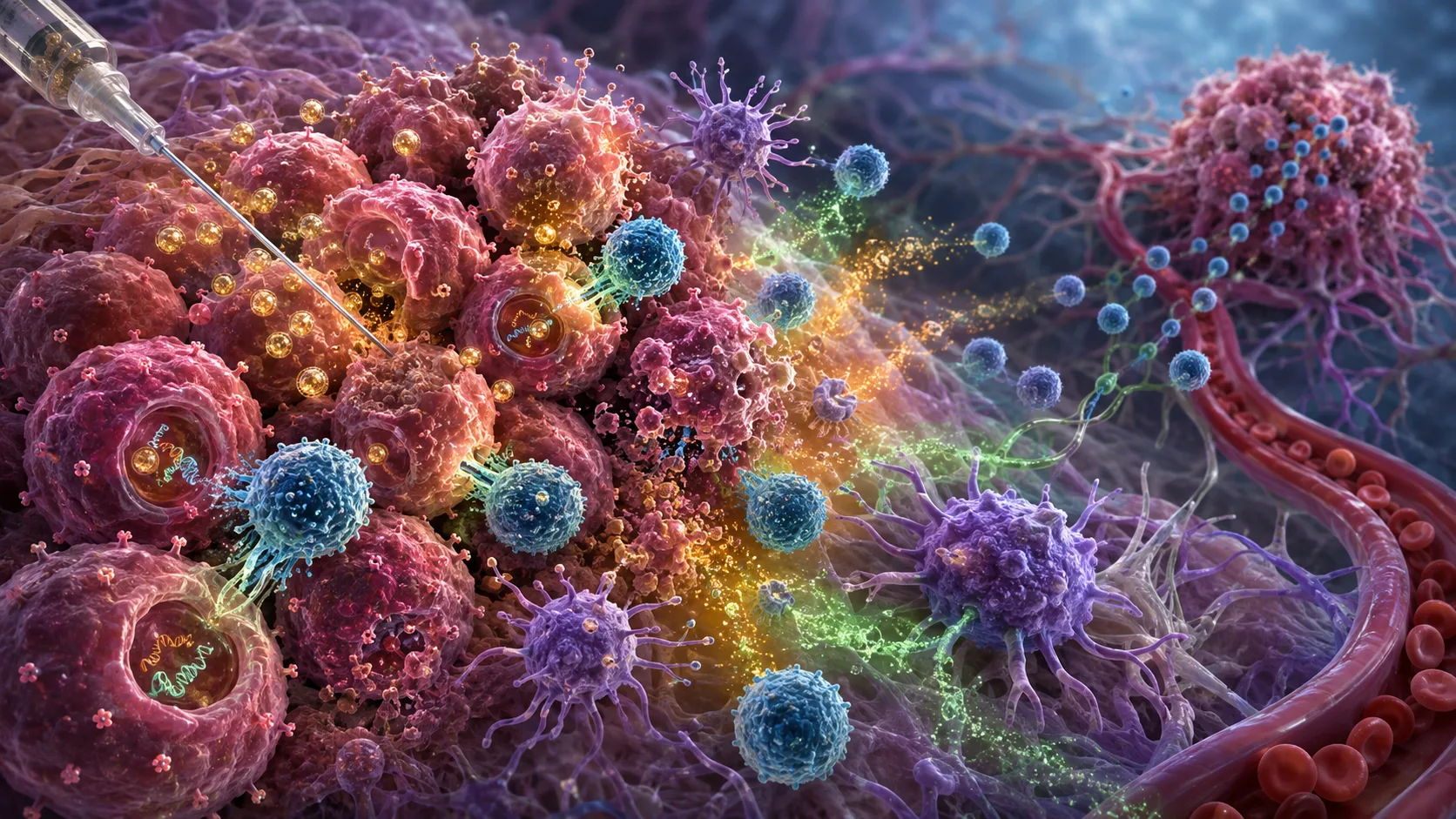
We have previously shown that a T cell engaging bispecific humanized anti-human EpCAM-CD3 antibody efficiently kills a human EpCAM positive human xenograft in an NSG partially humanized mouse injected intravenously with human T cells when the anti-EpCAM-CD3 was delivered intratumorally as an mRNA-LNP. To extend these results we tested the effects of combining the anti-human EpCAM-CD3 with various cytokines injected into a tumor on the left side of NSG mice and an uninjected tumor on the right side of the mice. Combining both IL-12 and GM-CSF with anti-EpCAM-CD3 increased the number of T cells and the expression of genes and pathways that mediated T cell-based killing in the neighborhood of both the injected and the uninjected tumor and substantial increases in the expression of HLA Class II and associated genes in both tumors. This turned the cancer cells into potentially antigen-presenting cells. The effect of combining intratumoral injection of anti-EpCAM-CD3 with cytokines IL-12 and GM-CSF on tumor growth distal to the injection site avoids serious side effects on normal tissue, and suggests this technology offers a major approach to immunotherapy for treatment of a wide range of cancers from early to severe late stages.