Immunotherapy with a short-lived anti-PD-L1 antibody in Alzheimer's disease: a phase 1b, randomized, double-blind trial.
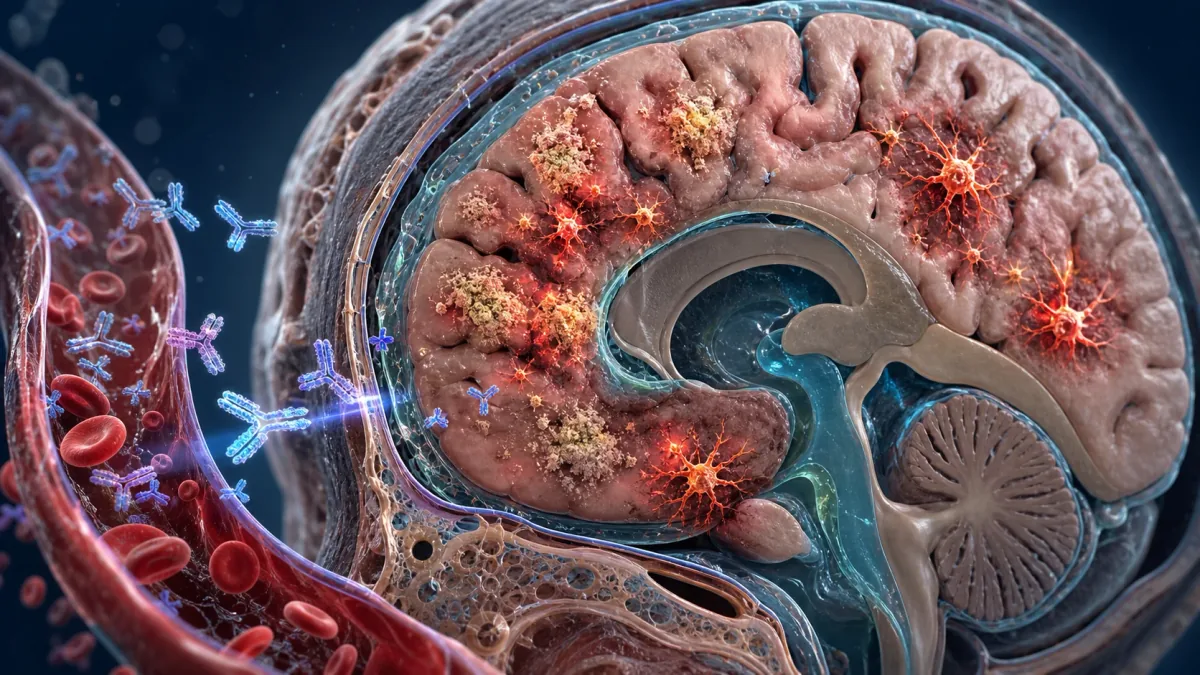
While Alzheimer's disease (AD) is initiated by amyloid plaque accumulation, its progression involves local neuroinflammation that the brain cannot resolve when age-related dysfunction of the systemic immune system limits peripheral immune support. Preclinical studies using rodent models showed that transient systemic blockade of programmed death-ligand 1 is associated with reduced neuroinflammation, neuroprotection and attenuation of disease progression. Based on the underlying mechanism, a new
While Alzheimer's disease (AD) is initiated by amyloid plaque accumulation, its progression involves local neuroinflammation that the brain cannot resolve when age-related dysfunction of the systemic immune system limits peripheral immune support. Preclinical studies using rodent models showed that transient systemic blockade of programmed death-ligand 1 is associated with reduced neuroinflammation, neuroprotection and attenuation of disease progression. Based on the underlying mechanism, a new short-lived anti-programmed death-ligand 1 antibody with Fc-effector silencing and reduced FcRn binding (IBC-Ab002) was engineered. Here, we report a randomized, double-blind, phase 1b first-in-human trial in early AD, with safety and tolerability as the primary endpoint. Forty participants were enrolled across five ascending dose cohorts (1-30 mg kg -1 ), with dosing administered four times at 3-month intervals. Treatment was well tolerated, with no treatment-related serious adverse events or evidence of amyloid-related imaging abnormalities. Exploratory analyses at week 48 showed directional changes in cerebrospinal fluid biomarkers of neuronal and synaptic damage favoring the 30 mg kg -1 dose, although no doses reached statistical significance given the limited sample size. The safety and tolerability profile supports further clinical development of systemic, intermittently administered IBC-Ab002 in early AD. ClinicalTrials.gov registration: NCT05551741 .