High risk of hypoxemic COVID-19 pneumonia in myasthenia gravis patients with type I IFN autoantibodies.
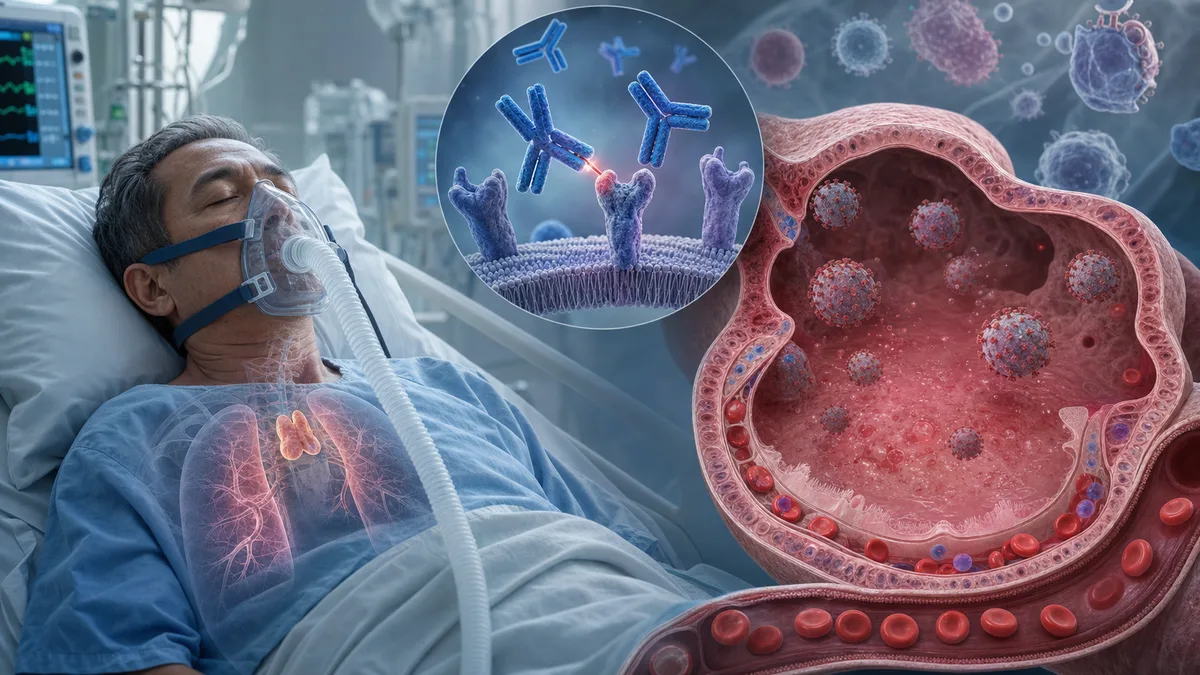
Patients with myasthenia gravis (MG) may produce autoantibodies neutralizing type I interferons (AAN-I-IFN), which underlie severe viral diseases, including critical COVID-19 pneumonia, in patients without MG. We studied an international cohort of 85 unvaccinated SARS-CoV-2-infected MG patients not given antiviral treatment. Hypoxemic pneumonia occurred in 48 of these patients, including 22 (45.8%) with AAN-I-IFN, which neutralized both IFN-α2 and IFN-ω in 14 (29.2%) patients. Six (1
Patients with myasthenia gravis (MG) may produce autoantibodies neutralizing type I interferons (AAN-I-IFN), which underlie severe viral diseases, including critical COVID-19 pneumonia, in patients without MG. We studied an international cohort of 85 unvaccinated SARS-CoV-2-infected MG patients not given antiviral treatment. Hypoxemic pneumonia occurred in 48 of these patients, including 22 (45.8%) with AAN-I-IFN, which neutralized both IFN-α2 and IFN-ω in 14 (29.2%) patients. Six (16.2%) of the remaining 37 patients had AAN-I-IFN, neutralizing both IFN-α2 and IFN-ω in three patients. The risk of hypoxemic pneumonia was greater in MG patients with AAN-I-IFN neutralizing 10 ng/mL of both IFN-α2 and IFN-ω (odds ratio and 95% confidence interval (OR [95% CI]): 12.7 [2.1 to 78.9], P = 0.0010) or IFN-α2 at any dose (OR [95% CI]: 4.7 [1.5 to 15.0], P = 0.0054) than in those without such autoantibodies. The risk of producing AAN-I-IFN was much higher in MG patients than in the general population (OR [95% CI]: 28.9 [10.8 to 77.7], P = 4.9 × 10 -27 ). Thymoma was found in 14 patients and increased the risk of AAN-I-IFN (64% versus 27%, (OR [95% CI]: 5.6 [1.6 to 19.4], P = 0.0050) and hypoxemic pneumonia (9.2 [1.9 to 44.2]; P = 0.0019). Thymoma is, thus, associated with a higher risk of producing AAN-I-IFN, which are, in turn, associated with a higher risk of developing life-threatening COVID-19 pneumonia in patients with MG.